
Rated4.8/5 | 1017 reviews

Choose the right Englandtenancy agreement for the let

If the tenancy is a straightforward whole-property let, start with Standard. Use Premium when you want fuller drafting. Standard and Premium are the updated current England assured periodic routes under the post-Renters' Rights Act framework from 1 May 2026.

Start with the agreement that matches the property, occupiers, and management setup.
Trusted by UK landlords

Choose the agreement that fits the tenancy

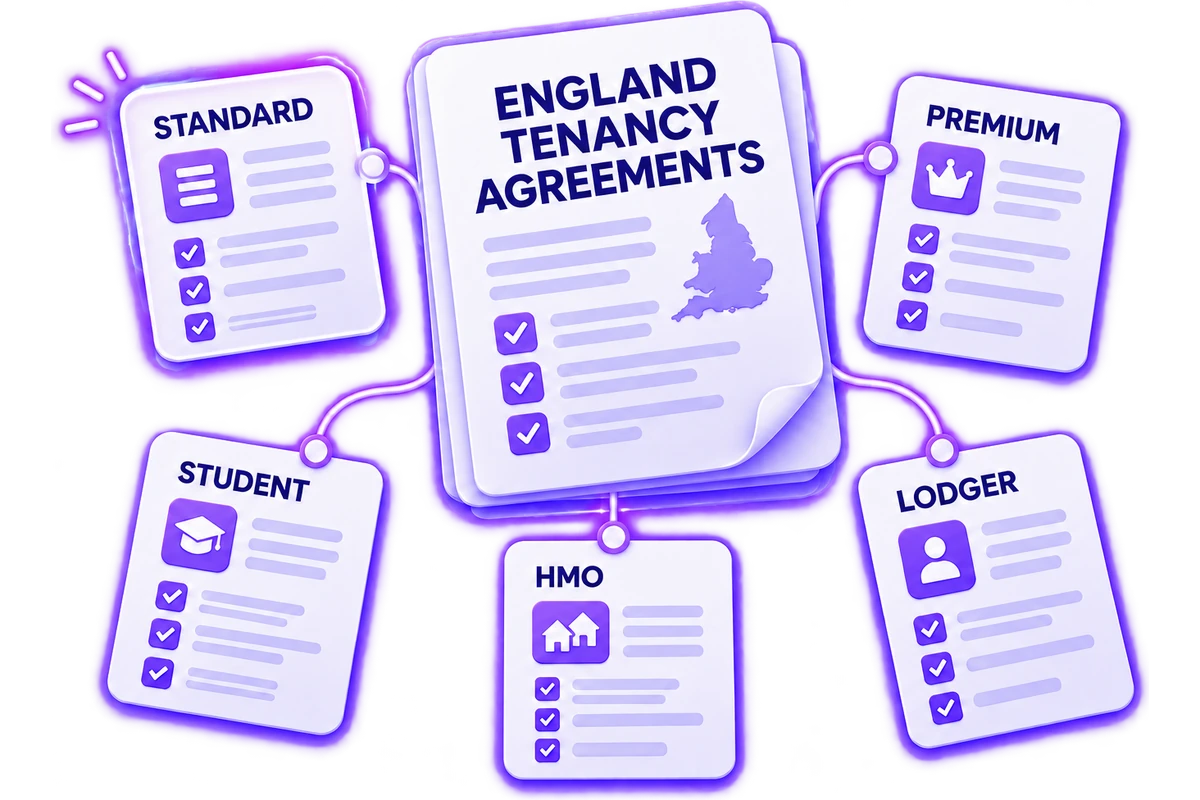
Use this page to compare the five agreement routes properly. Standard is the usual ordinary-let start, Premium is the fuller residential route, and the specialist options below are for student, shared-house, and lodger setups that need their own wording.

Standard Tenancy Agreement

£14.99
What it is for
The updated current England assured periodic agreement for a straightforward whole-property let.
What problem it solves
Gives landlords a clean starting point when the tenancy is ordinary and does not need specialist student, shared-house, or resident-landlord wording, including landlords who searched for a periodic tenancy agreement and need the updated mainstream England route after the Renters' Rights Act changes.
What goes wrong without it
If you use a more specialist route by mistake, the paperwork becomes more complicated than it needs to be. If you use something older or vaguer, the core tenancy terms can feel too light.
How it helps the landlord
Gets the tenancy in place with a clear England agreement and the practical setup paperwork most straightforward lets need.
Choose the Standard agreement

Premium Tenancy Agreement

£24.99
What it is for
The updated fuller current England assured periodic route for ordinary residential lets that need stronger management wording.
What problem it solves
Helps when the landlord wants more detail around access, reporting, inspections, keys, repairs, and hand-back from the outset, while still staying on the updated ordinary England periodic route after the Renters' Rights Act changes.
What goes wrong without it
If a more involved let is forced into a lighter agreement, avoidable management arguments can start because the paperwork never set expectations clearly enough.
How it helps the landlord
Gives the landlord a stronger written framework for the day-to-day running of the tenancy without moving into the wrong specialist product.
Choose the Premium agreement

Student Tenancy Agreement

£24.99
What it is for
The dedicated agreement for student households in England.
What problem it solves
Deals more clearly with guarantors, sharers, replacement requests, and end-of-term move-out than a generic residential agreement usually can.
What goes wrong without it
If a student household is documented as a generic let, the pressure points that matter most often end up under-explained until something goes wrong.
How it helps the landlord
Gives the landlord a student-focused agreement that matches how the property is really being occupied and managed.
Choose the Student agreement

HMO / Shared House Tenancy Agreement

£34.99
What it is for
The shared-house route for occupiers living together and using communal areas.
What problem it solves
Deals with house rules, communal spaces, sharer expectations, and shared living arrangements more directly than a standard tenancy agreement.
What goes wrong without it
If a shared house is documented like a straightforward whole-property let, the file can miss the rules that stop everyday shared-living disputes from escalating.
How it helps the landlord
Helps the landlord run a communal property with paperwork that fits the real shared-house setup.
Choose the HMO / Shared House agreement

Lodger Agreement

£14.99
What it is for
The room-let agreement for a landlord who lives in the property.
What problem it solves
Keeps the resident-landlord arrangement separate from a standard tenancy so shared-home rules and notice expectations are set out properly.
What goes wrong without it
If a lodger setup is treated like a normal tenancy, the paperwork can mismatch the reality of shared occupation inside the landlord's own home.
How it helps the landlord
Gives the landlord a clearer room-let agreement that matches the practical reality of a shared-home arrangement.
Choose the Lodger agreement

Why you need the right route first

Most agreement problems start before the document is generated. They start when the landlord picks a route that does not match the occupiers, the property, or the way the let will actually be managed.

Different lets create different risks

A student household, a shared house, and a resident-landlord room let are not the same job even if they all look like tenancy paperwork at first glance.

Wrong-route paperwork weakens the file early

If the agreement does not match the real arrangement, the paperwork can feel vague or misaligned before the tenancy has properly begun.

The exact product pages do the detailed selling

This comparison page helps you choose. Each exact agreement page then explains the full pack and what every included document is doing for the landlord.

How this helps the landlord outcome

The goal is to get the landlord onto the right agreement page quickly, with less guesswork and less chance of buying the wrong pack.

It narrows the choice fast

Instead of browsing generic agreement pages, landlords can see which route matches the kind of tenancy they are actually setting up, even if they started with broad searches like tenancy agreement template or periodic tenancy agreement.

It keeps the product promise honest

Each agreement page can rank for its exact intent because this page is doing the comparison job and the exact page owns the full product explanation.

It reduces route confusion before checkout

Landlords can compare the practical difference between Standard, Premium, Student, HMO, and Lodger before they start generating anything.

How it works

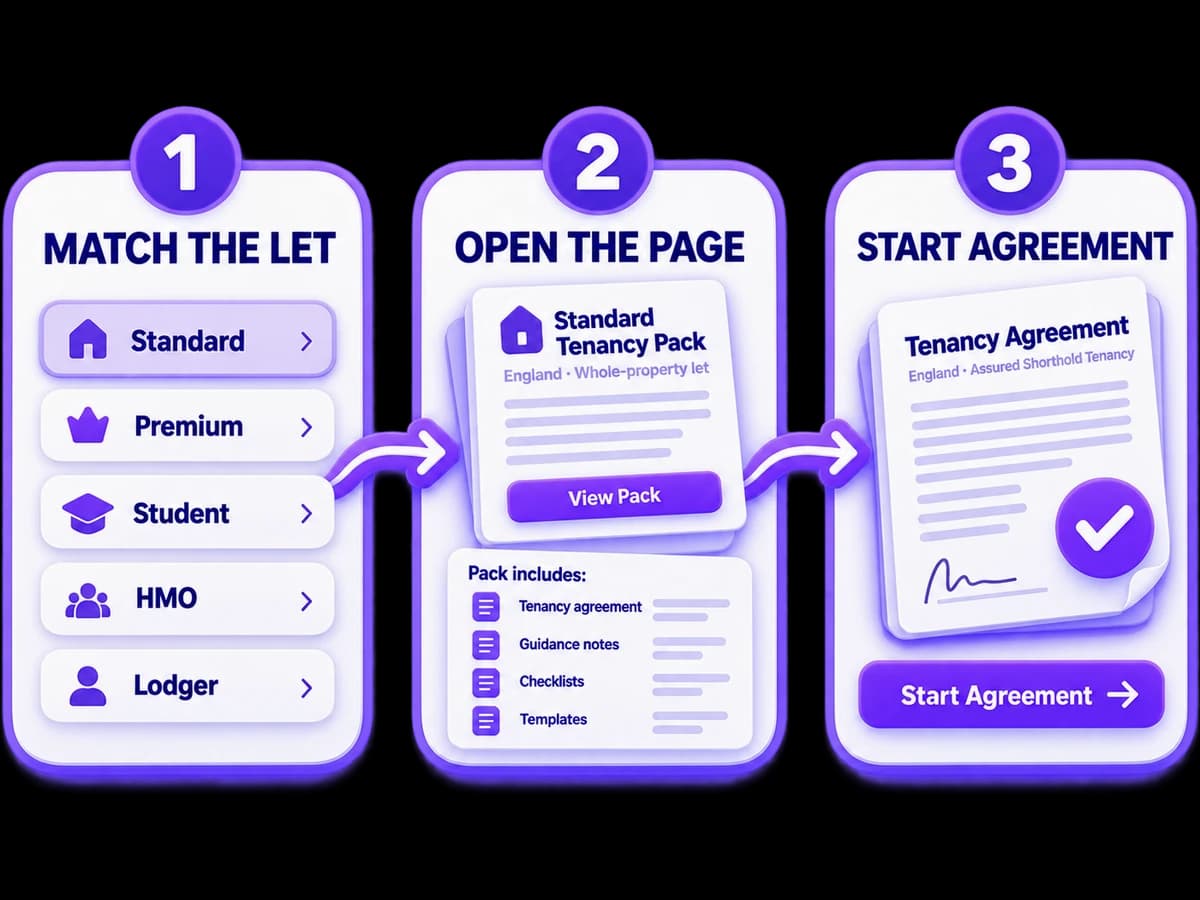
Use this page to compare the routes first, then move into the exact product page that matches the tenancy you are about to put in place.

Step 01

Match the let to the right route

Decide whether the tenancy is straightforward, more detailed, student-focused, shared-house based, or a resident-landlord room let. If you came in on periodic wording, that usually means Standard or Premium.

Step 02

Open the exact agreement page

Read the full pack breakdown for that route so you can see exactly what the landlord receives and why each document is there.

Step 03

Start the correct agreement workflow

Generate the product that matches the property and the occupiers instead of trying to adapt the wrong paperwork later.

Start with the agreement that fits the let

If the tenancy is a straightforward whole-property let, open the Standard agreement first. Move to Premium when you want the fuller residential route. Use the specialist cards above only when the occupiers or letting setup clearly point you there.

England tenancy agreement FAQs

It is for landlords putting a tenancy in place for property in England and choosing between the exact agreement products.
Because each route solves a different tenancy risk. The public pages now match the setup more honestly instead of pretending one agreement suits every kind of let.
Yes. If you searched for AST, this is the best place to choose the exact current England agreement that fits the property and the occupiers.
That is still the right kind of search for this England tenancy journey. Standard and Premium are the updated current England assured periodic routes under the post-Renters' Rights Act framework, so use this page to choose the exact product and the periodic support guides if you want the terminology explained first.
Use this page to choose the right route, then open the exact product page for the full agreement and document-by-document pack breakdown.
Ask Heaven
Get instant answers, guidance, and next steps with Ask Heaven.
Ask Heaven