
Rated4.8/5 | 3008 reviews
Landlord Tax UK - Complete Guide 2026
Everything landlords need to know about tax in the UK. Income tax, allowable expenses, capital gains, and tax-efficient structures. Get the UK steps and choo...
Use this guide when
You need a practical landlord answer, not just a definition
Use this page when you need to understand landlord tax uk in landlord terms, check the evidence or compliance points that matter, and decide whether the next step is a guide, free tool, notice pack, court pack, tenancy agreement, rent increase pack, or money claim route.
This guide explains landlord tax uk in plain English, including the rules, common mistakes and practical next steps.
Tax Overview
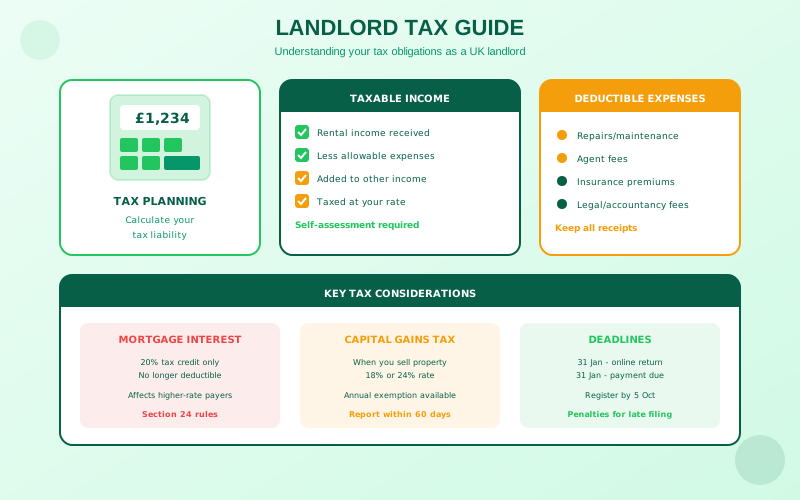
Landlords in the UK face several types of tax:
Next step for landlords
Problem clear? Create the right notice before you serve
If the issue now points toward possession, move from guidance into a notice route that keeps grounds, dates, service, and evidence together.
- Choose the right route before you serve anything.
- Answer plain-English questions. We handle the legal logic.
- Preview the paperwork before you pay.

- Income Tax: On rental profits each year
- Capital Gains Tax: When you sell a property
- Stamp Duty: When you buy a property (higher rates for BTL)
- Inheritance Tax: On property passed to heirs
Self Assessment Required
If you earn more than £1,000 per year from property rental, you must register for Self Assessment and file a tax return annually. The deadline is 31 January following the tax year.
Income Tax on Rent
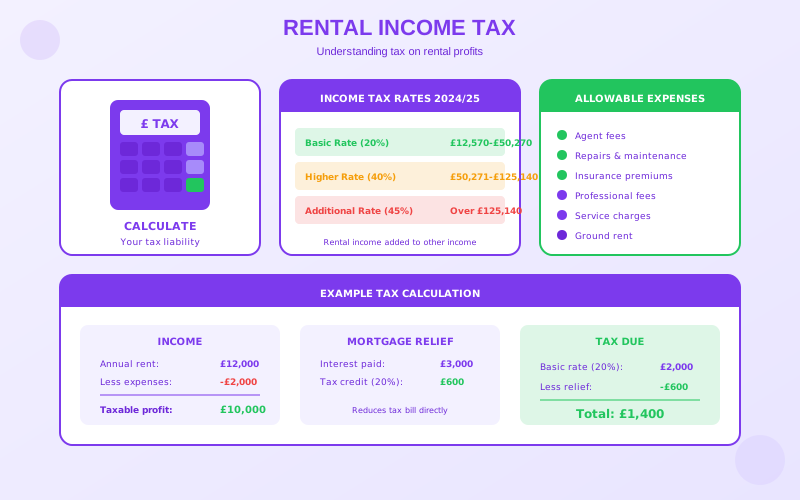
You pay income tax on your rental profit, not your total rent received. Rental profit = Total rent - Allowable expenses.
Tax Rates (2025/26)
| Tax Band | Income Range | Rate |
|---|---|---|
| Personal Allowance | Up to £12,570 | 0% |
| Basic Rate | £12,571 - £50,270 | 20% |
| Higher Rate | £50,271 - £125,140 | 40% |
| Additional Rate | Over £125,140 | 45% |
Note: Rental income is added to your other income (employment, etc.) to determine your tax band.
Property Allowance
If your rental income is under £1,000 per year, you don't need to report it. Between £1,000 and £2,500, you can use the £1,000 property allowance instead of claiming expenses.
Allowable Expenses
You can deduct certain expenses to reduce your taxable profit:
Fully Deductible Expenses
- Letting agent fees and management costs
- Legal fees for letting (not buying)
- Accountant fees for rental accounts
- Buildings and contents insurance
- Ground rent and service charges
- Council tax (when property empty)
- Water rates (if you pay them)
- Gas and electricity (if included in rent)
- Advertising for tenants
- Stationery and phone costs
Repair and Maintenance
Repairs are deductible, but improvements are not:
- Repairs (deductible): Fixing boiler, replacing broken window, repainting
- Improvements (not deductible): Extension, new kitchen upgrade, adding conservatory
- Replacements: Like-for-like replacement of domestic items (furniture, appliances)
Keep All Receipts
HMRC can investigate your records for up to 6 years. Keep all receipts, invoices, and bank statements to support your expense claims.
Mortgage Interest
Mortgage interest relief for landlords has changed significantly:
Current Rules
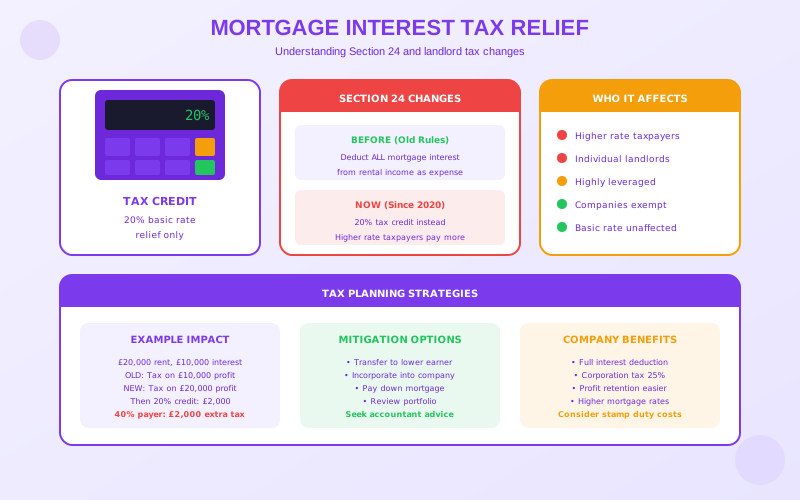
Since April 2020, landlords cannot deduct mortgage interest from rental income. Instead, you receive a tax credit:
- Tax credit = 20% of mortgage interest paid
- Applies to all individual landlords
- Companies can still deduct interest fully
Impact on Higher Rate Taxpayers
This particularly affects higher rate taxpayers:
- Previously: 40% relief on interest
- Now: Only 20% tax credit
- Effective tax increase for many landlords
Capital Gains Tax
When you sell a rental property, you may owe Capital Gains Tax (CGT):
CGT Rates for Property
- Basic rate taxpayers: 18%
- Higher rate taxpayers: 24%
- Annual exempt amount: £3,000 (2025/26)
Calculating the Gain
Your taxable gain is calculated as:
- Sale price
- Minus: Original purchase price
- Minus: Purchase costs (stamp duty, legal fees)
- Minus: Sale costs (agent fees, legal fees)
- Minus: Capital improvements (extensions, etc.)
- Equals: Taxable gain
Reporting Requirements
- Report and pay within 60 days of completion
- Use HMRC's online service
- Include in Self Assessment too
Private Residence Relief
If you lived in the property as your main home at any time, you may qualify for partial Private Residence Relief, reducing your CGT bill. The last 9 months of ownership are always exempt.
Tax Resources for Landlords
Landlord Heaven provides tax calculators, expense tracking templates, and guidance on tax-efficient property ownership.
View Tax Resources ?Tax FAQ
Should I use a limited company?
Companies pay corporation tax (25%) instead of income tax and can deduct mortgage interest fully. However, there are costs and complexity. It depends on your circumstances - seek professional advice.
Can I offset losses against other income?
No, rental losses can only be offset against future rental profits, not other income like employment. Losses can be carried forward indefinitely.
Do I need an accountant?
Not legally required, but recommended for most landlords. Accountants often save more in tax than their fees and ensure compliance. At minimum, get advice when starting out.
What about joint ownership with spouse?
Rental income is usually split 50/50 between spouses unless you make a declaration of unequal beneficial interests. This can help if one spouse is in a lower tax band.
What to do next
Core eviction guides landlords usually need next
These are the core possession guides landlords usually need after notice or arrears problems start.
FAQs for landlords

Have a landlord question?
Ask Heaven is our free AI assistant that can help with eviction advice, tenancy questions, and more.