Your tenant ignoring your eviction notice is frustrating — but you must follow the legal process. Here's exactly what to do next.
Illegal eviction is a criminal offence. You cannot change locks, remove belongings, cut off utilities, or harass the tenant into leaving. Even if they owe rent or have damaged the property, you must use the court process. Penalties include fines up to £5,000 and potential imprisonment.
Follow this step-by-step process to legally regain possession of your property.
Before going to court, ensure your eviction notice was correctly served. Common issues include:
Once the notice period has expired and the tenant hasn't left, apply to the county court:
Form N5B — no hearing needed in most cases
Court fee: £355
Form N5 — requires court hearing
Court fee: £355
The court will review your application and issue a possession order if valid:
The order will give the tenant 14-28 days to leave (or immediately for certain grounds).
If the tenant still won't leave after the court order date, apply for a warrant of possession:
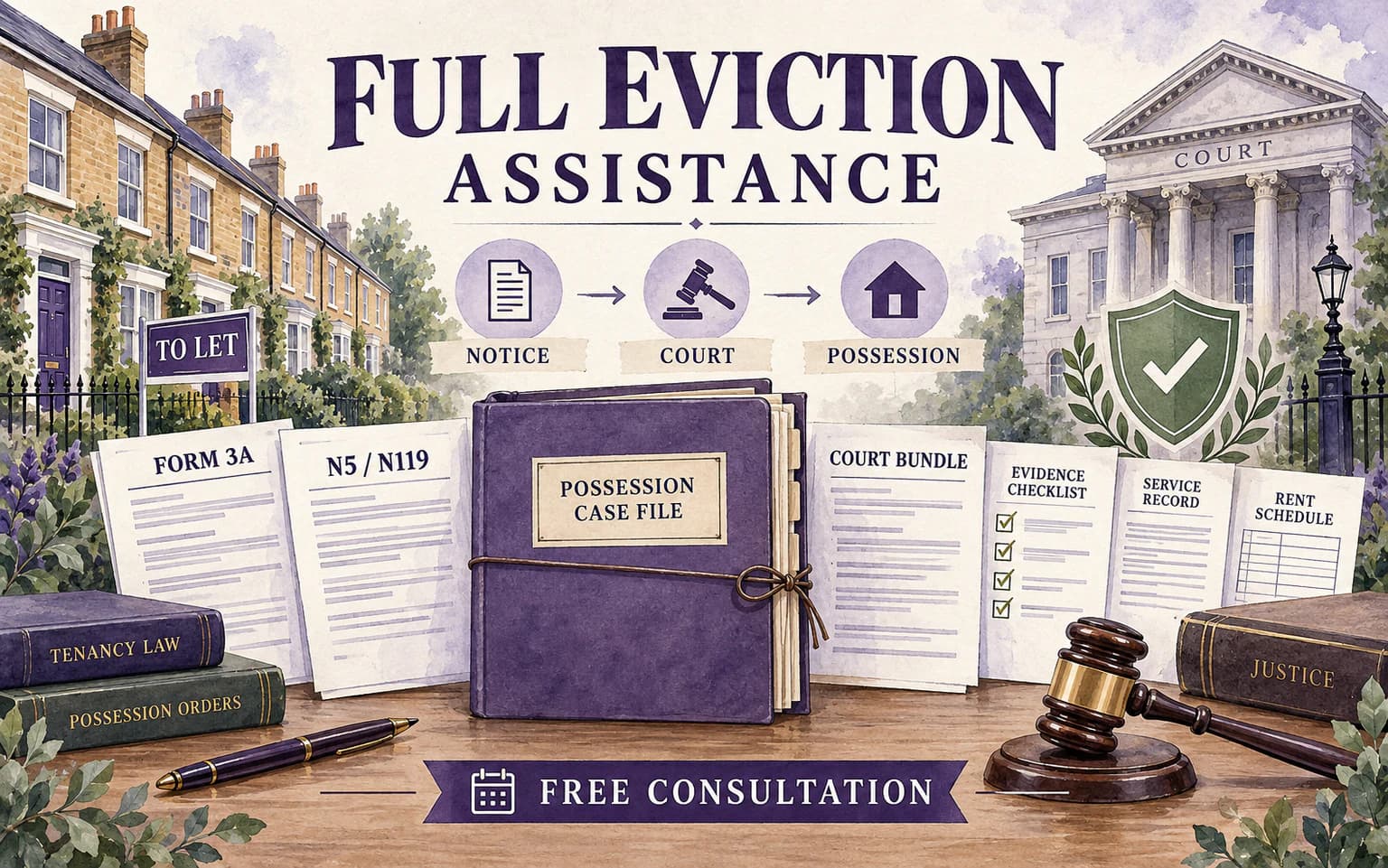
Our Complete Eviction Pack includes notices, possession claim forms (N5, N5B), witness statements, and step-by-step instructions.
From serving notice to bailiff enforcement — what to expect at each stage.
Serve Section 21 (2 months) or Section 8 (2 weeks - 2 months depending on ground)
If tenant hasn't left, you can now apply to court for possession
Court reviews claim and issues possession order with leave date
If tenant still won't leave, bailiffs physically remove them
Total time: Typically 4-6 months from serving notice to bailiff enforcement. Section 21 accelerated possession is usually faster than Section 8 standard possession.
You must apply to court for a possession order. You cannot force the tenant to leave yourself - this would be illegal eviction. After the notice period expires, apply for accelerated possession using form N5B (Section 21) or standard possession using N5 (Section 8).
The process typically takes 4-6 months in total: 2 months notice period, 6-10 weeks for court hearing, and 4-6 weeks for bailiff appointment if needed. Accelerated possession (Section 21) is usually faster as it doesn't require a hearing.
No. Changing locks, removing belongings, or cutting off utilities is illegal eviction and can result in criminal prosecution and civil liability. You must go through the court process and use certified bailiffs.
A possession order is a court order that legally requires the tenant to leave by a specific date. If they still refuse, you can then apply for a warrant of possession to have bailiffs enforce the order.
Court fees are approximately £355 for possession claims, plus £130 for a bailiff warrant if needed. Using our Complete Pack (£199.99) can save hundreds compared to solicitor fees (typically £1,000-2,000).
Tenants can apply to suspend or delay the possession order in some circumstances, particularly for Section 8 discretionary grounds. For Section 21, defences are limited to procedural issues with the notice or deposit protection.
Keep proof of service - recorded delivery receipt, witness statement, or photos of hand delivery. Courts require evidence that the notice was properly served. Our documents include a certificate of service template.
If you have grounds (rent arrears, breach), Section 8 can be faster with only 2 weeks notice for some grounds. Section 21 is simpler but requires 2 months notice. Many landlords serve both together.
Our Notice Only Pack includes both Section 21 and Section 8 notices, designed for court acceptance.
Court-ready notices and forms. AI compliance checking. Step-by-step serving instructions.
Section 21 & 8 Included • AI Compliance Check • Designed for Court Acceptance
For general information only. This page provides educational content about UK landlord law and is not legal advice. Laws vary by jurisdiction and change over time. For advice specific to your situation, consult a qualified solicitor.