
Rated4.8/5 | 3008 reviews
Money Claim Online (MCOL) for Landlords: Rent Arrears Guide 2026
Complete landlord guide to using Money Claim Online (MCOL) for rent arrears. Learn the MCOL claim process, fees, timescales, and enforcement options.
Use this guide when
You need a practical landlord answer, not just a definition
Use this page when you need to understand money claim online in landlord terms, check the evidence or compliance points that matter, and decide whether the next step is a guide, free tool, notice pack, court pack, tenancy agreement, rent increase pack, or money claim route.
Ready to turn the arrears into a clear claim file?
When the debt is quantified, prepare the arrears record, pre-action letter and county court claim documents without starting the legal process from scratch.
Fixed price £28.99. Preview available before payment.
What this helps you do
- Turn arrears into clear claim paperwork
- Prepare particulars, interest, and evidence prompts
- Keep the claim focused on unpaid rent and recoverable sums
Your tenant owes you money and you need to know the fastest lawful way to chase it. This guide explains the route, the paperwork, and the mistakes that can slow you down.
Key Information
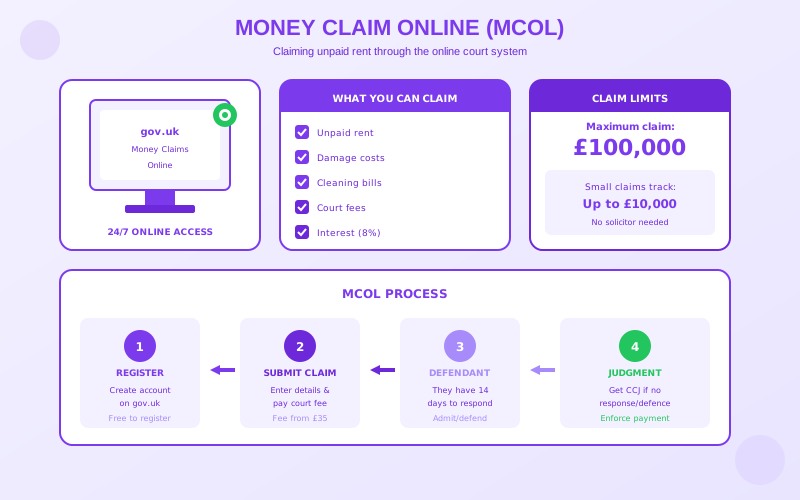
money claim for unpaid rent is the online system for making money claims in England and Wales. It's designed for claims between £25 and £100,000 against defendants with UK addresses. The process is entirely online and significantly faster than paper claims.
What Is Money Claim Online?
Money Claim Online is a government service that allows you to make money claims against individuals or businesses through the County Court. For landlords, it's typically used to recover:
Recommended next step
Ready to turn the arrears into a clear claim file?
When the debt is quantified, prepare the arrears record, pre-action letter and county court claim documents without starting the legal process from scratch.
Fixed price £28.99. Preview available before payment.
- Organise the debt and payment history clearly.
- Prepare the claim narrative and supporting documents.
- Preview the available output before payment.

- Rent arrears: Outstanding rent owed by current or former tenants
- Damage to property: Costs beyond the security deposit
- Unpaid bills: Utility or council tax debts the tenant should have paid
- Cleaning costs: Professional cleaning beyond normal wear and tear
- Other financial losses: Related to the tenancy
Benefits of MCOL
- 24/7 availability: Submit claims any time, not just court hours
- Lower fees: Online fees are lower than paper claims
- Faster processing: Claims are processed more quickly
- Track progress: Monitor your claim status online
- No court visits: Many claims are resolved without attending court
Limitations
- Maximum claim value: £100,000 (plus interest and costs)
- Defendant must have a UK address
- You must have an email address
- Cannot be used for certain types of claims (e.g., possession)
When to Use MCOL
MCOL Is Appropriate When:
- The tenant owes you a fixed sum of money
- You have evidence of what they owe (rent records, invoices, photos)
- You've already tried to recover the money informally
- You have the tenant's current address (or can trace them)
- The debt is less than 6 years old (limitation period)
MCOL Is NOT Suitable When:
- You want to evict the tenant (use possession proceedings instead)
- You don't know how much they owe (amount must be specific)
- The tenant has left the country with no UK address
- The debt is over 6 years old
- The claim exceeds £100,000
Money Claim vs Possession
If you want to evict a tenant AND claim rent arrears, you typically pursue possession first (using Section 8 notice guide or Section 21). You can include money claims within possession proceedings. MCOL is most useful when the tenant has already left but still owes money.
Before You Make a Claim
Pre-Action Protocol
Before making a court claim, you should follow the Pre-Action Protocol for Debt Claims. This requires you to:
Required Steps:
- 1Send a Letter Before Action (LBA): A formal letter giving the tenant 30 days to pay or propose a payment plan
- 2Provide debt information: Clear breakdown of what is owed and how it was calculated
- 3Include reply form: Allow them to respond with their position
- 4Consider their response: If they propose reasonable payments, consider accepting
The court expects you to have followed this protocol. If you haven't, costs penalties may apply even if you win.
Gather Your Evidence
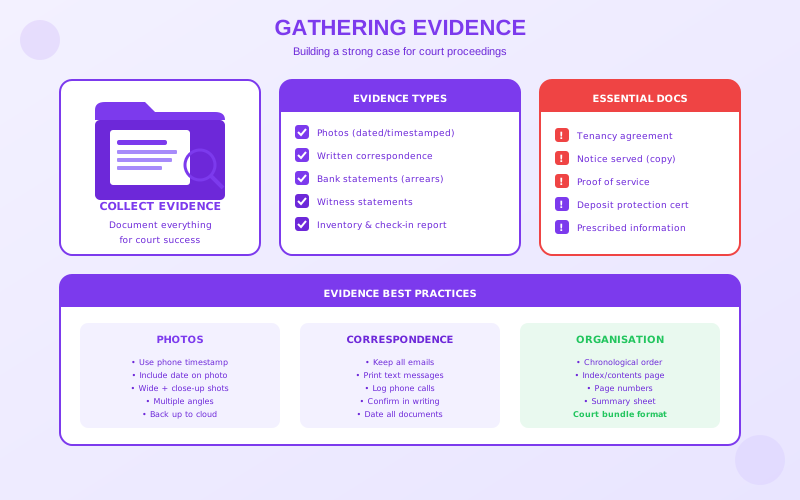
Before starting your claim, collect:
- Tenancy agreement showing rent amount and payment terms
- Rent payment records (bank statements, rent book)
- Correspondence about arrears (letters, emails, texts)
- Your Letter Before Action and proof of sending
- Any response from the tenant
- For damage claims: photos, quotes, invoices, inventory/check-out reports
- The tenant's current address for service
The MCOL Process
Step 1: Register on MCOL
Go to the Money Claim Online website (www.moneyclaim.gov.uk) and create an account. You'll need:
- Email address
- Your details (name, address, contact information)
- Payment method for court fees
Step 2: Enter Claim Details
You'll complete an online form covering:
- Claimant details: Your information
- Defendant details: The tenant's name and address
- Claim amount: How much they owe
- Interest: Whether you're claiming interest (and at what rate)
- Particulars of claim: Brief explanation of why money is owed
Step 3: Write Your Particulars of Claim
The particulars of claim explain what the debt is for. Keep it clear and factual:
"The Claimant is the landlord of [property address]. The Defendant was the tenant under an Assured Shorthold Tenancy dated [date]. The Defendant failed to pay rent due under the tenancy. The total rent arrears from [date] to [date] amount to [£amount]. Despite demand, the Defendant has not paid this sum. The Claimant claims [£amount] plus interest and costs."
Step 4: Pay the Court Fee
Fees are paid online by debit or credit card. The claim is issued once payment is processed.
Step 5: Claim Is Served
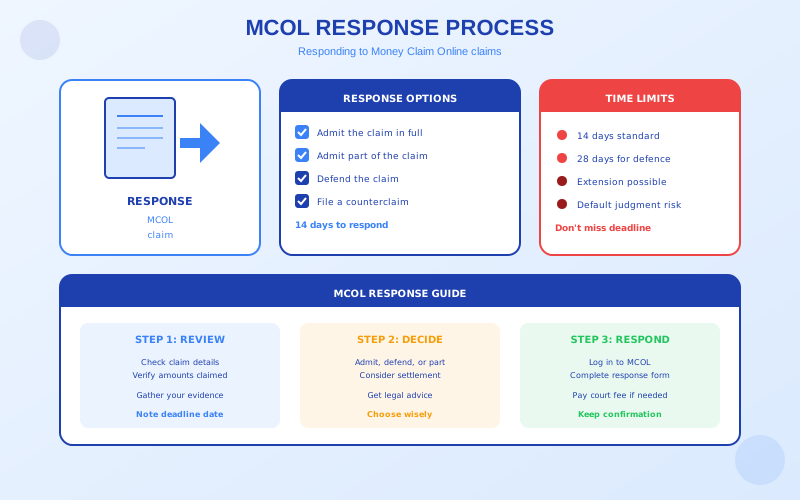
The court sends the claim to the defendant by post. They have 14 days to respond (extended to 28 days if they acknowledge service but need more time to prepare their defence).
Court Fees
MCOL fees (as of 2026) are based on the claim value:
| Claim Value | Online Fee (MCOL) | Paper Fee |
|---|---|---|
| Up to £300 | £35 | £50 |
| £300.01 - £500 | £50 | £70 |
| £500.01 - £1,000 | £70 | £80 |
| £1,000.01 - £1,500 | £80 | £115 |
| £1,500.01 - £3,000 | £115 | £205 |
| £3,000.01 - £5,000 | £205 | £455 |
| £5,000.01 - £10,000 | £455 | 5% of claim value |
| £10,000.01 - £100,000 | 5% of claim value | 5% of claim value |
You can add the court fee to your claim, so the defendant pays it if you win.
Defendant Responses
The defendant (tenant) can respond in several ways:
1. Pay the Claim
If they pay the full amount (claim + fee + any interest), the case is closed. This is the best outcome.
2. Admit the Claim
They accept they owe the money but may request time to pay. You can:
- Accept their payment proposal
- Reject it and ask the court to decide payment terms
3. Dispute the Claim (Defence)
They deny owing the money (or the amount). The case will proceed to a hearing unless you can settle.
4. No Response
If they don't respond within the time limit, you can request "judgment in default" - the court automatically rules in your favour.
Getting Judgment
Judgment by Default
If the defendant doesn't respond, you can request judgment online. The court will issue a County Court Judgment (CCJ) ordering them to pay. This is recorded on their credit file for 6 years (unless paid within 30 days).
Judgment by Admission
If they admit the debt, you can request judgment for the admitted amount. You'll need to decide whether to accept their proposed payment terms.
Judgment After Hearing
If they defend the claim, a hearing will be listed. For small claims (under £10,000), this is usually informal and held in private. The judge will review evidence and decide who wins.
Small Claims Track
Most landlord money claims under £10,000 go to the "small claims track." This means simpler procedures, limited costs recovery, and hearings are designed for people without lawyers. You won't recover legal fees even if you win.
Enforcing Your Judgment
Getting a CCJ doesn't automatically mean you'll be paid. If the defendant doesn't pay voluntarily, you'll need to enforce the judgment. Options include:
Warrant of Control (Bailiffs)
- Bailiffs seize and sell goods to pay the debt
- Fee: £77 (debts up to £5,000)
- Works if the defendant has valuable assets
Attachment of Earnings
- Money deducted directly from their wages
- Fee: £130
- Only works if they're employed
Third Party Debt Order
- Freezes money in their bank account
- Fee: £130
- Requires knowing their bank details
Charging Order
- Secures debt against their property
- Fee: £130
- Only works if they own property
Order to Obtain Information
If you don't know the defendant's financial position, you can apply for an order requiring them to attend court and disclose their assets, income, and outgoings. Fee: £59.
MCOL FAQ
How long does MCOL take?
If the defendant doesn't respond, you can get judgment in default within 3-4 weeks. If they defend, a hearing may take 2-4 months. Enforcement can add further time. The entire process from claim to payment can take anywhere from 1 month to over a year.
Can I claim interest on rent arrears?
Yes. Check your tenancy agreement - it may specify an interest rate for late payment. If not, you can claim statutory interest at 8% per year. Interest runs from when each payment was due.
What if I can't find the tenant's address?
You need a valid address to serve the claim. Try: their guarantor, previous employer, forwarding address from Royal Mail, tracing agents, or searching the electoral roll. Without an address, you cannot proceed.
Is it worth claiming small amounts?
Consider the economics. A £500 claim costs £50 in fees. If the defendant has no money or assets, even a CCJ may not result in payment. For very small debts, weigh the cost, time, and likelihood of recovery.
What happens if they defend the claim?
The case is transferred to the defendant's local court (usually). A hearing will be listed where you both present evidence. The judge decides who wins. For small claims, this is usually informal and lasts 30-60 minutes.
Can I use MCOL for deposit disputes?
If the deposit is protected, you must use the deposit scheme's dispute resolution service first. MCOL is for additional amounts beyond the deposit, or if the deposit wasn't protected and you're claiming damages.
Need Help With Your Money Claim?
Landlord Heaven provides comprehensive tools to help you recover money owed by tenants. From template letters before action to guidance on writing particulars of claim.
View Money Claim Pack ?Prefer us to prepare it with you?
Free consultation before any assisted eviction preparation is agreed
We discuss the facts first. If we can help, we confirm the scope and send a secure Stripe payment link afterwards.
Unsure about grounds or dates?
Landlord Section 8 notice assistance
Free consultation · £149.00 only if we confirm we can help
Before you serve, we help organise your Form 3A, tenant details, notice timing, service plan and evidence prompts around the facts you approve.
Book free consultation
Want the full case, including court forms?
Landlord eviction assistance service
Free consultation · £399.00 only if we confirm we can help
Our £399 full-case service can cover your Section 8 notice, service record, N5, N119 particulars of claim and supporting bundle. If you have already served notice, we focus on the court-stage pack.
Book free consultationWhat to do next
Core eviction guides landlords usually need next
These are the core possession guides landlords usually need after notice or arrears problems start.
FAQs for landlords
Official Sources & References
This guide references official legislation and government resources. Always verify current requirements with the relevant authorities.
- Make a court claim for moneyGovernmenthttps://www.gov.uk/make-court-claim-for-money
- Pre-Action Protocol for Debt ClaimsOfficialhttps://www.justice.gov.uk/courts/procedure-rules/civil/protocol/prot_debt
- County Courts Act 1984, section 69Legislationhttps://www.legislation.gov.uk/ukpga/1984/28/section/69

Have a landlord question?
Ask Heaven is our free AI assistant that can help with eviction advice, tenancy questions, and more.