
Rated4.8/5 | 3008 reviews
Tenant Won't Pay Rent? Landlord Action Plan 2026
Step-by-step guide for landlords when tenants refuse to pay rent or other debts. From first contact to court action and enforcement. Get the UK steps and cho...
Use this guide when
You need a practical landlord answer, not just a definition
Use this page when you need to understand tenant wont pay in landlord terms, check the evidence or compliance points that matter, and decide whether the next step is a guide, free tool, notice pack, court pack, tenancy agreement, rent increase pack, or money claim route.
Your tenant owes you money and you need to know the fastest lawful way to chase it. This guide explains the route, the paperwork, and the mistakes that can slow you down.
Quick Overview
- 1. Assess what's owed and your evidence
- 2. Communicate and try to resolve informally
- 3. Send formal demand for payment
- 4. Send Letter Before Action (wait 30 days)
- 5. Issue court claim (money claim for unpaid rent or N1)
- 6. Enforce CCJ if they still don't pay
Step 1: Assess the Situation
Before taking action, get clarity on:
Unpaid rent
Tenant still owes money? Prepare the claim file
If the arrears keep growing, turn the problem into a clearer debt record and claim narrative before the evidence gets harder to untangle.
- Set out what is owed clearly before the numbers get harder to untangle.
- Build the claim in plain English.
- Get the court paperwork ready for the next step.

- What's owed? Calculate exact amounts with dates
- Is the tenancy ongoing or ended? This affects your options
- What evidence do you have? Tenancy agreement, bank statements, photos
- Is there a guarantor? You can claim from them too
- What's their financial situation? Are they worth pursuing?
Reality check: If the tenant has no job, no assets, and no guarantor, even a CCJ won't produce immediate payment. Consider whether it's worth the court fees—though a CCJ does last 6 years and damages their credit.
Step 2: Communicate
Start with direct contact. Many payment issues result from temporary problems or miscommunication:
- Call or text to discuss the arrears
- Ask what's preventing payment
- Propose a payment plan if appropriate
- Keep records of all conversations
If they're responsive and willing to pay, you might resolve it without legal action. If they ignore you or refuse to engage, move to the next step.
Step 3: Formal Demand
Send a clear written demand for payment:
- State exactly what's owed and why
- Give a deadline (7-14 days)
- State consequences of non-payment
- Send by email and post
This isn't the formal Letter Before Action yet—it's a last chance before you start the legal process.
Step 4: Letter Before Action
If informal approaches fail, send a Pre-Action Protocol compliant Letter Before Action. This is a legal requirement before court action.
Your LBA must include:
- Full details of the debt
- How it arose
- Interest claimed
- 30 days to respond
- Warning of court action
- Information about debt advice
Read our complete LBA guide for templates and detailed instructions.
Step 5: Issue Court Claim
If no payment or acceptable offer after 30 days, issue your court claim:
Money Claim Online (MCOL)
- • Faster processing
- • Slightly lower fees
- • Online tracking
- • Best for straightforward claims
Paper Form N1
- • No character limits
- • Attach documents
- • Complex claims
- • Prefer paper processes
If the tenant doesn't respond within 14-33 days, request default judgment. If they defend, prepare for a hearing.
Step 6: Enforcement
If you get a CCJ but they still don't pay, use enforcement:
- Warrant of Control - Bailiffs seize goods (£77)
- Attachment of Earnings - Deductions from wages (£110)
- Third Party Debt Order - Freeze bank account (£110)
- Charging Order - Secure against property (£119)
- High Court Enforcement - For debts over £600
See our CCJ enforcement guide for detailed options.
Recover Your evict tenant not paying rent guide
Our Money Claim Pack gives you everything needed to recover tenant debt: Letter Before Action, Particulars of Claim, and step-by-step guidance.
Start Your Claim - £28.99FAQs for landlords
How long does the whole process take?
Minimum 6-10 weeks if undefended (including 30-day LBA period). If defended, add 3-6 months for a hearing. Enforcement adds more time.
What if the tenant has left the country?
You can still get a CCJ, but enforcement abroad is difficult and expensive. Consider whether it's worth pursuing.
Can I claim for my time spent on this?
Generally no. You can claim the debt, interest, and court fees—but not compensation for your time unless there's a contractual basis.
Should I use a debt collection agency?
Some landlords try this first. Agencies typically take 10-25% of recovered amounts. They can be effective for persuading payment but have no special legal powers.
Prefer us to prepare it with you?
Free consultation before any assisted eviction preparation is agreed
We discuss the facts first. If we can help, we confirm the scope and send a secure Stripe payment link afterwards.
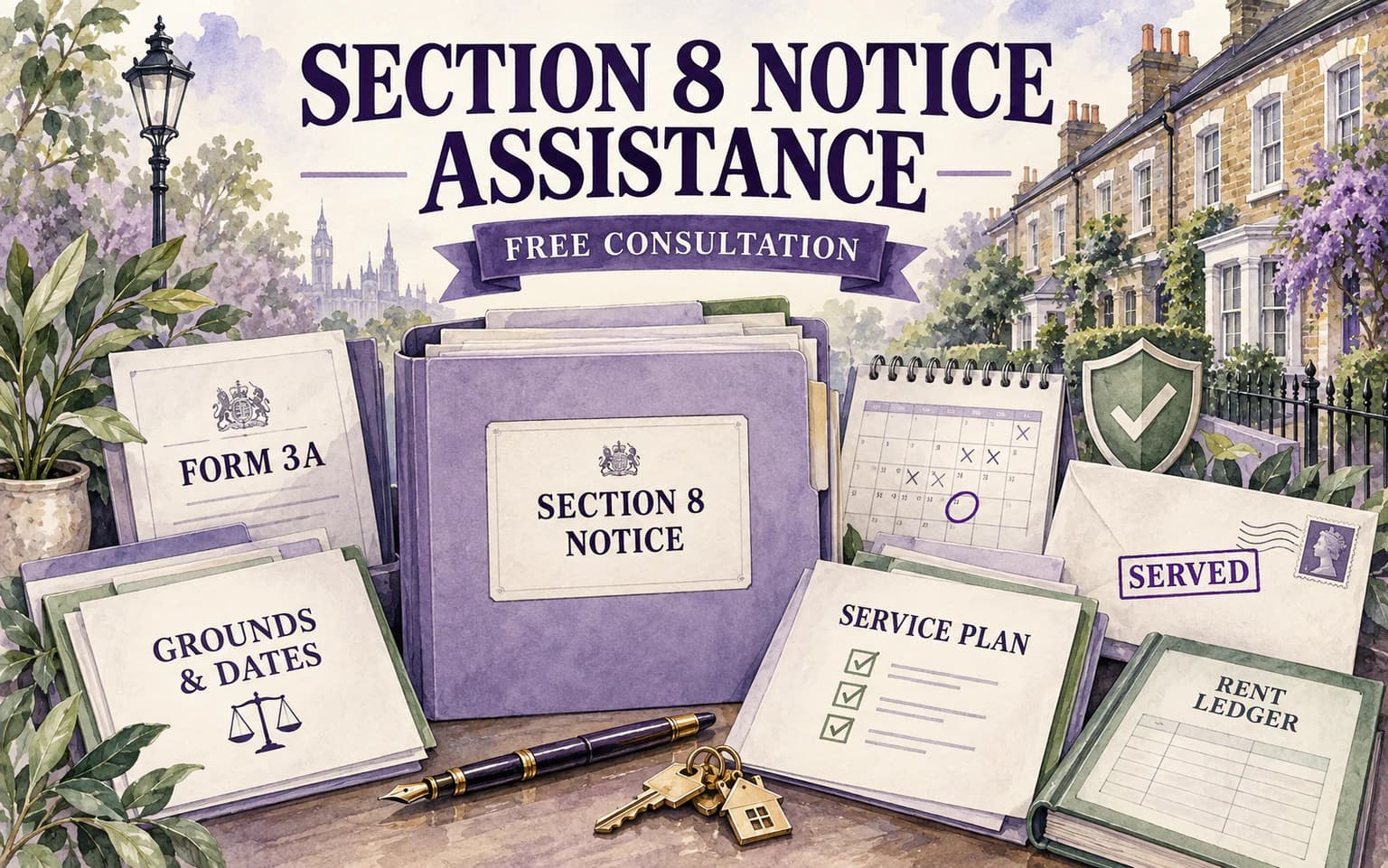
Unsure about grounds or dates?
Landlord Section 8 notice assistance
Free consultation · £149.00 only if we confirm we can help
Before you serve, we help organise your Form 3A, tenant details, notice timing, service plan and evidence prompts around the facts you approve.
Book free consultation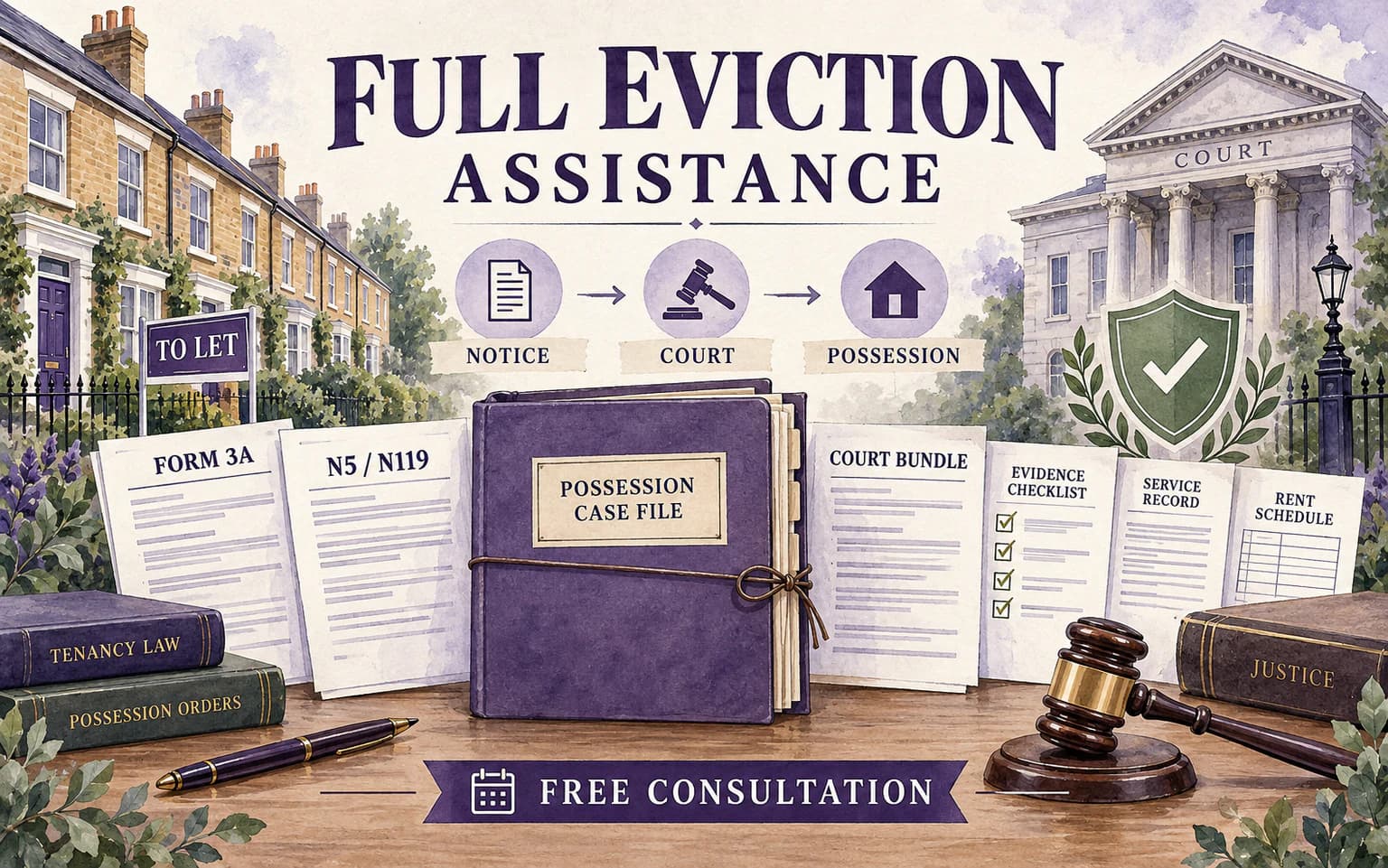
Want the full case, including court forms?
Landlord eviction assistance service
Free consultation · £399.00 only if we confirm we can help
Our £399 full-case service can cover your Section 8 notice, service record, N5, N119 particulars of claim and supporting bundle. If you have already served notice, we focus on the court-stage pack.
Book free consultationWhat to do next
Core eviction guides landlords usually need next
These are the core possession guides landlords usually need after notice or arrears problems start.
FAQs for landlords

Have a landlord question?
Ask Heaven is our free AI assistant that can help with eviction advice, tenancy questions, and more.