
Rated4.8/5 | 3008 reviews
What is a County Court Judgment (CCJ)? Guide for Landlords 2026
Understanding CCJs for landlords: what they are, how to get one against a tenant, and how to enforce payment. Complete UK guide. Get the UK steps and choose...
Use this guide when
You need a practical landlord answer, not just a definition
Use this page when you need to understand county court judgment landlord in landlord terms, check the evidence or compliance points that matter, and decide whether the next step is a guide, free tool, notice pack, court pack, tenancy agreement, rent increase pack, or money claim route.
Your tenant owes you money and you need to know the fastest lawful way to chase it. This guide explains the route, the paperwork, and the mistakes that can slow you down.
What is a CCJ?
A County Court Judgment is a formal court decision that states:
Unpaid rent
Tenant still owes money? Prepare the claim file
If the arrears keep growing, turn the problem into a clearer debt record and claim narrative before the evidence gets harder to untangle.
- Set out what is owed clearly before the numbers get harder to untangle.
- Build the claim in plain English.
- Get the court paperwork ready for the next step.

- The defendant (your tenant) owes you a specific amount of money
- When and how they must pay (immediately or in instalments)
- The legal basis for the debt
Once you have a CCJ, the debt is legally established. The tenant can no longer simply deny they owe you money. However, having a judgment and actually receiving payment are two different things.
Important: A CCJ stays on the debtor's credit file for 6 years, affecting their ability to get mortgages, credit cards, and sometimes jobs. This alone motivates many debtors to pay.
How to Get a CCJ Against a Tenant
The process to obtain a CCJ involves several steps:
- Send a Letter Before Action - Give the tenant 30 days to pay or respond
- Issue your claim - Use money claim for unpaid rent Online (MCOL) or paper form N1
- Wait for response - Tenant has 14-33 days to respond
- Obtain judgment - Either by default (no response) or at hearing
The easiest route is when the tenant doesn't respond to your claim at all—you can then request "default judgment" without a hearing.
Default Judgment Explained
If the tenant doesn't respond to your court claim within the time limit (usually 14 days, extendable to 33), you can request default judgment. This means:
- No step-by-step UK eviction process needed
- Judgment entered automatically
- You get the amount claimed plus court fees
- The CCJ appears on their credit file
Most uncontested landlord claims end this way. The tenant either can't be bothered to respond or knows they have no defence.
Enforcing Your CCJ
Having a CCJ doesn't guarantee payment. If the tenant still won't pay, you have several enforcement options:
Warrant of Control
Bailiffs seize and sell the debtor's goods. Fee: £77
Attachment of Earnings
Money deducted from wages. Fee: £110
Third Party Debt Order
Freeze and seize bank accounts. Fee: £110
Charging Order
Secure debt against their property. Fee: £119
For debts over £600, you can also transfer to High Court and use High Court Enforcement Officers (HCEOs), who are often more effective than county court bailiffs.
Learn more in our CCJ enforcement guide.
The CCJ Register
CCJs are recorded on the Register of Judgments, Orders and Fines for 6 years. This register is checked by:
- Credit reference agencies (affecting credit scores)
- Mortgage lenders
- Landlords doing tenant reference checks
- Some employers
If the tenant pays in full within 30 days of the judgment, they can apply to have it removed from the register. After 30 days, it stays for the full 6 years (though it can be marked as "satisfied" when paid).
Start Your Money Claim
Get professionally drafted court documents to claim what your tenant owes you.
Start Your Claim - £28.99FAQs for landlords
How long does it take to get a CCJ?
If the tenant doesn't defend, you can get default judgment in about 4-6 weeks from issuing your claim. If they defend, it could take 3-6 months to reach a hearing.
What if the tenant has no money?
You still get the CCJ, which lasts 6 years. You can attempt enforcement when their circumstances change. The CCJ also damages their credit, which may motivate payment.
Can the tenant appeal a CCJ?
They can apply to "set aside" a default judgment if they have a good reason for not responding and a real defence to your claim. They can't set it aside just because they don't want to pay.
Prefer us to prepare it with you?
Free consultation before any assisted eviction preparation is agreed
We discuss the facts first. If we can help, we confirm the scope and send a secure Stripe payment link afterwards.
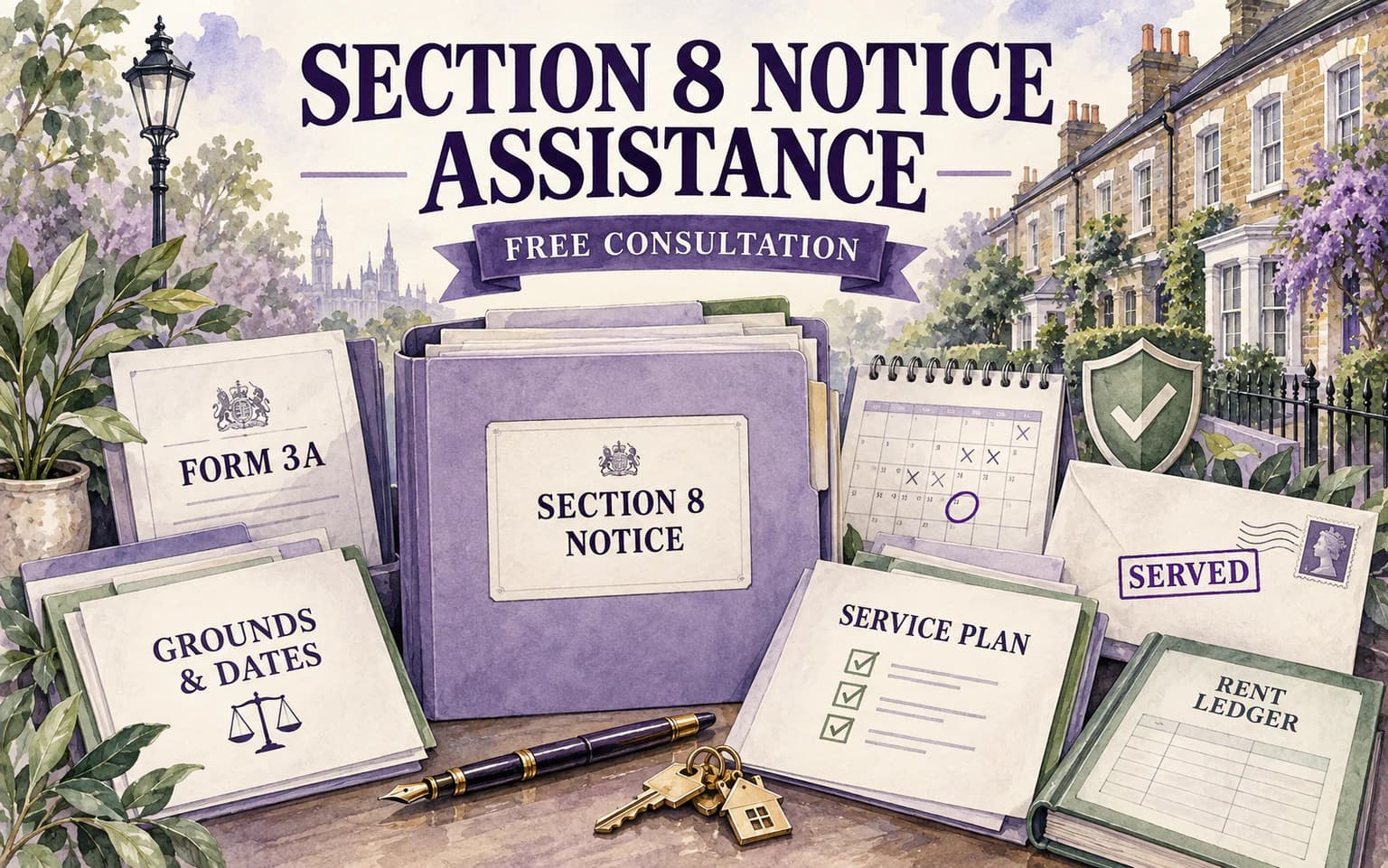
Unsure about grounds or dates?
Landlord Section 8 notice assistance
Free consultation · £149.00 only if we confirm we can help
Before you serve, we help organise your Form 3A, tenant details, notice timing, service plan and evidence prompts around the facts you approve.
Book free consultation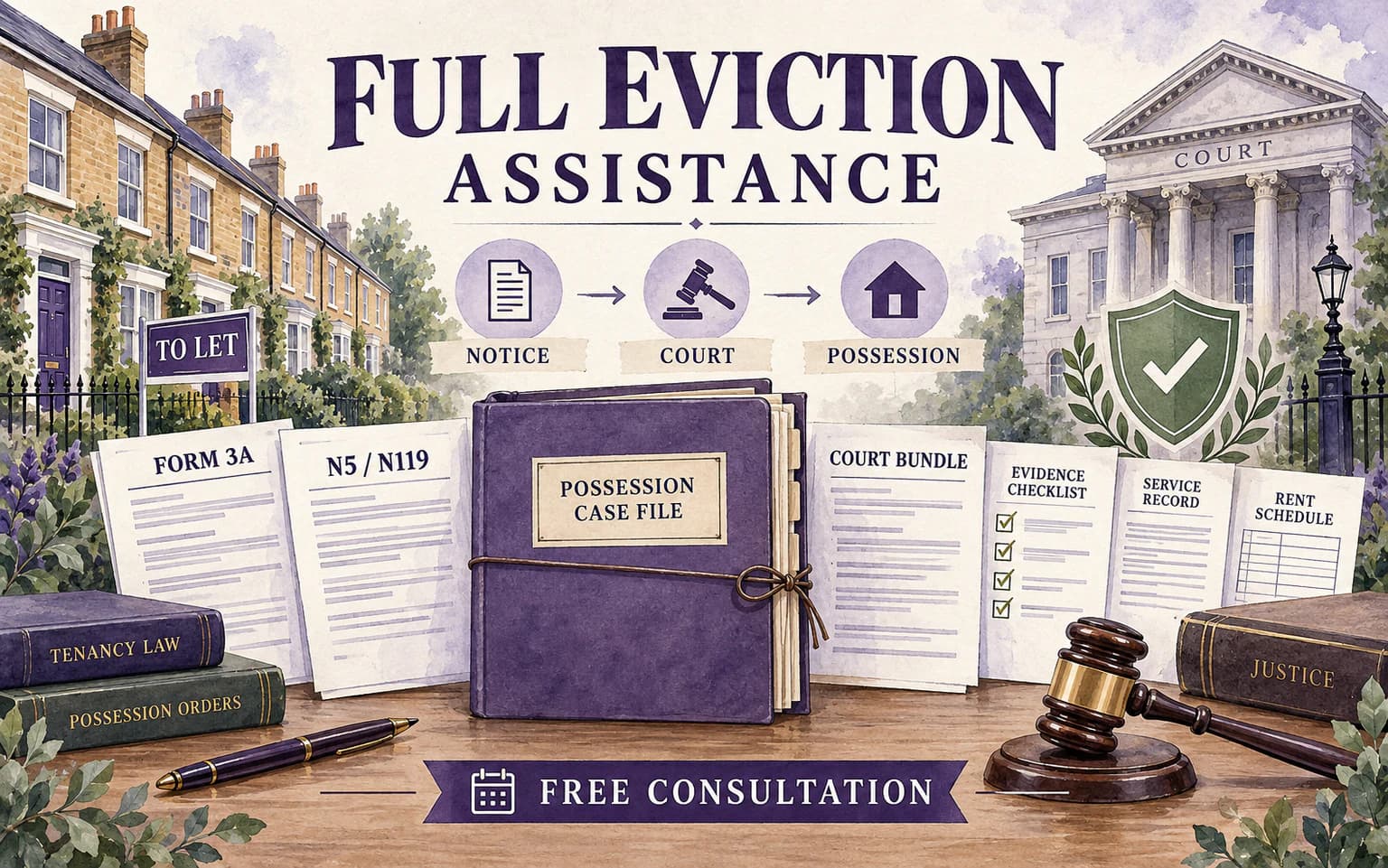
Want the full case, including court forms?
Landlord eviction assistance service
Free consultation · £399.00 only if we confirm we can help
Our £399 full-case service can cover your Section 8 notice, service record, N5, N119 particulars of claim and supporting bundle. If you have already served notice, we focus on the court-stage pack.
Book free consultationWhat to do next
Core eviction guides landlords usually need next
These are the core possession guides landlords usually need after notice or arrears problems start.
FAQs for landlords

Have a landlord question?
Ask Heaven is our free AI assistant that can help with eviction advice, tenancy questions, and more.