
Rated4.8/5 | 3008 reviews
UK Property Portfolio Growth - Complete Landlord Guide 2026
Comprehensive guide to growing a property portfolio in the UK. Learn about financing strategies, portfolio structuring, scaling operations, and building long...
Use this guide when
You need a practical landlord answer, not just a definition
Use this page when you need to understand property portfolio growth UK in landlord terms, check the evidence or compliance points that matter, and decide whether the next step is a guide, free tool, notice pack, court pack, tenancy agreement, rent increase pack, or money claim route.
This guide explains property portfolio growth uk in plain English, including the rules, common mistakes and practical next steps.
Portfolio Growth Overview
Growing a property portfolio is not simply about buying more properties. Success requires understanding financing constraints, structuring for tax efficiency, building systems for scale, and managing increasing complexity.
Next step for landlords
Problem clear? Create the right notice before you serve
If the issue now points toward possession, move from guidance into a notice route that keeps grounds, dates, service, and evidence together.
- Choose the right route before you serve anything.
- Answer plain-English questions. We handle the legal logic.
- Preview the paperwork before you pay.

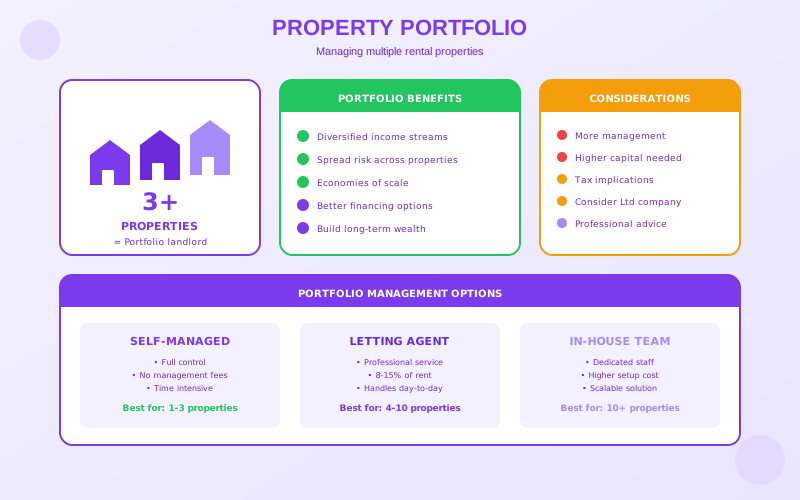
Growth Stages
| Stage | Properties | Key Focus |
|---|---|---|
| Foundation | 1-3 | Learning, systems, cash flow |
| Growth | 4-10 | Financing, efficiency, scaling |
| Established | 11-25 | Professional management, diversification |
| Institutional | 25+ | Team building, asset management |
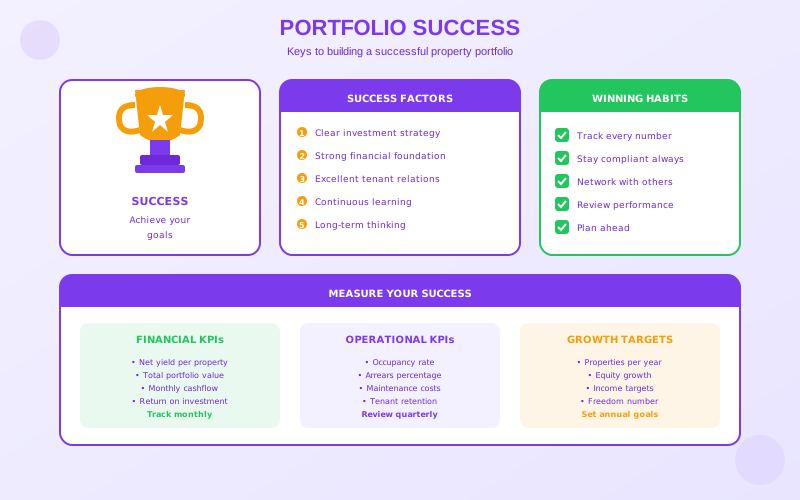
Key Success Factors
- Clear strategy - Know your investment thesis and stick to it
- Financing access - Multiple lender relationships
- Efficient operations - Systems that scale
- Risk management - Diversification and reserves
- Professional support - Advisors who understand property
Growth Principle
Sustainable growth comes from compounding equity and reinvesting cash flow. Avoid the temptation to grow too fast at the expense of cash reserves and operational capability.
Financing Strategies
Access to finance is typically the primary constraint on portfolio growth. Understanding financing options and lender requirements is essential.
Portfolio Landlord Rules
Since 2017, lenders apply "portfolio landlord" rules to borrowers with 4+ mortgaged properties. These require more detailed information about your entire portfolio, income, and business plan. Lenders stress-test the whole portfolio, not just the new property.
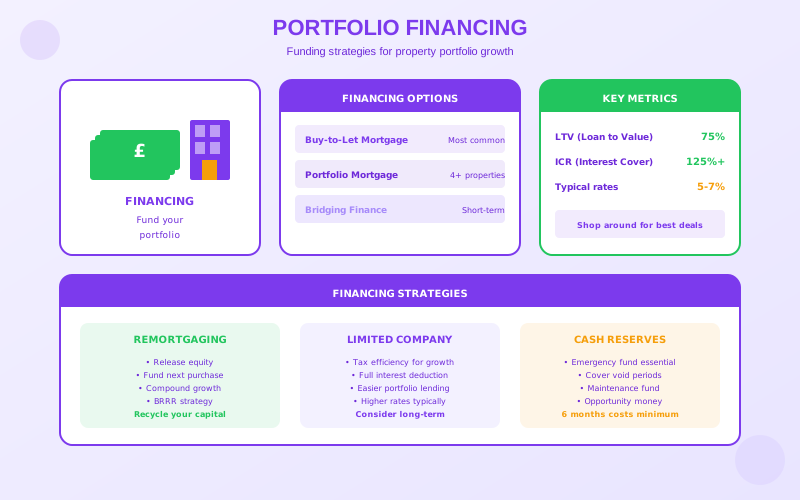
Financing Options
| Option | Best For | Considerations |
|---|---|---|
| Standard BTL mortgages | Most purchases | Product choice narrows with portfolio size |
| Portfolio mortgages | Larger portfolios | Single facility, cross-charging |
| Bridging finance | Fast purchases, refurbs | High cost, short term |
| Development finance | Conversions, new builds | Complex, staged drawdowns |
| Commercial mortgages | Mixed-use, large portfolios | More flexible, higher rates |
Equity Recycling
As properties appreciate and mortgages reduce, equity builds in your portfolio. Remortgaging to release equity provides capital for further acquisitions. This "velocity of capital" accelerates growth without requiring new savings.
Financing Tip
Build relationships with multiple brokers and lenders. Portfolio landlords find that lender appetite varies. Having options prevents growth stalling when one lender's criteria change.
Portfolio Structuring
How you structure ownership affects tax efficiency, liability protection, and ease of management.
Ownership Options
- Personal ownership - Simple but less tax-efficient for higher earners
- Limited company (SPV) - Corporation tax rates, mortgage interest deductible
- Partnership - Flexibility but complexity
- Multiple companies - Separate risk, optimise small company reliefs
Personal vs Limited Company
| Factor | Personal | Limited Company |
|---|---|---|
| Tax on profits | Income tax (20-45%) | Corporation tax (25%) |
| Mortgage interest | 20% tax credit only | Fully deductible |
| Extracting profits | Direct access | Dividends/salary (additional tax) |
| CGT on sale | CGT rates apply | Corp tax, then extraction tax |
| Mortgage rates | Generally lower | Typically 0.5-1% higher |
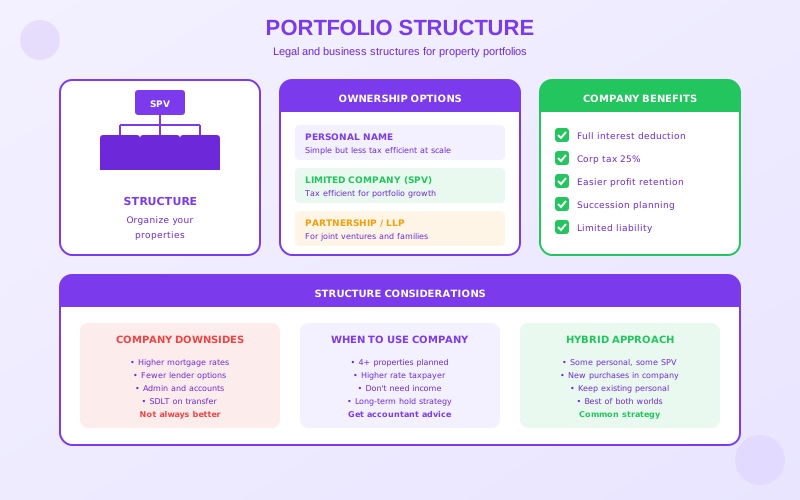
Structuring Warning
Transferring existing properties to a company triggers CGT and Stamp Duty. This is rarely cost-effective. Consider company ownership for new acquisitions rather than restructuring existing holdings.
Acquisition Strategy
Consistent acquisition requires a clear strategy and efficient processes for finding, evaluating, and completing on properties.
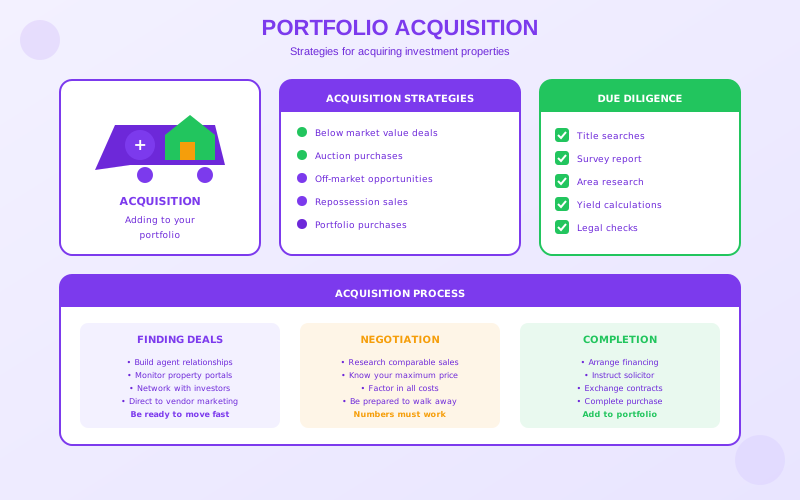
Sourcing Properties
- Estate agents - Build relationships for early access
- Property sourcers - Pay fees for off-market deals
- Auctions - Below market value opportunities
- Direct to vendor - Leaflet drops, approaching owners
- Network - Other investors, solicitors, accountants
Due Diligence Process
Develop a systematic due diligence process covering financial analysis (yield, cash flow, stress testing), legal checks (title, planning, compliance), physical inspection (condition, required works), and market research (comparable rents, demand drivers).
Investment Criteria
Define clear criteria for purchases: minimum yield, maximum price, acceptable locations, property types, and condition requirements. Clear criteria speed decision-making and prevent emotional purchases that don't fit your strategy.
Scaling Operations
Operational efficiency becomes critical as the portfolio grows. What works for 3 properties fails at 30.
Property Management
| Approach | Suits | Considerations |
|---|---|---|
| Self-management | Small portfolios, local | Time intensive, learning curve |
| Letting agents | Growing portfolios | Cost 8-15%, variable quality |
| In-house team | Large portfolios (25+) | Fixed costs, control |
| Hybrid | Most portfolios | Strategic oversight, outsourced operations |
Systems and Technology
- Property management software - Track rent, maintenance, documents
- Accounting systems - Proper bookkeeping from the start
- Document management - Digital storage for all records
- Tenant portals - Self-service rent payments, requests
- Contractor management - Approved supplier lists, scheduling
Building Your Team
As you scale, build a professional team including a property-specialist accountant, responsive solicitor, reliable contractors, mortgage broker with portfolio experience, and potentially property manager or VA for administrative tasks.
Scaling Tip
Build systems before you need them. Implementing processes at 5 properties is easier than retrofitting at 20. Document everything to enable delegation.
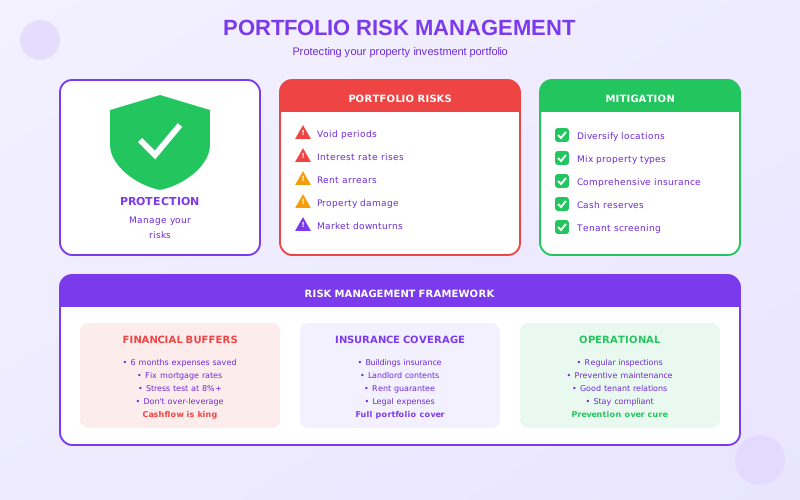
Risk Management
Portfolio scale amplifies risks. Systematic risk management protects against adverse events.
Key Risk Areas
- Void risk - Empty properties drain cash flow
- Interest rate risk - Rising rates squeeze margins
- Regulatory risk - Changing rules increase costs
- Tenant default - Non-payment affects cash flow
- Capital value - Market corrections reduce equity
- Concentration - Single location or tenant type exposure
Mitigation Strategies
- Cash reserves - Minimum 3-6 months expenses
- Interest rate hedging - Fixed rate mortgages
- Geographic diversification - Multiple locations
- Property type mix - Houses, flats, HMOs
- Insurance - Comprehensive landlord cover, rent guarantee
- LTV discipline - Conservative leverage maintains buffer
Stress Testing
Regularly stress test your portfolio against scenarios including interest rate rises of 2-3%, vacancy rates of 10-20%, rent reductions of 10-15%, and major repair costs. Understanding vulnerabilities enables proactive management.
Exit Planning
Building a portfolio is only valuable if you can extract the wealth created. Consider exit strategies from the outset.
Exit Options
- Individual sales - Sell properties gradually for income
- Portfolio sale - Sell entire portfolio to institutional buyer
- Refinance and hold - Release equity, retain ownership
- Family succession - Transfer to next generation
- REIT contribution - Exchange for shares in larger vehicle
Tax Planning
Exit tax planning should start early. Consider using annual CGT allowances, timing sales across tax years, spousal transfers before sale, principal private residence elections where applicable, and company liquidation strategies.
Exit Tip
The most tax-efficient exit is often no exit. Properties passing on death receive base cost uplift, eliminating CGT on lifetime gains. Consider inter-generational wealth transfer as part of your strategy.
FAQs for landlords
How many properties do I need before it's worth setting up a company?
There's no magic number. Company ownership typically benefits higher-rate taxpayers or those planning significant growth and profit retention. Many start using companies from their first or second property if they fit these criteria.
Do I need more deposit as my portfolio grows?
Individual property deposits remain similar (typically 25%). However, portfolio landlord rules mean lenders assess your whole portfolio. You may need to demonstrate stronger overall finances and cash reserves.
When should I start using a property manager?
Consider management when the portfolio reaches 5-10 properties, when you can't respond promptly to issues, when properties are distant, or when you want to focus on acquisitions rather than operations.
Should I concentrate in one area or diversify?
Both strategies work. Concentration builds local expertise and efficient management. Diversification reduces location-specific risks. Many investors start concentrated then diversify as they grow.
How do I finance growth without new capital?
Equity recycling through remortgaging releases capital as properties appreciate. BRRR (Buy, Refurbish, Refinance, Rent) strategies maximise this approach. Cash flow from existing properties can also fund deposits.
What to do next
Core eviction guides landlords usually need next
These are the core possession guides landlords usually need after notice or arrears problems start.
FAQs for landlords

Have a landlord question?
Ask Heaven is our free AI assistant that can help with eviction advice, tenancy questions, and more.