
Rated4.8/5 | 3008 reviews
UK Holiday Let Regulations - Complete Landlord Guide 2026
Comprehensive guide to holiday let regulations in the UK. Learn about planning permission, licensing requirements, tax rules, and compliance for short-term r...
Use this guide when
You need a practical landlord answer, not just a definition
Use this page when you need to understand holiday let regulations UK in landlord terms, check the evidence or compliance points that matter, and decide whether the next step is a guide, free tool, notice pack, court pack, tenancy agreement, rent increase pack, or money claim route.
This guide explains holiday let regulations uk in plain English, including the rules, common mistakes and practical next steps.
Holiday Let Overview
A holiday let (or short-term let) is a furnished property rented out for short periods, typically to holidaymakers or business travellers. Unlike assured shorthold tenancies, these bookings don't create long-term tenant rights.
Next step for landlords
Problem clear? Create the right notice before you serve
If the issue now points toward possession, move from guidance into a notice route that keeps grounds, dates, service, and evidence together.
- Choose the right route before you serve anything.
- Answer plain-English questions. We handle the legal logic.
- Preview the paperwork before you pay.

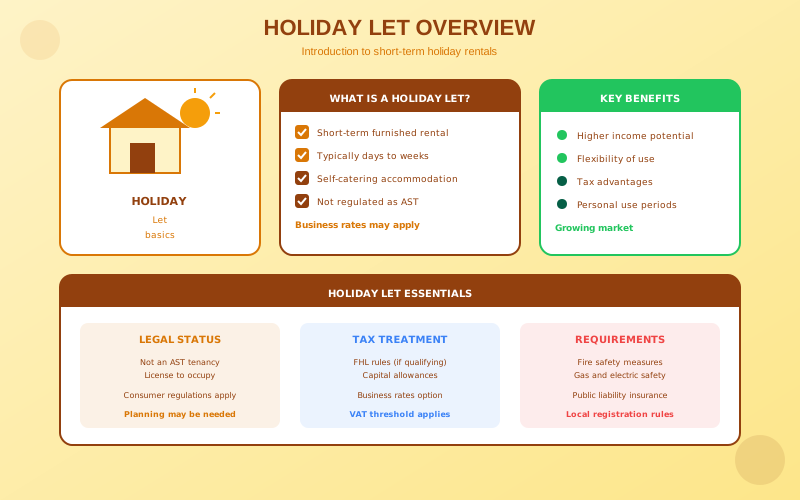
Types of Holiday Accommodation
- Entire properties - Houses, flats, cottages let exclusively
- Rooms in occupied homes - Spare room letting
- Annexes and outbuildings - Converted spaces
- Unique properties - Boats, treehouses, glamping
Market Considerations
| Factor | Holiday Let | Long-Term Let |
|---|---|---|
| Income potential | Higher (if well-occupied) | Stable, predictable |
| Occupancy | Variable, seasonal | Continuous |
| Management | Intensive | Lower touch |
| Wear and tear | Higher turnover impact | Lower frequency |
| Regulation | Increasing complexity | Established framework |
Regulatory Trend
Holiday let regulations are tightening across the UK. New registration schemes, planning restrictions, and tax changes are making this sector more complex. Stay informed about changes affecting your area.
Planning Permission Rules
Planning requirements for holiday lets vary by location and intensity of use. Understanding when permission is needed prevents enforcement action.
The 90-Day Rule (London)
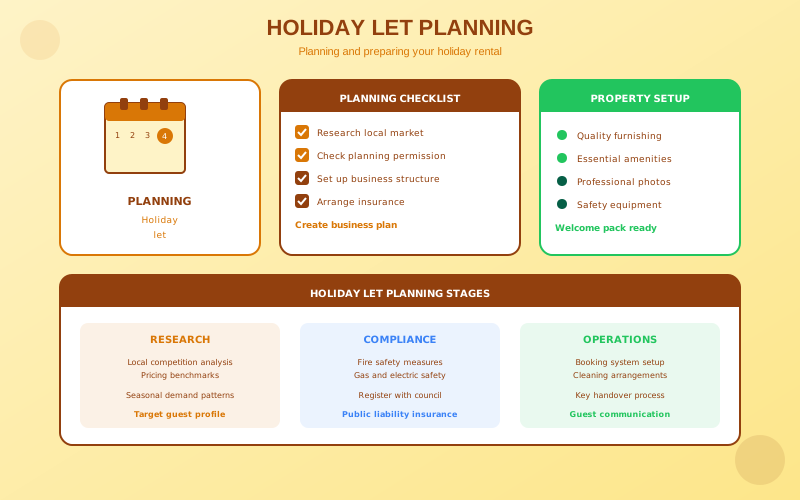
In Greater London, you can let your entire home for up to 90 nights per calendar year without planning permission. Beyond 90 nights requires a material change of use application. This applies to the property, not the platform used.
Outside London
Most areas outside London don't have specific day limits, but converting a residential property to exclusive holiday let use may constitute a material change of use requiring permission. The key factors are frequency and exclusivity of holiday use.
Scotland's Licensing Scheme
Scotland introduced mandatory licensing for all short-term lets from October 2023. Hosts must apply to their local council for a licence. Requirements include safety compliance, insurance, and planning permission where needed. Operating without a licence is a criminal offence.
Wales Registration
Wales introduced a statutory licensing scheme requiring all holiday let operators to register and meet safety standards. Properties must also meet the 182-day letting threshold to avoid domestic rates.
Planning Tip
Check with your local planning authority before starting holiday letting. Some councils actively enforce against unlicensed short-term lets, especially in areas with housing pressure.
Licensing Requirements
Licensing requirements for holiday lets have expanded significantly and vary by nation and local authority.
England - Proposed Registration
The UK Government has announced plans for a mandatory registration scheme for short-term lets in England. This will require all operators to register with a central database and display a registration number on listings. Implementation timing and details are still being finalised.
Scotland - Mandatory Licensing
| Requirement | Details |
|---|---|
| Application | Apply to local council with required documentation |
| Safety standards | Fire, gas, electrical safety certificates |
| Insurance | Public liability insurance required |
| Planning | Confirmation of permitted use |
| Fees | Vary by council, typically £200-500 |
Wales - Licensing Scheme
Wales requires all visitor accommodation to register. Properties must meet fire safety requirements, have appropriate insurance, and comply with planning rules. The scheme helps ensure consistent standards across the sector.
Tax Treatment
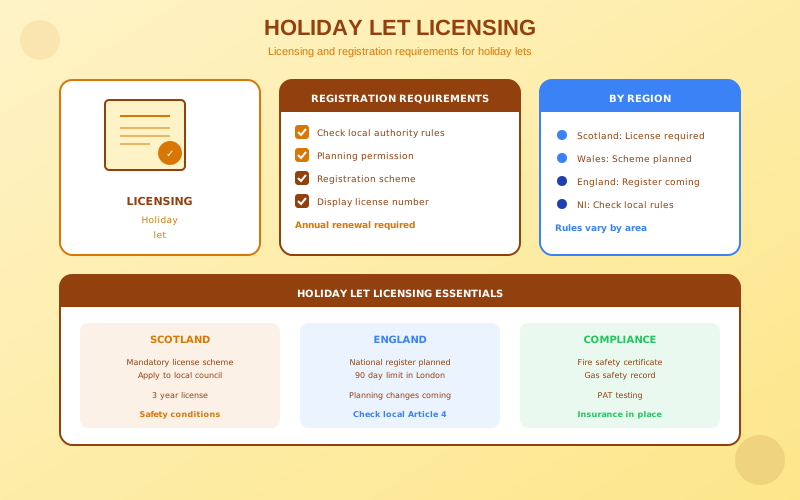
Holiday let taxation changed significantly from April 2025 with the abolition of the Furnished Holiday Lettings (FHL) tax regime.
Changes from April 2025
- Mortgage interest - Now restricted to basic rate tax relief
- Capital allowances - No longer available for FHL furniture
- Capital gains - Business Asset Disposal Relief removed
- Pension contributions - FHL income no longer counts as earnings
- Loss relief - Cannot offset against other income
Tax Impact
The FHL tax regime abolition significantly increases tax liability for many holiday let owners. Review your financial projections and consider whether holiday letting remains viable for your situation.
Business Rates vs Council Tax
Properties available for holiday letting 140+ days per year and actually let 70+ days may qualify for business rates instead of council tax. Business rates may offer small business rate relief, potentially reducing the bill to zero. However, stricter enforcement means you must demonstrate genuine availability and lettings.
VAT Considerations
Holiday accommodation is subject to VAT if your total taxable turnover exceeds £90,000. This affects pricing and potentially makes your offering less competitive compared to non-VAT registered operators.
Safety Compliance
Holiday lets must meet comprehensive safety requirements to protect guests and operators.
Fire Safety
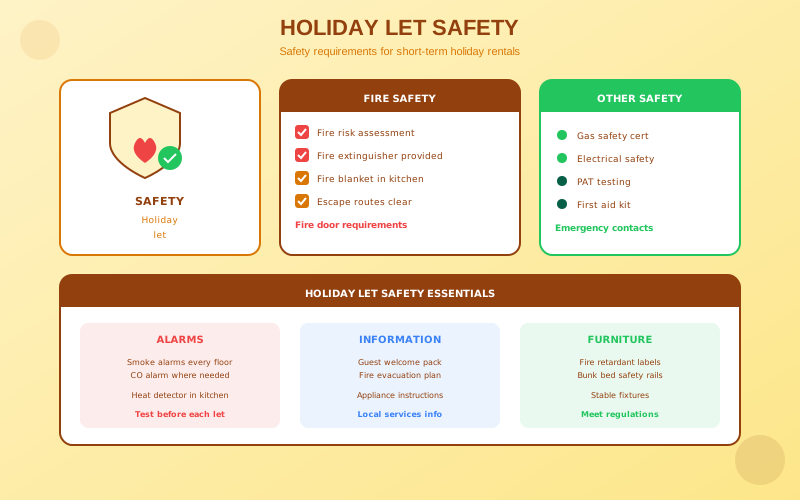
- Smoke alarms on every floor (interlinked if new installation)
- Carbon monoxide alarms near any fuel-burning appliance
- Fire risk assessment recommended (required in Scotland)
- Fire blanket in kitchen
- Clear escape routes with fire action notices
- Fire-retardant soft furnishings
Gas Safety
Annual gas safety checks are legally required. All gas appliances must be checked by a Gas Safe registered engineer. The certificate must be available to guests and displayed in the property.
Electrical Safety
While not legally mandatory for holiday lets in all areas, an Electrical Installation Condition Report (EICR) is strongly recommended. PAT testing of portable appliances demonstrates due diligence. Scotland requires electrical safety certificates for licensing.
Water Safety
Legionella risk assessments are recommended, especially for properties with complex water systems or infrequent use. Water temperature should be controlled to prevent scalding risks.
Insurance Requirements
Standard home insurance does not cover holiday letting. Specialist insurance is essential.
Essential Coverage
| Coverage | Purpose | Typical Limit |
|---|---|---|
| Public liability | Guest injury claims | £2-5 million |
| Buildings | Structure damage | Rebuild cost |
| Contents | Furnishings, equipment | Replacement value |
| Loss of income | Cancellation costs | 12 months income |
| Guest damage | Malicious damage | Varies |
Platform Insurance
Platforms like Airbnb offer host protection programmes, but these have limitations and exclusions. They should supplement, not replace, comprehensive holiday let insurance. Read the terms carefully to understand coverage gaps.
Insurance Tip
Disclose holiday letting to your insurer. Undisclosed commercial use can void your policy entirely, leaving you unprotected for any claims.
Management Considerations
Holiday lets require active management far beyond traditional rentals.
Operational Requirements
- Check-in/out - Key handover, property access
- Cleaning - Turnover cleaning between guests
- Maintenance - Quick response to issues during stays
- Guest communication - Pre-arrival, during stay, reviews
- Booking management - Calendar, pricing, enquiries
- Supplies - Linen, toiletries, consumables
Self-Management vs Agent
Self-management suits local owners with time and hospitality inclination. Property management companies charge 15-25% of revenue but handle all operational aspects. Consider the value of your time and distance from the property.
FAQs for landlords
Do I need planning permission for Airbnb?
In London, you can let for up to 90 nights without permission. Elsewhere, occasional letting usually doesn't require permission, but full-time holiday letting may constitute a change of use. Check with your local planning authority.
Is holiday letting still profitable after tax changes?
It depends on your circumstances. The FHL abolition increased tax liability. Properties with strong occupancy in prime locations may remain profitable. Run detailed financial projections before investing.
Do I need a licence to run a holiday let?
In Scotland, yes - mandatory licensing applies. In Wales, registration is required. In England, a registration scheme is planned. Check current requirements for your location.
Can I switch between holiday let and long-term rental?
Yes, but consider planning implications if the property has been primarily used as a holiday let. Also ensure your mortgage and insurance permit the intended use.
What's the difference between holiday let and serviced accommodation?
These terms are often used interchangeably. Serviced accommodation typically implies additional services like cleaning and linen changes during stays. Both face similar regulatory requirements.
What to do next
Core eviction guides landlords usually need next
These are the core possession guides landlords usually need after notice or arrears problems start.
FAQs for landlords

Have a landlord question?
Ask Heaven is our free AI assistant that can help with eviction advice, tenancy questions, and more.