Rated4.8/5 · 522 reviews

Possession Order Process: What Happens After Notice

Served notice already? This guide explains what happens next in court so you can prepare the right documents and avoid delays caused by avoidable admin errors.

Unlike generic form builders, we validate 20+ legal requirements before generating court-ready documents — reducing the risk of rejected claims.

  • Compliance checks included before documents are generated
  • Jurisdiction-specific documents for UK landlord workflows
  • Step-by-step guided wizard built to reduce mistakes and rework
  • Maps notice stage to possession order clearly
  • Explains hearing and post-order expectations
  • Strong court-pack positioning for paperwork consistency

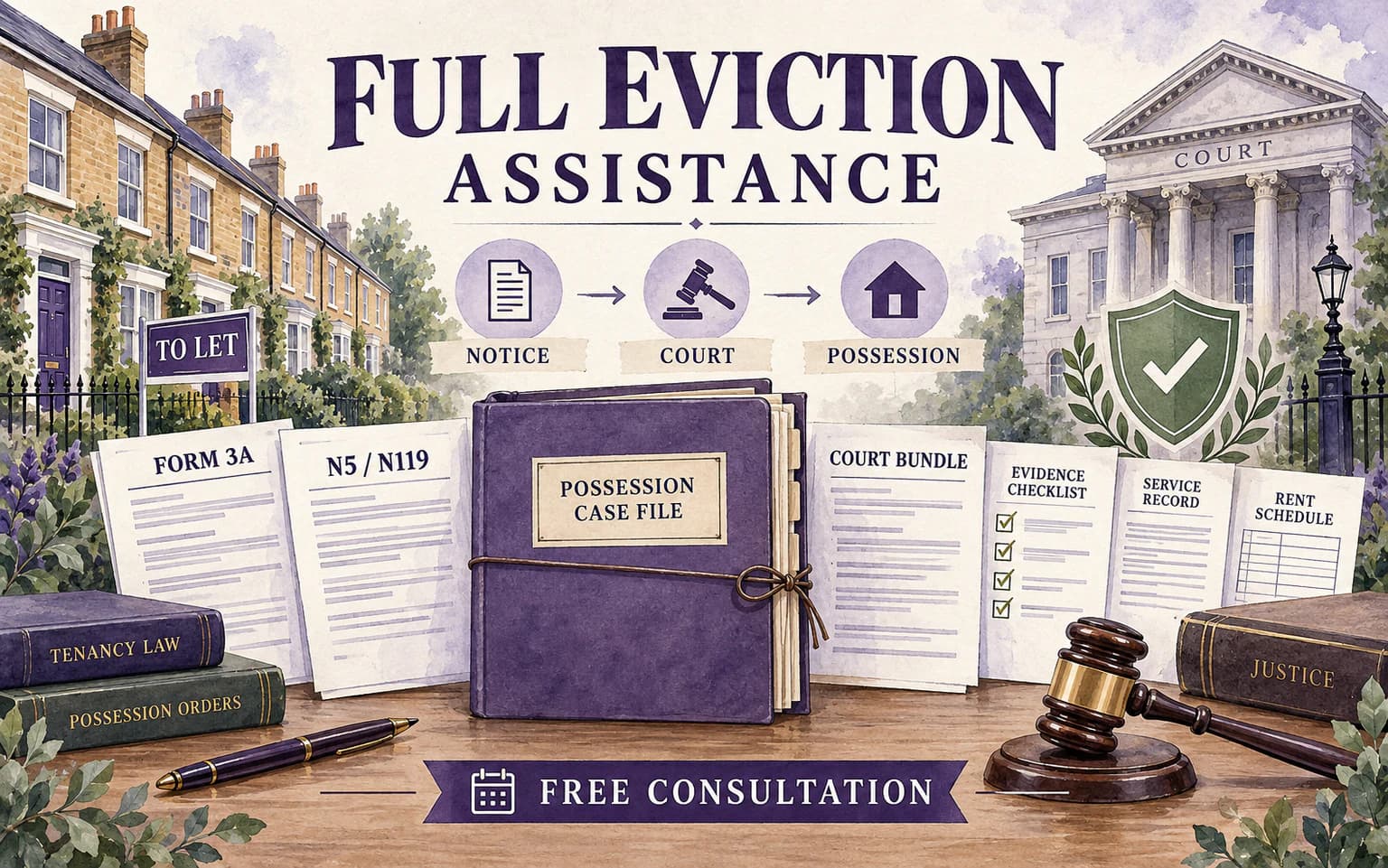
Eviction process overview

A lot of landlords lose time after serving notice because they are unclear on court sequence. Possession claims are manageable in straightforward cases, but only if documents are consistent and prepared properly.

This page targets users searching what happens after filing for possession. It focuses on practical flow: notice history, court forms, hearing pathway, possession order outcomes, and what to do next if enforcement is required.

Landlord scenario

You served notice and need a clear map of the court process before filing.

Landlord scenario

You want to avoid possession claim rejection due to avoidable paperwork issues.

Landlord scenario

You need confidence on next steps from claim issue through order and enforcement stage.
Filing without route continuity from notice stage
Inconsistent facts across forms, statements, and evidence
Missing key documents before hearing stage
Not planning enforcement if tenant remains post-order

Section 21 vs Section 8: choose the right route

A cheap template becomes expensive quickly if it sends you down the wrong route. If you are still deciding, use the Section 21 vs Section 8 comparison guide before serving anything. If you already know your route, jump straight into the matching workflow.

Compliance requirements and why notices fail

Most failed eviction workflows are not caused by obscure legal points; they are caused by missing basics. Generic form sites rarely validate these details.

  • Generic forms pages do not explain process sequencing
  • No structured workflow across notice, claim, hearing, and enforcement
  • No practical guidance on reducing court admin friction
  • Landlords left to piece together steps from scattered sources

For Section 21 specifically, use the Section 21 checklist. For court progression details, see eviction court forms explained.

wizard icon

Checklist prompts

  • Cross-document consistency checks
  • Service and chronology reminders
  • Court-stage completeness prompts
  • Escalation guidance for complex/defended matters

If your notice is invalid, the court can reject your claim and you may need to start again.

Court forms explained and route continuity

If the tenant does not leave, route continuity matters. For N5B-focused no-fault progression, see N5B possession claim form guidance. For grounds-based claim forms, use N5 and N119 possession claim guidance.

Comparison pointLandlord HeavenGeneric templates / solicitor route
Process visibilityClear notice-to-order workflowStatic forms without sequencing guidance
Document coherenceAligned outputs in one pathManual patchwork with mismatch risk
PracticalityLandlord-focused step promptsLegal-heavy content with limited execution help
ValueMiddle ground for straightforward casesEither risky templates or higher legal spend

Eviction timeline and common delay points

For timing expectations, use the eviction timeline England guide. Court backlogs are outside your control, but notice validity and service quality are not.

Eviction timeline

Common eviction mistakes landlords make

Serving the wrong notice for the case facts
Using outdated forms from generic template websites
Serving through the wrong method or without proof
Missing key compliance documents such as gas safety evidence
Choosing the wrong possession route and losing weeks
Submitting incomplete court paperwork after notice expiry

Next step

Do not let avoidable paperwork errors add more lost rent

A generic template can look cheap at the start, but if route, dates, or service are wrong you can lose months and restart. Use the guided wizard now and keep your case moving.

Frequently asked questions

In practical terms, it is the route from valid notice to possession claim, court determination, and then enforcement if the tenant still does not leave.
Not always in the same way, but landlords should prepare as if clarity of paperwork and evidence will be scrutinised.
If the tenant still remains after the order date, landlords generally need to move into enforcement steps such as bailiff action.
If court progression is likely, complete pack is often the practical choice because it helps maintain notice-to-court continuity.

Related eviction guides

Use these guides to move from notice choice to court progression with fewer mistakes.

Prepare the possession route properly from the start

For many straightforward cases, landlords do not need to pay a solicitor hundreds or thousands just to get the starting paperwork in place. Use the guided route and move now.

Landlord Heaven provides document generation and guidance, not legal advice or court representation.