Rated4.8/5 | 1017 reviews

Tenant Not Paying Rent?

If your tenant has stopped paying, you usually have three main routes: push for payment, start possession for arrears, or recover the debt through court. This page helps you choose the right one.

Grounds 8, 10 and 11 explainedBuilt around court-ready paperworkTwo-week notice route for arrears
Trusted by UK landlords

Need help choosing your next step?

Pick the route that matches your situation now.

Serve a notice

  • Best if you need a valid Section 21 or Section 8 notice.
  • You want compliant drafting and service evidence.
Choose this option →

Full eviction pack

  • Best if the tenant is still in the property.
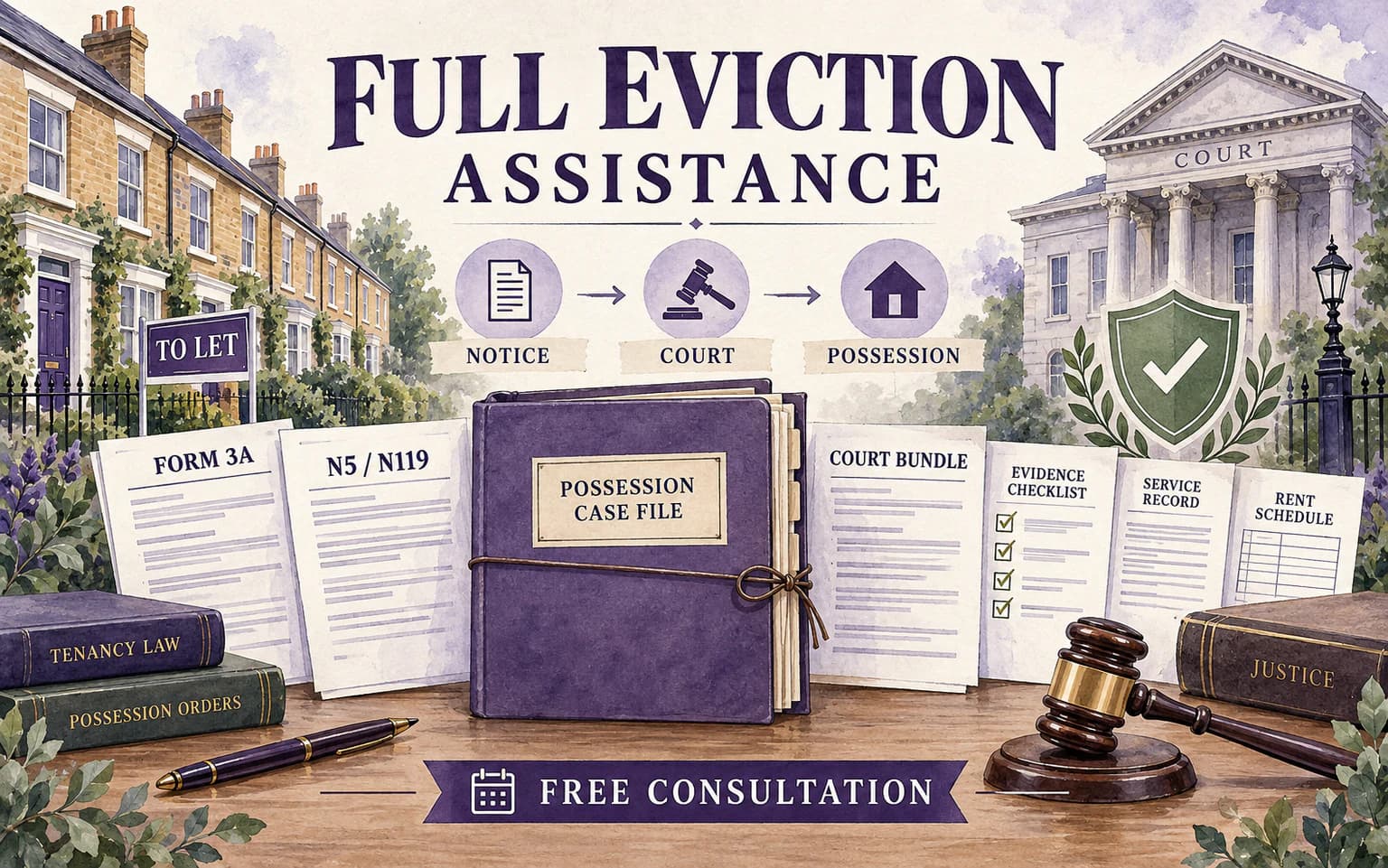
  • Includes notice, possession paperwork, and next-step guidance.
Choose this option →

Recover money owed

  • Best if you are focused on arrears or damage recovery.
  • Ideal when the tenant has left but owes rent.
Choose this option →

Tenant is still in the property

Use possession-focused support to serve Section 8 properly and move to court if the tenant still stays.

See Section 8 notice guide ->

Also follow the eviction process in the UK if getting the property back is the priority.

Tenant has already left owing money

Focus on debt recovery with a money claim and an evidence-ready arrears schedule.

Go to money claim ->

Reviewed

21 March 2026

Applies to

UK-wide comparison guide

Current position

Section 21 is due to end in England on 1 May 2026, and court proceedings on qualifying older Section 21 notices must begin by 31 July 2026. Landlords should already be planning around a Section 8-led possession route unless a transitional legacy case is clearly available.

Start here if you need the main guide on this issue. If your situation is narrower or you want the next practical step, go to money claim for unpaid rent.

If you want the wider background first, read Section 8 notice guide.

Ready to act? The quickest route from here is money claim pack for unpaid rent.

Your three main options for rent arrears

Because Section 21 ended in England on 1 May 2026, most arrears cases now start with a Section 8 notice for rent arrears and a clear plan for what happens next if the tenant still does not pay or leave.

1. Ask for payment formally

Send a formal rent demand letter giving the tenant a clear chance to pay. This often resolves the issue without legal action.

  • Fastest place to start
  • No court fee at this stage
  • Can preserve the tenancy relationship
Use the free rent demand letter
Most Common

2. Start possession for arrears

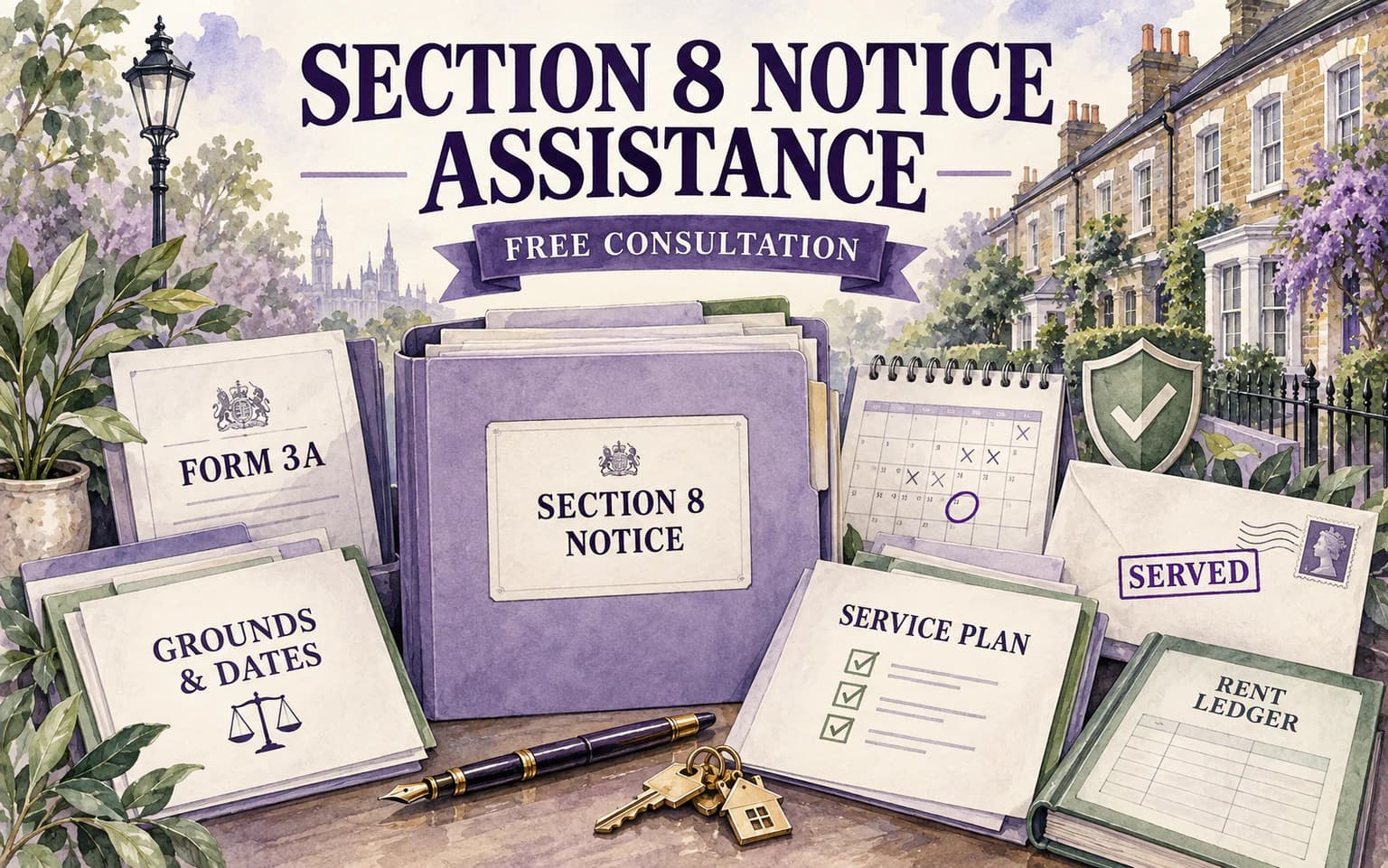
Serve a Section 8 notice using rent arrears grounds. In many cases, Ground 8 now gives a four-week notice period.

  • 4 weeks notice (Ground 8)
  • Mandatory ground if the test is still met
  • Current route after May 2026
Start Section 8 notice - £39.99

3. Recover the debt through court

File a county court claim through MCOL to recover unpaid rent. You can do this even after the tenant has left.

  • Claim the full arrears
  • Add interest and eligible fees
  • Can lead to a CCJ if unpaid
Start money claim - £29.99

Practical point: you can pursue possession and a money claim at the same time. Many landlords secure the property back first, then continue with arrears and any damage claim once the tenant has gone.

Need the right route for your exact arrears case?

Start with the money claim route if recovery is the priority, or move into possession support if the tenant is still in the property.

Section 8 grounds commonly used for rent arrears

For rent arrears, landlords often rely on one or more of these grounds. We usually recommend citing every ground that genuinely fits the facts.

8

Ground 8 - Mandatory

Court Must Grant

At least 3 months' rent arrears, or 13 weeks' rent for weekly and fortnightly payments, when notice is served AND at the court hearing.

Notice period: 4 weeks
Outcome: Possession must be granted
10

Ground 10 - Discretionary

Court May Grant

Some rent lawfully due is unpaid when notice served AND proceedings begun.

Notice period: 4 weeks
Outcome: Court considers reasonableness
11

Ground 11 - Discretionary

Court May Grant

Tenant has persistently delayed paying rent, even if no arrears currently exist.

Notice period: 4 weeks
Evidence needed: Pattern of late payments

Recommended approach

Cite all three grounds (8, 10, and 11) on the Section 8 notice if the facts support them. If the tenant pays the arrears below the Ground 8 threshold before the hearing, you may lose Ground 8 but still continue under Grounds 10 and 11.

Need the strongest arrears route?

Use the money claim route when recovering the debt is the priority, then move into the Section 8 possession path if you still need the property back.

Calculate the total arrears first

Before you take action, calculate exactly what is owed, including any interest you may be able to claim.

Free rent arrears calculator

Enter the rent amount and payment dates and we'll calculate the total arrears with statutory interest. Use this when preparing a Section 8 notice or a money claim.

Calculate arrears free

Tenant left without paying? Recover the money properly

If your tenant has already moved out but still owes rent, a money claim through the county court is often the best route. You can usually claim the arrears plus 8% statutory interest.

  • AI-drafted particulars of claim
  • PAP-DEBT compliant letter before action
  • Interest calculation included
  • Enforcement guidance if they still do not pay

Tenant not paying rent: questions landlords ask

Contact the tenant immediately to understand their situation. Document everything in writing. If they cannot pay, discuss a payment plan. Keep records of all communication as evidence for potential court proceedings.
There is no legal minimum, but practically you should allow time for the tenant to respond. Most landlords wait 14-28 days of non-payment before serving notice, while continuing to communicate.
You can serve a Section 8 notice under Ground 10 or 11 (some rent lawfully due and unpaid), but these are discretionary. For mandatory Ground 8, you now need the post-May 2026 threshold at service AND hearing: 3 months rent if monthly, or 13 weeks rent if weekly or fortnightly.
For new England private-rented cases after 1 May 2026, use the current Section 8 / Form 3A route. Section 21 is no longer part of that live route, so the key choice is which grounds you can support and whether you need the notice-only pack or the full court pack.
No, this is illegal. Even if the tenant owes months of rent, you must obtain a court order and use bailiffs to evict. Changing locks without a court order is a criminal offence.
Yes. You can pursue a money claim through MCOL (Money Claim Online) for up to 6 years after the debt arose. You need evidence of the debt and must follow the pre-action protocol.

Start with the strongest rent arrears route

Recover unpaid rent with the money claim route, then use the Section 8 possession path when you still need the property back.

Section 21 and Section 8 included • AI compliance check • Designed for court acceptance