Rated4.8/5 | 3008 reviews
HMO Licensing England - Complete Guide 2026
Does your property need an HMO licence? This guide explains mandatory and additional licensing schemes, how to apply, conditions, and penalties for non-compl...
Use this guide when
You need a practical landlord answer, not just a definition
Use this page when you need to understand hmo licensing england in landlord terms, check the evidence or compliance points that matter, and decide whether the next step is a guide, free tool, notice pack, court pack, tenancy agreement, rent increase pack, or money claim route.
You are trying to sort hmo licensing england before it causes a bigger problem later. This guide explains what you need to do, when it matters, and how it affects the rest of your case.
Operating Without a Licence
If your property needs an HMO licence and you don't have one, you cannot use Section 21 to evict tenants, and tenants can apply for a rent repayment order to recover up to 12 months' rent. The council can also prosecute, with unlimited fines for serious cases.
What Is an HMO?
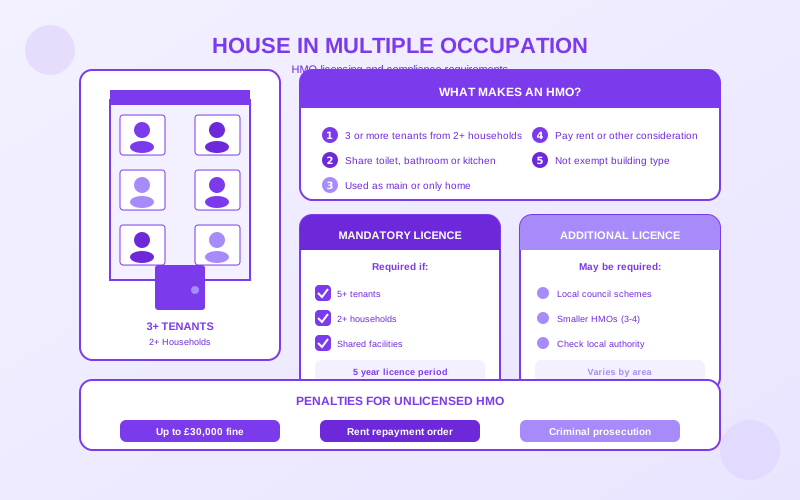
A House in Multiple Occupation (HMO) is a property rented out by at least 3 people who are not from the same household (e.g., family), but share facilities like the bathroom or kitchen.
Next step for landlords
Problem clear? Create the right notice before you serve
If the issue now points toward possession, move from guidance into a notice route that keeps grounds, dates, service, and evidence together.
- Choose the right route before you serve anything.
- Answer plain-English questions. We handle the legal logic.
- Preview the paperwork before you pay.

The Standard Test
A property is an HMO if it meets all of these conditions:
- Occupied by 3 or more persons
- Those persons form 2 or more households
- They share one or more amenities (bathroom, toilet, kitchen)
- The property is their only or main residence
- Rent is payable (or other consideration)
What Counts as a "Household"?
A household is typically:
- A single person living alone
- Members of the same family living together (couples, parents/children, siblings)
- Cohabiting couples (whether married, civil partners, or unmarried)
Unrelated individuals—like friends sharing a house, students, or professionals—are separate households even if they share one tenancy agreement.
Common HMO Scenarios
| Scenario | HMO? |
|---|---|
| 3 unrelated friends sharing a house | Yes |
| Couple plus 2 unrelated lodgers | Yes (3 households) |
| 4 students in a shared house | Yes |
| Family of 5 renting a house | No (1 household) |
| Couple renting a 1-bed flat | No (1 household) |
| 2 unrelated people sharing | HMO but no licence needed |
Mandatory Licensing
Since 1 October 2018, mandatory HMO licensing applies across England to any HMO that is:
- Occupied by 5 or more persons
- Forming 2 or more households
- Sharing facilities (bathroom, kitchen, toilet)
The Storey Requirement Removed
Before October 2018, mandatory licensing only applied to HMOs of 3+ storeys. This requirement was removed—now any HMO with 5+ occupants needs a licence regardless of the number of floors.
Who Applies for the Licence?
The person having control of or managing the property must apply. This is usually:
- The landlord (owner)
- The managing agent if they have day-to-day control
Licence Duration
HMO licences are typically granted for 5 years. Some councils issue shorter licences (1-3 years) for new landlords or properties with compliance issues.
Licence Fees
Fees vary by council but typically range from:
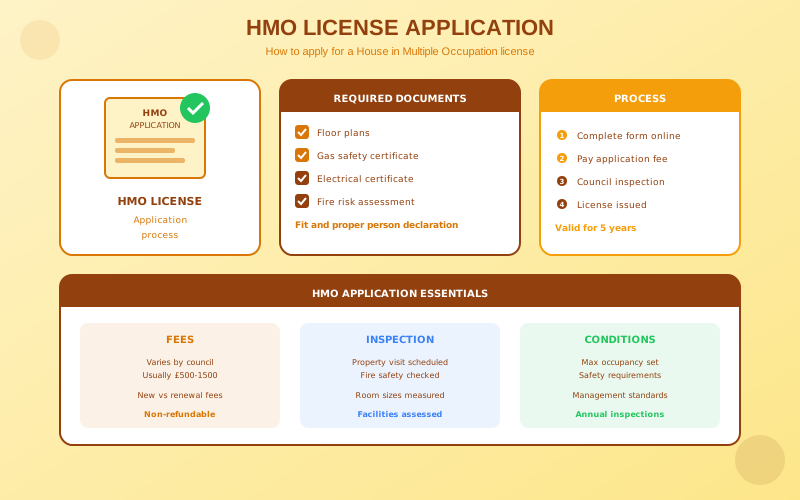
- New application: £500 - £1,500
- Renewal: £400 - £1,200
- Additional charges: For late applications, inspections, variations

Additional Licensing Schemes
Many councils operate additional licensing schemes covering HMOs that don't meet mandatory criteria. These are local schemes—you must check with your specific council.
What Additional Licensing Covers
Typically, additional licensing covers:
- HMOs with 3-4 occupants from 2+ households
- Properties above or below commercial premises
- Specific areas designated by the council
How to Check If Additional Licensing Applies
- Visit your local council website
- Search for "HMO licensing" or "additional licensing"
- Check if your property falls within a designated scheme area
- Contact the housing team if unsure
Selective Licensing
Some councils also operate selective licensing, which covers all private rented properties in designated areas—not just HMOs. If your area has selective licensing, you need a licence even for single-family lettings.
How to Apply for an HMO Licence
Step 1: Check Requirements
Before applying, ensure your property meets the council's standards for:
- Room sizes (minimum bedroom sizes for occupation)
- Fire safety (alarms, escapes, doors)
- Kitchen facilities (adequate for number of occupants)
- Bathroom facilities (adequate for number of occupants)
- General condition and maintenance
Step 2: Gather Documentation
You'll Typically Need:
- ?Floor plans showing room sizes and layout
- ?Current Gas Safety Certificate
- ?Current EICR (Electrical Installation Condition Report)
- ?Energy Performance Certificate (EPC)
- ?Fire safety risk assessment
- ?Proof of ownership or management responsibility
- ?Details of the manager/licence holder
Step 3: Complete the Application
Most councils have online application portals. You'll provide:
- Property details and layout
- Proposed number of occupants and households
- Your details as proposed licence holder
- Manager details (if different)
- Declaration of "fit and proper person" status
- Fee payment
Step 4: Inspection
The council will usually inspect the property. They'll check:
- Room sizes meet minimum standards
- Fire safety measures are adequate
- Kitchen and bathroom facilities are sufficient
- General condition is satisfactory
Step 5: Licence Issued
If satisfied, the council issues the licence with conditions. Processing typically takes 2-6 months depending on the council.
Licence Conditions
HMO licences come with conditions you must comply with throughout the licence period:
Mandatory Conditions
- Gas safety: Annual Gas Safety Certificate
- Electrical safety: EICR every 5 years
- Smoke alarms: Working alarms on every floor
- Carbon monoxide: Detectors where required
- Tenancy references: References for new occupiers
- Terms of occupation: Written statement to each occupier
Common Additional Conditions
- Maximum number of occupants per room
- Regular property inspections
- Waste management arrangements
- External appearance and maintenance
- Display of licence or emergency contacts
- Notifying the council of changes
Room Size Requirements
Minimum sleeping room sizes (per person):
- 1 person (10+ years): 6.51 m—
- 2 persons (10+ years): 10.22 m—
- 1 child (under 10): 4.64 m—
Penalties for Non-Compliance
Criminal Prosecution
Operating an unlicensed HMO that requires a licence is a criminal offence:
- Civil penalty: Up to £30,000 per offence
- Criminal fine: Unlimited (for prosecution through courts)
- Criminal record: Potential conviction
Rent Repayment Orders
Tenants (or the council) can apply to the First-tier Tribunal for a rent repayment order:
- Covers up to 12 months' rent
- Tribunal decides the amount based on circumstances
- Order made against the landlord personally
Section 21 Block
You cannot serve a valid Section 21 notice while the property requires but lacks an HMO licence. Any Section 21 served will be invalid.
Breach of Licence Conditions
Breaching licence conditions can result in:
- Civil penalties
- Licence revocation
- Management orders (council takes over management)
- Prosecution for serious breaches
HMO Licensing FAQ
My property has 3 tenants—do I need a licence?
If they're from 2+ households and share facilities, it's an HMO. You don't need a mandatory licence (that's 5+ occupants), but check if your council has an additional licensing scheme that covers smaller HMOs.
What if I'm waiting for my licence application?
If you've applied and are waiting for processing, you're generally protected from prosecution. Keep proof of your application. However, you must still comply with all HMO management regulations.
Can I refuse a licence application?
The council can refuse if the property doesn't meet standards, you're not a "fit and proper person," or the proposed management arrangements are inadequate. You can appeal to the First-tier Tribunal.
What makes someone "fit and proper"?
You may fail the fit and proper test if you have relevant criminal convictions, have previously breached housing law, or have been involved in unlawful discrimination. Most landlords pass this test.
Do I need planning permission for an HMO?
Possibly. Converting a family home to a small HMO (3-6 unrelated people) is often permitted development. Larger HMOs or HMOs in Article 4 areas need planning permission. Check with your council—planning and licensing are separate requirements.
What about insurance for HMOs?
Standard landlord insurance often doesn't cover HMOs. You need specialist HMO insurance that covers multiple tenancies, higher risk, and HMO-specific requirements. Inform your insurer of the HMO status.
Manage Your HMO Compliance
HMO landlords have additional compliance requirements. Our tools help you track certifications, manage tenancies, and ensure you're meeting all your legal obligations.
View All Products ?What to do next
Core eviction guides landlords usually need next
These are the core possession guides landlords usually need after notice or arrears problems start.
FAQs for landlords

Have a landlord question?
Ask Heaven is our free AI assistant that can help with eviction advice, tenancy questions, and more.