
Rated4.8/5 | 3008 reviews
UK HMO Management - Complete Landlord Guide 2026
Comprehensive guide to managing Houses in Multiple Occupation in the UK. Licensing, safety requirements, and operational best practices for HMO landlords.
Use this guide when
You need a practical landlord answer, not just a definition
Use this page when you need to understand HMO management UK in landlord terms, check the evidence or compliance points that matter, and decide whether the next step is a guide, free tool, notice pack, court pack, tenancy agreement, rent increase pack, or money claim route.
This guide explains hmo management uk in plain English, including the rules, common mistakes and practical next steps.
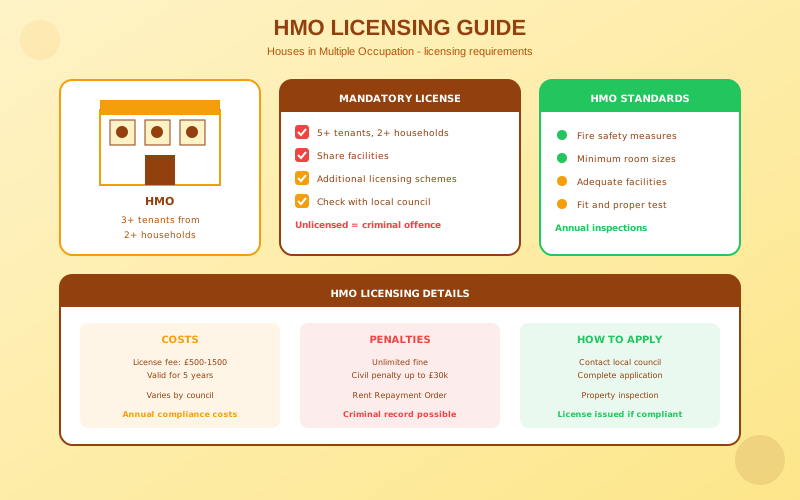
What is an HMO?
A property is an HMO if:
Next step for landlords
Problem clear? Create the right notice before you serve
If the issue now points toward possession, move from guidance into a notice route that keeps grounds, dates, service, and evidence together.
- Choose the right route before you serve anything.
- Answer plain-English questions. We handle the legal logic.
- Preview the paperwork before you pay.

- 3 or more tenants live there forming 2 or more households
- Tenants share facilities (kitchen, bathroom, toilet)
- At least one tenant pays rent
Common HMO Types
- Student house shares
- Professional house shares
- Bedsits with shared facilities
- Some hostels and B&Bs
Large vs Small HMOs
| Type | Definition | Mandatory Licence? |
|---|---|---|
| Large HMO | 5+ occupiers, 2+ households, 3+ storeys | Yes, across UK |
| Small HMO | 3-4 occupiers or 2 storeys | Depends on local schemes |
Definition Changes
Since 2018, mandatory licensing applies to HMOs with 5+ occupiers from 2+ households, regardless of storeys. Previously, it required 3+ storeys. Check current requirements with your local council.
Licensing Requirements
HMO licensing varies by location and property type:
Mandatory Licensing (England)
Required for properties with:
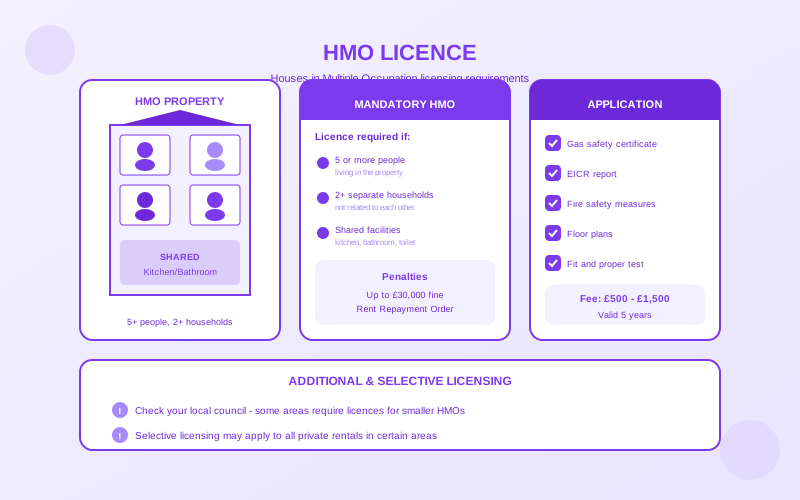
- 5 or more occupiers
- Forming 2 or more households
- Sharing facilities
- No storey requirement (changed 2018)
Additional Licensing
Many councils have additional schemes covering:
- Smaller HMOs (3-4 occupiers)
- All HMOs in certain areas
- Specific property types
Application Process
- Check if licence required with local council
- Complete application form
- Pay application fee (typically £500-1,500)
- Property inspection arranged
- Fit and proper person test
- Licence issued (usually 5 years)
Safety Standards
HMOs have enhanced safety requirements:
Fire Safety
- Interlinked smoke alarms on each floor
- Fire doors to kitchens and bedrooms
- Emergency lighting in some cases
- Fire blanket in kitchen
- Fire risk assessment required
- Clear escape routes maintained
Minimum Room Sizes
| Room Type | Minimum Size |
|---|---|
| Single bedroom (1 person over 10) | 6.51 sq metres |
| Double bedroom (2 persons over 10) | 10.22 sq metres |
| Child under 10 | 4.64 sq metres |
Kitchen Facilities
- Kitchen sink with hot and cold water
- Cooker (hob and oven)
- Adequate worktop space
- Food storage (cupboards, fridge)
- Requirements scale with occupier numbers
Bathroom Facilities
- Minimum 1 bathroom per 5 occupiers
- Some councils require 1:4 ratio
- Separate toilet may be required
- Hot and cold running water
Management Regulations
The Management of Houses in Multiple Occupation Regulations set requirements:
Manager Duties
- Display name and contact details in property
- Maintain common areas in good repair
- Keep escape routes clear
- Maintain fire safety equipment
- Ensure adequate waste facilities
- Supply water, gas, electricity properly
Maintenance Requirements
- Regular inspections of property condition
- Prompt repair of defects
- Annual gas safety checks
- Regular electrical checks (5-yearly EICR)
- Pest control if needed
Penalties
Operating an unlicensed HMO can result in unlimited fines, rent repayment orders covering up to 12 months' rent, and criminal prosecution. Council can also issue improvement notices.
Operational Tips
Successful HMO management requires attention to detail:
Tenant Selection
- Reference all tenants thoroughly
- Consider compatibility in house shares
- Clear house rules from the start
- Individual tenancy agreements for each room
Cleaning and Maintenance
- Regular professional cleaning of common areas
- Clear cleaning rotas for tenants
- Responsive maintenance for shared facilities
- Regular property inspections
Managing Disputes
- Clear house rules about noise, guests, cleaning
- Act quickly on complaints
- Document issues and resolutions
- Be prepared to evict problematic tenants
HMO Management Resources
Landlord Heaven provides HMO compliance checklists, fire safety guides, and room tenancy agreement templates for professional HMO management.
View HMO Resources ?HMO FAQ
Is a couple counted as one or two occupiers?
A couple sharing a bedroom are usually counted as one household but two occupiers. The room size requirements would apply for two people, but they only count as one household for the household count.
Do I need planning permission for an HMO?
Small HMOs (3-6 people) may be permitted development. Large HMOs (7+) typically need planning permission. Many councils have Article 4 directions requiring permission for all HMOs. Check with your local planning authority.
Can I convert a house to an HMO?
You may need planning permission, building regulations approval for alterations, and an HMO licence. Consider costs of fire doors, additional bathrooms, and kitchen upgrades. Some areas restrict new HMOs.
What mortgage do I need for an HMO?
You need an HMO-specific buy-to-let mortgage. Not all lenders offer these, and they often have higher rates than standard BTL mortgages. Lenders will want to see the licence or licence application.

What to do next
Core eviction guides landlords usually need next
These are the core possession guides landlords usually need after notice or arrears problems start.
FAQs for landlords

Have a landlord question?
Ask Heaven is our free AI assistant that can help with eviction advice, tenancy questions, and more.