
Rated4.8/5 | 3008 reviews
UK Smoke & CO Alarm Regulations - Complete Landlord Guide 2026
Comprehensive guide to smoke and carbon monoxide alarm requirements for UK landlords. Legal obligations, installation rules, and compliance tips.
Use this guide when
You need a practical landlord answer, not just a definition
Use this page when you need to understand smoke alarm regulations landlord UK in landlord terms, check the evidence or compliance points that matter, and decide whether the next step is a guide, free tool, notice pack, court pack, tenancy agreement, rent increase pack, or money claim route.
You are trying to sort smoke alarm regulations landlord uk before it causes a bigger problem later. This guide explains what you need to do, when it matters, and how it affects the rest of your case.
Legal Requirements
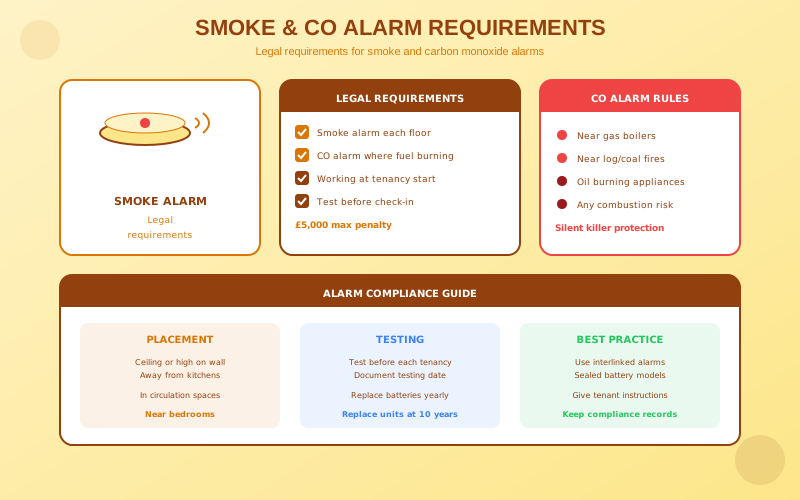
Requirements vary slightly between UK nations but all require smoke alarms and most require CO alarms in rental properties.
Next step for landlords
Problem clear? Create the right notice before you serve
If the issue now points toward possession, move from guidance into a notice route that keeps grounds, dates, service, and evidence together.
- Choose the right route before you serve anything.
- Answer plain-English questions. We handle the legal logic.
- Preview the paperwork before you pay.

England
The Smoke and Carbon Monoxide Alarm (Amendment) Regulations 2022:
- Smoke alarm on every floor with living accommodation
- CO alarm in every room with a fixed combustion appliance (except gas cookers)
- Alarms must be in working order at start of each tenancy
- Applies to all tenancies (including existing ones)
Scotland
More stringent requirements apply:
- Interlinked smoke alarms in living room and hallways/landings
- Heat alarm in kitchen (interlinked)
- CO alarm where there's a carbon-fuelled appliance
- All alarms must be interlinked (wired or wireless)
Wales
Similar requirements to England:
- Smoke alarm on every storey
- CO alarm in rooms with solid fuel appliances
- Part of Fitness for Human Habitation requirements
Northern Ireland
Under Building Regulations:
- Smoke alarms required on every floor
- CO alarm recommended where combustion appliances present
- Check specific NIHE and council requirements
| Nation | Smoke Alarms | CO Alarms | Interlinked? |
|---|---|---|---|
| England | Every floor | Combustion rooms | No (recommended) |
| Scotland | Living room + landings | Carbon fuel rooms | Yes (required) |
| Wales | Every storey | Solid fuel rooms | No |
| N. Ireland | Every floor | Recommended | No |
Smoke Alarm Rules
Smoke alarms must be properly positioned and maintained:
Positioning
- On the ceiling or high on wall (within 150-300mm of ceiling)
- At least 300mm from walls if ceiling-mounted
- Away from corners (dead air reduces effectiveness)
- Not in kitchens or bathrooms (use heat alarms)
- Ideally in hallways/landings near bedrooms
Types of Smoke Alarm
- Ionisation - best for fast-flaming fires, sensitive to cooking
- Optical - best for slow, smouldering fires
- Combined - offers protection from both types
Best Practice
Install optical alarms in or near kitchens to reduce false alarms from cooking. Interlinked systems (though only mandatory in Scotland) provide the best protection across larger properties.
Carbon Monoxide Alarm Rules
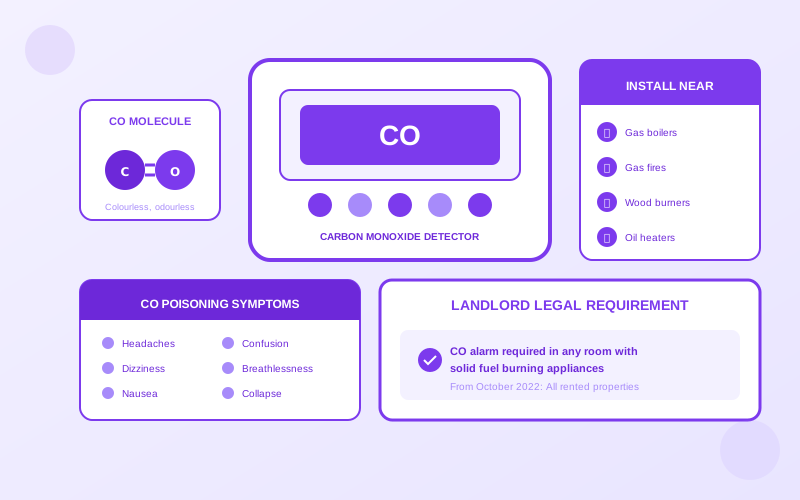
CO alarms protect against this deadly, odourless gas:
When Required
- In England: any room with fixed combustion appliance (not gas cookers)
- This includes gas boilers, gas fires, wood burners, oil heaters
- Living rooms with a gas fire need CO alarm
- Utility rooms with boilers need CO alarm
Positioning
- Same room as combustion appliance
- At head height (1-3 metres horizontally from appliance)
- Not directly above the appliance
- Not in humid areas like bathrooms
- Not near doors or windows where air circulation could affect readings
Installation Tips
Proper installation ensures alarms work when needed:
Alarm Selection
- Choose alarms meeting British Standards (BS EN 14604 for smoke, BS EN 50291 for CO)
- Look for Kitemark or equivalent certification
- Consider 10-year sealed battery alarms (no battery changes needed)
- For Scotland, choose interlinked wireless or wired systems
Installation Methods
- Wired - most reliable, connects to mains power
- Battery - easier to install, needs battery replacement
- Sealed 10-year - no maintenance, replace entire unit
- Wireless interlinked - all alarms sound together
Scotland Requirement
In Scotland, alarms must be interlinked. This means when one triggers, all alarms sound. Wireless interlinked systems are the easiest retrofit option for existing properties.
Testing and Maintenance
Alarms must work when needed. Establish a maintenance routine:
Landlord Responsibilities
- Test alarms work at the start of each new tenancy
- Replace faulty alarms immediately
- Keep records of checks conducted
- Replace alarms when they reach end of life (typically 10 years)
Tenant Responsibilities
- Test alarms regularly (weekly recommended)
- Replace batteries if needed (unless sealed units)
- Report any faults to landlord
- Not to tamper with or remove alarms
Testing Process
- Press and hold test button
- Alarm should sound within seconds
- If interlinked, check all units sound
- If no sound or weak sound, replace batteries or unit
Safety Compliance Resources
Landlord Heaven provides alarm testing checklists, installation guides, and compliance documentation templates for all safety requirements.
View Safety Resources ?Alarm Regulations FAQ
Do I need a CO alarm if I only have a gas cooker?
In England, gas cookers are specifically excluded from the CO alarm requirement. However, installing one in the kitchen is still good practice. Other combustion appliances (boilers, fires) do require CO alarms.
What happens if a tenant removes an alarm?
Include clear terms in the tenancy about not tampering with safety equipment. If a tenant removes or disables alarms, you should reinstate them and may need to address the breach through proper channels.
Can I use combination smoke/CO alarms?
Combination alarms that detect both smoke and CO are available. These can simplify installation and ensure you meet both requirements with fewer devices. Ensure they meet British Standards for both functions.
What are the penalties for non-compliance?
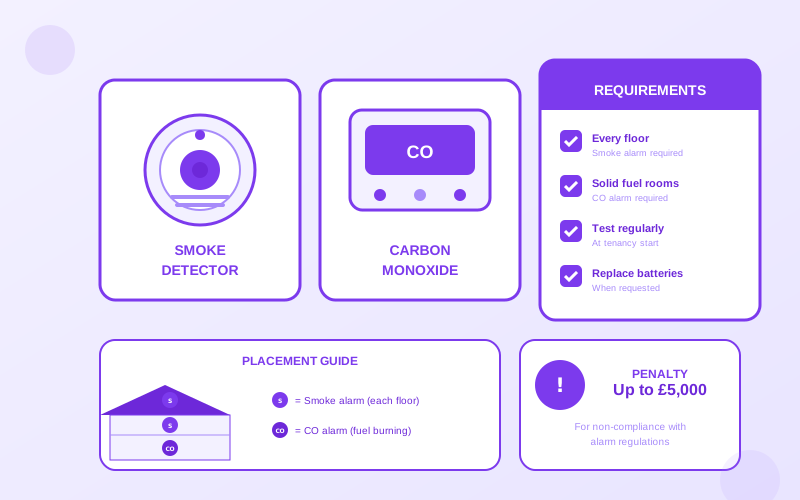
In England, local authorities can issue remedial notices. Failure to comply can result in fines up to £5,000. More importantly, non-compliance risks tenant safety and could lead to serious liability if incidents occur.
What to do next
Core eviction guides landlords usually need next
These are the core possession guides landlords usually need after notice or arrears problems start.
FAQs for landlords

Question about smoke or CO alarms?
Ask Heaven is our free AI assistant that can help with eviction advice, tenancy questions, and more.