
Rated4.8/5 | 3008 reviews
UK HMO Regulations - Complete Landlord Guide 2026
Comprehensive guide to HMO regulations for UK landlords. Learn about licensing requirements, safety standards, management regulations, and penalties.
Use this guide when
You need a practical landlord answer, not just a definition
Use this page when you need to understand HMO regulations UK landlords in landlord terms, check the evidence or compliance points that matter, and decide whether the next step is a guide, free tool, notice pack, court pack, tenancy agreement, rent increase pack, or money claim route.
You are trying to sort hmo regulations uk landlords before it causes a bigger problem later. This guide explains what you need to do, when it matters, and how it affects the rest of your case.
Why HMO Regulations Matter
HMOs present higher risks than single-household properties - more occupants, shared facilities, and potential fire hazards. Regulations exist to ensure minimum safety and living standards. Non-compliance can result in unlimited fines and rent repayment orders.
What is an HMO
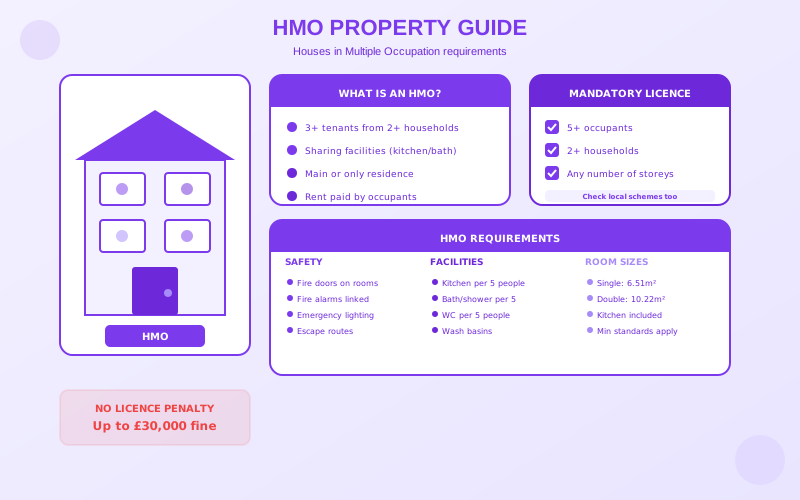
A property is an HMO if it meets the "standard test" - three or more tenants forming two or more separate households, who share toilet, bathroom, or kitchen facilities.
Next step for landlords
Problem clear? Create the right notice before you serve
If the issue now points toward possession, move from guidance into a notice route that keeps grounds, dates, service, and evidence together.
- Choose the right route before you serve anything.
- Answer plain-English questions. We handle the legal logic.
- Preview the paperwork before you pay.

HMO Definitions
- Household: A single person, couple, or family living together
- Sharing facilities: Common use of kitchens, bathrooms, or toilets
- Main residence: The property is tenants' only or main home
- Rent or consideration: Payment of some kind is made
Common HMO types include:
- Student house shares
- Professional house shares
- Bedsits with shared facilities
- Converted buildings with self-contained flats (certain circumstances)
- Hostels and B&Bs (not holiday lets)
Mandatory Licensing
Since October 2018, mandatory HMO licensing in England applies to properties occupied by five or more people forming two or more households, regardless of storeys.
| Criteria | Pre-October 2018 | Current Rules |
|---|---|---|
| Minimum occupants | 5+ people | 5+ people |
| Minimum households | 2+ households | 2+ households |
| Storey requirement | 3+ storeys | Any number of storeys |
| Purpose-built flats | Generally excluded | May be included |
In Scotland, HMO licensing applies to all HMOs with 3+ unrelated people. Wales and Northern Ireland have different thresholds. Always check local requirements.
Additional Licensing Schemes
Many local authorities operate additional licensing schemes that cover smaller HMOs not caught by mandatory licensing. These vary significantly by area.
Additional Licensing Examples
- All HMOs regardless of size (some London boroughs)
- HMOs in specific wards or areas
- Above-commercial HMOs
- Converted properties with bedsits
- Properties in areas with high ASB or poor conditions

Some areas also have selective licensing covering all private rental properties, not just HMOs. Contact your local council to understand which schemes apply to you.
Applying for a License
HMO license applications are made to your local authority. The process typically involves property inspection, fee payment, and proving you're a fit and proper person.
| Requirement | Details |
|---|---|
| Application fee | £500-£1,500+ depending on council |
| Fit and proper person | No relevant criminal convictions, discrimination findings |
| Property standards | Fire safety, amenities, room sizes |
| Management arrangements | Demonstrable ability to manage the property |
| License duration | Up to 5 years |
Start your application early - processing can take months, and operating an unlicensed HMO is an offense from day one.
Minimum Room Sizes
National minimum room sizes apply to all licensed HMOs. Local authorities may impose stricter requirements through license conditions.
National Minimum Room Sizes
- Single occupancy (1 person over 10): 6.51 square meters
- Double occupancy (2 people over 10): 10.22 square meters
- Child under 10: Counts as 0.5 person for calculation

Only floor space with ceiling height of 1.5m+ counts toward room size. Sloping ceilings, alcoves, and unusable space are excluded from the calculation.
Safety Requirements
HMOs must meet enhanced safety standards beyond those for standard rental properties. These are typically enforced through license conditions.
| Safety Area | Typical Requirements |
|---|---|
| Fire detection | Interlinked smoke/heat alarms, possibly Grade A system |
| Fire doors | FD30 doors to bedrooms and kitchens |
| Emergency lighting | In corridors and escape routes (larger HMOs) |
| Fire extinguishers | Often required in common areas and kitchens |
| Fire blankets | Required in all kitchens |
| Escape routes | Clear, unobstructed, with thumb-turn locks |
Gas safety certificates, EICRs, and energy performance certificates are also mandatory for HMOs as with other rental properties.
Management Regulations
The Management of Houses in Multiple Occupation (England) Regulations 2006 impose ongoing duties on HMO landlords beyond initial licensing.
Manager's Duties
- Display name and contact details in the property
- Maintain common areas, fixtures, and fittings
- Keep escape routes clear and fire equipment maintained
- Ensure water and gas supplies are safe
- Provide adequate waste disposal facilities
- Maintain living accommodation in good repair
Amenity standards also apply - adequate kitchen facilities, bathrooms, and toilets for the number of occupants. Councils often specify ratios in license conditions.
| Amenity | Typical Ratio |
|---|---|
| Bathrooms | 1 per 5 occupants |
| Toilets | 1 per 5 occupants |
| Kitchen sinks | 1 per 5 occupants |
| Cookers | 1 per 5 occupants |
| Fridges | 1 per 5 occupants |
Penalties for Non-Compliance
Operating an unlicensed HMO or breaching license conditions carries severe penalties. Councils are actively enforcing HMO regulations.
Potential Penalties
- Unlicensed HMO: Unlimited fine (criminal) or up to £30,000 (civil)
- Breach of conditions: Up to £5,000 fine per breach
- Management failures: Up to £5,000 per breach
- Rent Repayment Orders: Up to 12 months' rent returned to tenants
- Banning orders: Prohibited from being a landlord

Tenants can apply for Rent Repayment Orders if you operate an unlicensed HMO, potentially recovering up to 12 months' rent. Councils can also apply for RROs.
HMO Compliance Tools
Landlord Heaven provides HMO compliance checklists, license renewal reminders, and management templates to help you meet all regulatory requirements.
View HMO Tools ?HMO FAQ
Do couples count as one or two households?
Couples living together as a household count as one household, regardless of whether they're married. However, they count as two people for occupancy numbers and room size calculations.
Do I need planning permission for an HMO?
Possibly. Small HMOs (up to 6 people) usually fall under Use Class C4 and may need permission if there's an Article 4 direction in your area. Larger HMOs require sui generis planning permission. Check with your local planning authority.
Can I use Section 21 for unlicensed HMO?
No. If your HMO requires a license but doesn't have one, you cannot serve a valid Section 21 notice. You'll need to obtain the license first, then wait for any required notice period before serving Section 21.
How long does an HMO license last?
HMO licenses are typically granted for 5 years, though councils can issue shorter licenses if there are concerns. License conditions may require annual inspections or certifications throughout the period.
What if I inherit an HMO without a license?
Apply for a license immediately. You may have a defense if you can show you didn't know and couldn't reasonably have known licensing was required. However, you must apply as soon as you become aware. Councils may show leniency for inherited properties if you act promptly.
What to do next
Core eviction guides landlords usually need next
These are the core possession guides landlords usually need after notice or arrears problems start.
FAQs for landlords

Have a landlord question?
Ask Heaven is our free AI assistant that can help with eviction advice, tenancy questions, and more.