
Rated4.8/5 | 3008 reviews
Deposit Protection Scotland - Tenancy Deposit Schemes Guide 2026
Complete guide to deposit protection in Scotland. Learn which schemes to use, deadlines, penalties for non-compliance, and how to handle deposit disputes.
Use this guide when
You need a practical landlord answer, not just a definition
Use this page when you need to understand scotland deposit protection tenancy in landlord terms, check the evidence or compliance points that matter, and decide whether the next step is a guide, free tool, notice pack, court pack, tenancy agreement, rent increase pack, or money claim route.
You are setting up a new tenancy and you do not want to rely on an old template. This guide explains which agreement you need and what to sort before the tenant moves in.
Deposit Protection Key Points
- Deadline: 30 working days from receiving deposit
- Schemes: 3 approved schemes in Scotland
- Penalty: Up to 3x deposit for non-compliance
- Maximum deposit: No statutory limit in Scotland (usually 1-2 months)
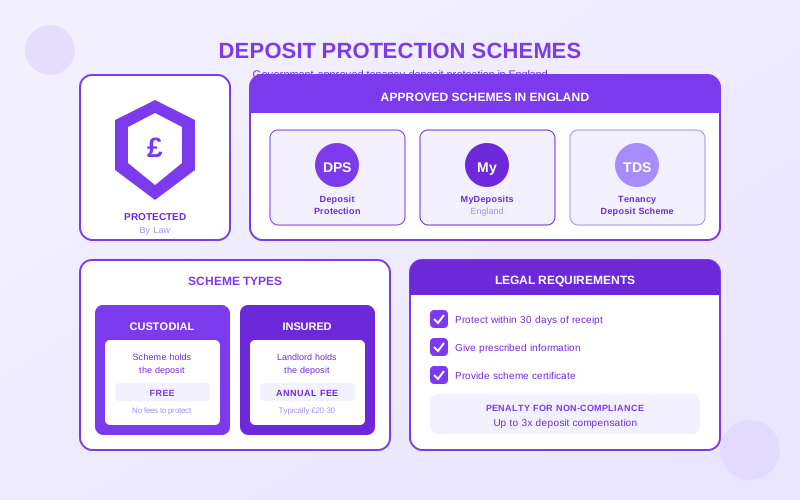
Overview
The Tenancy Deposit Schemes (Scotland) Regulations 2011 require landlords to protect deposits paid by tenants. This applies to:
New tenancy
Setting up a tenancy? Choose the right agreement
If the next job is getting the tenancy in place, choose the agreement route that matches the property and arrangement now.
- Choose the right England agreement route for the tenancy you are setting up.
- Avoid old wording that causes problems later.
- Preview it before you pay.

- Private Residential Tenancies (PRTs)
- Assured tenancies
- Short assured tenancies
- Any tenancy where a deposit is taken
The deposit must be protected for the duration of the tenancy and only released at the end, with any agreed deductions for damage or evict tenant not paying rent guide.
Approved Schemes
There are three approved tenancy deposit schemes in Scotland:
| Scheme | Type | Website |
|---|---|---|
| SafeDeposits Scotland | Custodial | safedepositsscotland.com |
| Letting Protection Service Scotland | Insurance-based | lettingprotectionscotland.com |
| mydeposits Scotland | Insurance-based | mydepositsscotland.co.uk |
Custodial vs Insurance-Based
Custodial Schemes
- You pay the deposit to the scheme
- The scheme holds the money
- Usually free to use
- SafeDeposits Scotland is the only custodial option
Insurance-Based Schemes
- You keep the deposit in your account
- You pay a fee to the scheme
- The scheme provides insurance protection
- Good if you want to retain the deposit funds
Protection Deadlines
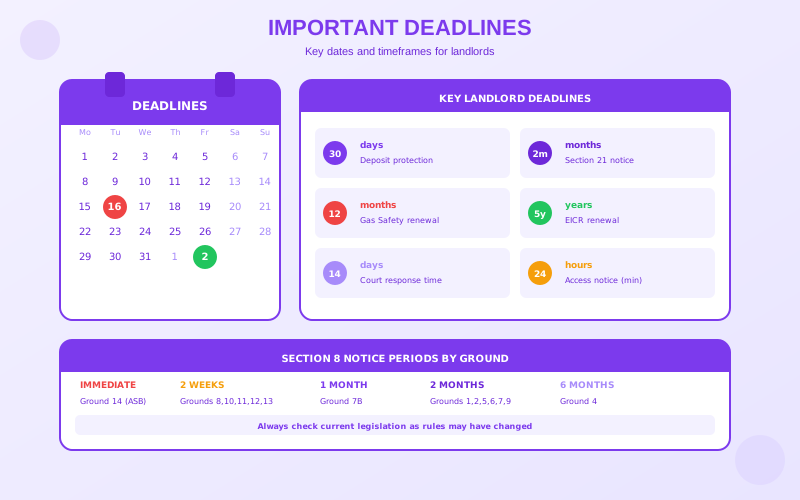
You must protect the deposit within 30 working days of receiving it. This means:
- Count from the day you receive the deposit (not tenancy start)
- Exclude weekends and Scottish public holidays
- The deposit must be registered with the scheme by the deadline
Don't Miss the Deadline
If you miss the 30 working day deadline, you're in breach of the regulations. The tenant can apply to the First-tier Tribunal for a penalty even years later. There's no way to "fix" late protection.
Tenant Information Requirements
Within 30 working days of receiving the deposit, you must provide the tenant with specific information:
- Confirmation that the deposit is protected
- The name and contact details of the scheme used
- How to apply for the deposit's return
- What to do if there's a dispute
- The scheme's dispute resolution process
Most schemes provide a certificate or letter that meets these requirements. Keep proof that you gave this information to the tenant.
Penalties for Non-Compliance
If you fail to protect a deposit or provide the required information:
Tenant Can Apply to Tribunal For:
- Payment order: Up to 3x the deposit amount
- This is a penalty, not compensation - the tenant keeps it
- The tenant can also claim return of the deposit itself
When Penalties Apply
- Deposit not protected at all
- Protected late (after 30 working days)
- Required information not given to tenant
- Information given late
- Wrong scheme used (unlikely but possible)
Tribunal Discretion
The Tribunal decides the penalty amount, up to 3x the deposit. Factors include:
- How late the protection was
- Whether it was deliberate or a mistake
- Any harm to the tenant
- The landlord's conduct overall
End of Tenancy Process
Step 1: Inspection
Conduct a thorough checkout inspection, comparing the property to the check-in inventory. Note any damage beyond fair wear and tear.
Step 2: Deductions
If claiming deductions, provide the tenant with:
- Itemised list of deductions
- Photographs of damage
- Quotes or invoices for repairs
- Comparison to check-in inventory
Step 3: Agreement or Dispute
If the tenant agrees to deductions, both parties inform the scheme and the deposit is released accordingly. If there's disagreement, use the scheme's free dispute resolution service.
Handling Disputes
All three Scottish schemes offer free Alternative Dispute Resolution (ADR):
- Submit the dispute to the scheme
- Provide your evidence (inventory, photos, invoices)
- The tenant provides their evidence
- An adjudicator makes a binding decision
- The deposit is released according to the decision
Tip: Good Inventories Win Disputes
Detailed check-in and check-out inventories with dated photographs are crucial. Without them, it's very difficult to prove damage occurred during the tenancy.
Deposit Protection FAQ
Is there a maximum deposit in Scotland?
Unlike England (where it's capped at 5 weeks' rent), Scotland has no statutory maximum. However, most landlords take 1-2 months' rent.
What if I forget to protect the deposit?
Protect it immediately. You're still in breach, but the Tribunal considers how long the delay was. The tenant can still claim a penalty, but it may be lower if you acted quickly once you realised.
Do I need to re-protect if the tenancy changes?
If a Short Assured Tenancy becomes a PRT, you don't need to re-protect as long as the original protection is still valid. The deposit remains protected.
Can I use an English deposit scheme?
No. You must use one of the three approved Scottish schemes. English, Welsh, and Northern Irish schemes are not valid in Scotland.
What about deposits for HMO rooms?
The same rules apply. Each tenant's deposit must be protected within 30 working days of receipt, regardless of the property type.
Managing Tenancy Deposits?
Landlord Heaven provides templates and guidance for Scottish landlords managing deposits and tenancy compliance.
View All Products ?What to do next
Core eviction guides landlords usually need next
These are the core possession guides landlords usually need after notice or arrears problems start.
FAQs for landlords

Question about deposit protection?
Ask Heaven is our free AI assistant that can help with eviction advice, tenancy questions, and more.