
Rated4.8/5 | 3008 reviews
Private Residential Tenancy (PRT) Guide - Scotland 2026
Complete guide to Scotland Private Residential Tenancy. Learn about PRT rules, tenant rights, landlord obligations, rent increases, and how PRTs differ from...
Use this guide when
You need a practical landlord answer, not just a definition
Use this page when you need to understand private residential tenancy scotland in landlord terms, check the evidence or compliance points that matter, and decide whether the next step is a guide, free tool, notice pack, court pack, tenancy agreement, rent increase pack, or money claim route.
You are setting up a new tenancy and you do not want to rely on an old template. This guide explains which agreement you need and what to sort before the tenant moves in.
Scotland Is Different
Scottish tenancy law is completely separate from English law. There is no Section 21 in Scotland, no Assured Shorthold Tenancy, and eviction must be through the First-tier Tribunal (not the County Court). Make sure you're following the correct procedures.

What Is a Private Residential Tenancy?
A Private Residential Tenancy is the standard tenancy type for most private sector lettings in Scotland. It was introduced by the Private Housing (Tenancies) (Scotland) Act 2016 to replace the previous Assured Tenancy and Short Assured Tenancy.
New tenancy
Setting up a tenancy? Choose the right agreement
If the next job is getting the tenancy in place, choose the agreement route that matches the property and arrangement now.
- Choose the right England agreement route for the tenancy you are setting up.
- Avoid old wording that causes problems later.
- Preview it before you pay.

When Does a PRT Apply?
A PRT is created when all of these conditions are met:
- The property is let as a separate dwelling
- The tenant is an individual (not a company)
- The property is the tenant's only or principal home
- The landlord is not resident in the property
- The tenancy doesn't fall into an exempt category
Exempt Tenancies
PRTs do not apply to:
- Holiday lets
- Student accommodation let by educational institutions
- Resident landlord arrangements
- Agricultural tenancies
- Homeless temporary accommodation provided by councils
- Properties with very high rents
Key Features of PRTs
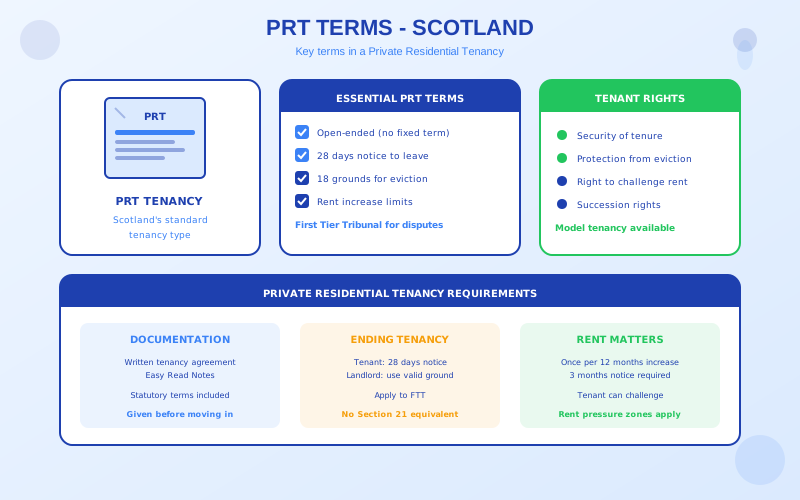
No Fixed Term (Open-Ended)
Unlike English ASTs, PRTs do not have an end date. The tenancy continues indefinitely until either:
- The tenant gives notice to leave, or
- The landlord obtains an eviction order from the First-tier Tribunal using one of the 18 statutory grounds
Statutory Terms
All PRTs automatically include certain statutory terms set out in legislation. You cannot contract out of these terms - any clause that contradicts them is void.
Model Tenancy Agreement
The Scottish Government provides a model tenancy agreement that landlords should use. Using the official template ensures compliance with statutory requirements.
No "No-Fault" Eviction
Scotland abolished "no-fault" eviction when it introduced PRTs. You cannot evict a tenant simply because you want them to leave or because a fixed term has ended. You must prove one of the statutory grounds applies, and the First-tier Tribunal must grant an eviction order.
Tenancy Terms
Mandatory Statutory Terms
Every PRT includes these terms by law, regardless of what your written agreement says:
- Rent and payment: How much rent is payable and when
- Deposits: How deposits must be handled
- Rent increases: The process for increasing rent
- Tenant's right to end the tenancy: Notice period and process
- Landlord's duty to provide information: What the landlord must tell the tenant
- Notifications: How notices must be served
- Subletting and assignation: Rules about subletting
- Access for repairs: The landlord's right to enter for repairs
Discretionary Terms
You can add additional terms to your PRT, provided they don't contradict the statutory terms or are unfair. Common additions include:
- Pet policies
- Garden maintenance responsibilities
- Rules about guests
- Smoking policies
- Decoration and alterations
Rent and Rent Increases
Setting the Initial Rent
You can set the initial rent at any level. Scotland doesn't have rent controls for new tenancies (unlike some other countries). The market determines initial rent.
Rent Increases
During the tenancy, there are strict rules about rent increases:
- Frequency: Only once every 12 months
- Notice: At least 3 months' written notice
- Form: Must use the prescribed form (Form RR1)
- Challenge: Tenant can refer the increase to Rent Service Scotland
Rent Pressure Zones
Local authorities can apply to have areas designated as "Rent Pressure Zones" where rent increases are capped. As of 2026, check whether your property is in a designated zone.
Rent Freeze History
Scotland implemented temporary rent freezes and eviction bans during the cost-of-living crisis. Always check the current rules, as emergency legislation may affect your ability to increase rent or evict tenants.
Landlord Obligations
Before the Tenancy
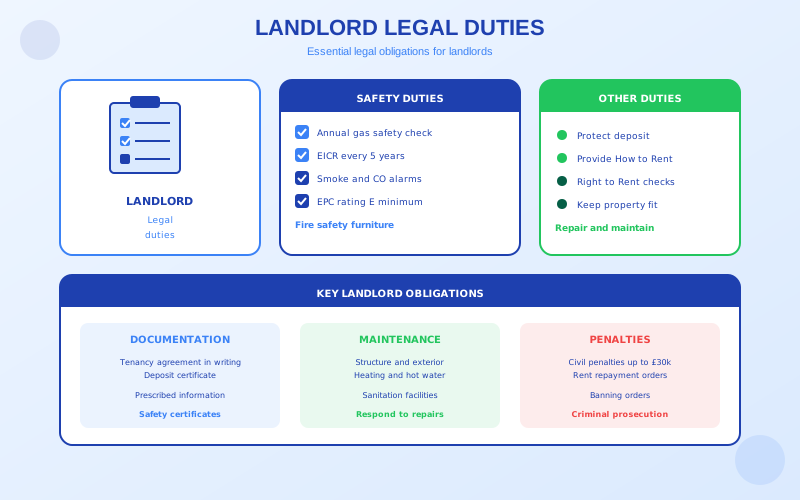
- Landlord registration: You must be registered with the local council
- Written agreement: Provide a written tenancy agreement (use the model PRT)
- Tenant information pack: Give the tenant prescribed information
- Deposit protection: Protect the deposit within 30 working days
During the Tenancy
- Repairing standard: Keep the property in good repair (Scottish repairing standard applies)
- Safety certificates: Gas safety certificate annually, EICR every 5 years
- Fire safety: Interlinked fire alarms and carbon monoxide detectors
- Legionella risk assessment: Assess and manage legionella risks
- 24-48 hours' notice: Before entering the property (except emergencies)
Tenant Information Pack
You must provide tenants with specific information, including:
- Your name and address (or agent's details)
- Your landlord registration number
- EPC for the property
- Information about deposit protection
- The Easy Read Notes for the Scottish Model Tenancy Agreement
Ending a PRT
Tenant Ends Tenancy
Tenants can end a PRT at any time by giving written notice. The minimum notice period is:
- 28 days: If notice is given on any day
The tenancy ends on the day stated in the notice (which must be at least 28 days from when notice is given), regardless of rent payment dates.
Landlord Ends Tenancy
Landlords cannot simply "end" a PRT. You must:
- Identify a valid eviction ground
- Serve a Notice to Leave with the correct notice period
- Apply to the First-tier Tribunal for an eviction order
- If granted, apply to sheriff officers to enforce the order
Notice to Leave Periods
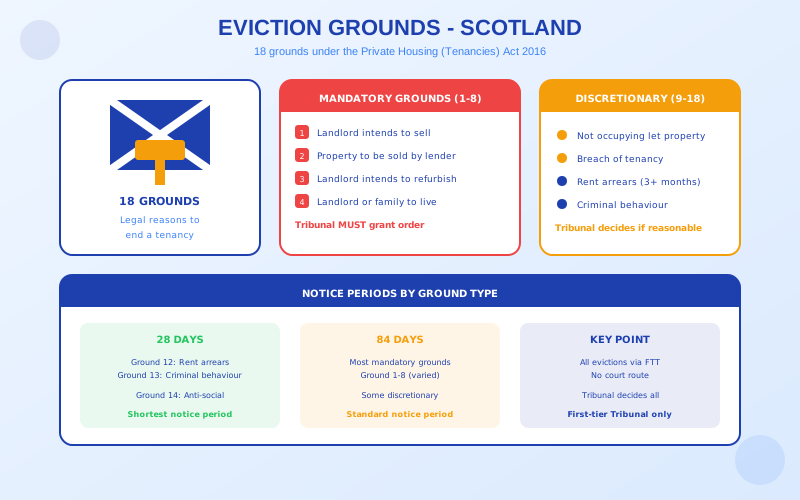
The notice period varies depending on the ground and how long the tenant has lived in the property. It ranges from 28 days to 84 days. Some grounds have different periods depending on tenancy length.
Eviction Grounds Overview
There are 18 grounds for eviction under the PRT. They fall into two categories:
Mandatory Grounds
If you prove the ground applies, the Tribunal must grant an eviction order:
- Ground 1: Landlord intends to sell
- Ground 2: Property to be sold by lender
- Ground 3: Landlord intends to refurbish
- Ground 4: Landlord or family member intends to live in property
- Ground 5: Property needed for religious worker
- Ground 6: Landlord intends to use for non-residential purpose
- Ground 7: Property to be demolished
- Section 8 notice guide: Tenant no longer needs supported accommodation
- Ground 10: Not occupying as only or principal home
- Ground 12: Rent arrears (at least 3 consecutive months)
Discretionary Grounds
The Tribunal may grant an eviction order if it is reasonable to do so:
- Ground 9: Tenant is an employee and employment has ended
- Ground 11: Breach of tenancy agreement
- Ground 12: Rent arrears (less than 3 months but substantial)
- Ground 13: Criminal behaviour
- Ground 14: Antisocial behaviour
- Ground 15: Association with person who has behaved antisocially
- Ground 16: Landlord has had registration refused or revoked
- Ground 17: HMO licence has been revoked
- Ground 18: Overcrowding statutory notice
| Ground | Reason | Type | Notice Period |
|---|---|---|---|
| Ground 1 | Landlord selling | Mandatory | 28/84 days |
| Ground 4 | Landlord/family moving in | Mandatory | 28/84 days |
| Ground 11 | Breach of agreement | Discretionary | 28 days |
| Ground 12 | Rent arrears | Both* | 28 days |
| Ground 14 | Antisocial behaviour | Discretionary | 28 days |
* Ground 12 is mandatory if arrears are 3+ months; discretionary otherwise
PRT FAQ
Can I use a break clause in a PRT?
No. PRTs don't have fixed terms, so break clauses don't apply. The tenant can leave with 28 days' notice at any time. The landlord can only end the tenancy using one of the 18 statutory grounds.
What if my tenant signed before December 2017?
Tenancies that started before 1 December 2017 may still be Assured or Short Assured Tenancies under the old rules. Check your tenancy type carefully - the rules are different.
How long does eviction take in Scotland?
From serving the Notice to Leave to the tenant leaving, expect 3-6 months minimum. Complex cases or appeals can take longer. The First-tier Tribunal process adds time compared to some court processes.
Can I refuse to renew a PRT?
You don't "renew" a PRT - it continues indefinitely. There is no equivalent to refusing to renew at the end of a fixed term. You can only end the tenancy by proving a ground and getting a Tribunal order.
What deposit scheme should I use?
Scotland has three approved schemes: SafeDeposits Scotland, Letting Protection Service Scotland, and mydeposits Scotland. You must protect the deposit within 30 working days of receiving it.
Is landlord registration mandatory?
Yes. All private landlords in Scotland must be registered with the local authority where their rental property is located. Operating without registration is a criminal offence with significant penalties.
Need a Scotland Tenancy Agreement?
Get a compliant Private Residential Tenancy agreement for Scotland. Our template follows the Scottish Government's model agreement and includes all required statutory terms.
View Tenancy Agreement ?What to do next
Core eviction guides landlords usually need next
These are the core possession guides landlords usually need after notice or arrears problems start.
FAQs for landlords

Have a landlord question?
Ask Heaven is our free AI assistant that can help with eviction advice, tenancy questions, and more.