
Rated4.8/5 | 3008 reviews
Scotland Ground 12 - Rent Arrears Eviction Guide 2026
Complete guide to Ground 12 rent arrears eviction in Scotland. Learn when Ground 12 is mandatory vs discretionary, notice requirements, and Tribunal process.

Assisted prep
Want a second pair of eyes before you act?
Book a free consultation and we will review the route and documents with you. We only confirm paid assisted preparation if we can help.
Book free consultationUse this guide when
You need a practical landlord answer, not just a definition
Use this page when you need to understand scotland ground 12 rent arrears in landlord terms, check the evidence or compliance points that matter, and decide whether the next step is a guide, free tool, notice pack, court pack, tenancy agreement, rent increase pack, or money claim route.
Your tenant owes you money and you need to know the fastest lawful way to chase it. This guide explains the route, the paperwork, and the mistakes that can slow you down.
Ground 12 Key Points
- Mandatory: When tenant owes 3+ consecutive months at both notice AND hearing
- Discretionary: When arrears are substantial but less than 3 months
- Notice period: 28 days (regardless of tenancy length)
- Evidence: Rent statements showing arrears history
What Is Ground 12?
Ground 12 of Schedule 3 to the Private Housing (Tenancies) (Scotland) Act 2016 allows landlords to seek eviction when the tenant has accumulated rent arrears. The ground applies when:
Unpaid rent
Tenant still owes money? Prepare the claim file
If the arrears keep growing, turn the problem into a clearer debt record and claim narrative before the evidence gets harder to untangle.
- Set out what is owed clearly before the numbers get harder to untangle.
- Build the claim in plain English.
- Get the court paperwork ready for the next step.

- The tenant is in rent arrears
- At the date of the Notice to Leave
- And at the date of the Tribunal hearing
The unique feature of Ground 12 is that it can be either mandatory or discretionary, depending on the amount and duration of the arrears.
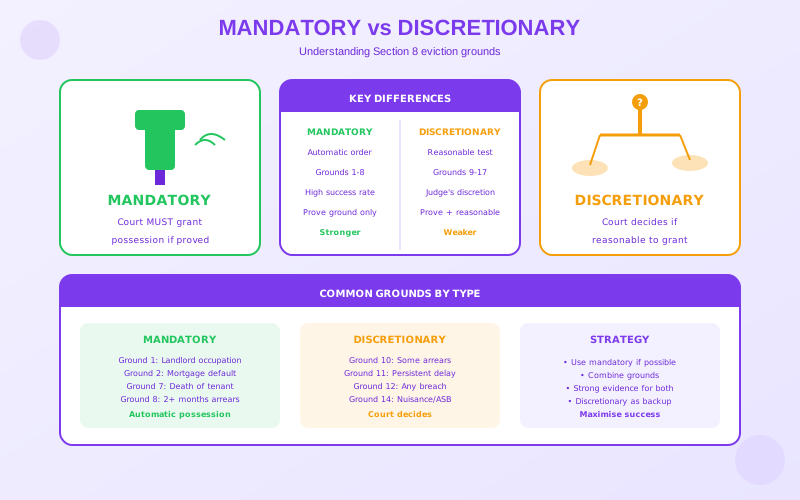
Mandatory vs Discretionary
When Ground 12 Is Mandatory
The Tribunal MUST grant an eviction order if:
Both Conditions Must Be Met:
- 1. The tenant owes at least 3 consecutive months' rent at the date of the Notice to Leave
- 2. The tenant STILL owes at least 3 consecutive months' rent at the date of the Tribunal hearing
If both conditions are satisfied, the Tribunal has no discretion - it must grant the eviction order. The tenant's personal circumstances, reasons for non-payment, or partial payments don't matter.
When Ground 12 Is Discretionary
Ground 12 becomes discretionary when:
- Arrears are less than 3 months at the notice date
- Arrears fall below 3 months before the hearing (tenant made payments)
- Arrears are for non-consecutive months
For discretionary Ground 12, the Tribunal considers whether it's reasonable to grant eviction, weighing factors like:
- Amount of arrears
- Payment history
- Reasons for falling into arrears
- Tenant's efforts to reduce the debt
- Impact of eviction on the tenant
- Landlord's need to recover the property
Strategic Payment by Tenants
Some tenants strategically pay just enough before the hearing to bring arrears below 3 months, converting mandatory Ground 12 to discretionary. While frustrating, this is a legitimate defence. Consider whether you have other grounds available.
Proving Rent Arrears
Documentation Required
You'll need to provide the Tribunal with:
- Tenancy agreement: Showing the rent amount and due dates
- Rent statement: Complete history of rent due and payments received
- Bank statements: Showing payments (or lack of) received
- Arrears letters: Any formal demands you've sent
- Communication: Emails/texts about the arrears
Calculating Arrears
For the 3-month mandatory threshold:
- Calculate the total rent due for 3 consecutive months
- If the tenant owes this amount or more, the threshold is met
- Partial months don't count - it must be 3 FULL months
- The months must be consecutive (e.g., January, February, March)
Example Calculation:
Rent: £1,000 per month
3 months' rent: £3,000
Current arrears: £3,500
Result: Mandatory Ground 12 applies (if still £3,000+ at hearing)
Notice Requirements
Notice Period
For Ground 12, the notice period is 28 days regardless of how long the tenant has been in the property. This is shorter than many other grounds which require 84 days for tenancies over 6 months.
Notice to Leave Content
Your Notice to Leave must:
- Use the prescribed form
- Tick Ground 12 as the eviction ground
- State the amount of arrears at the notice date
- Be served correctly on the tenant
Multiple Grounds
Consider including other applicable grounds in your notice:
- Section 8 notice guide (Breach): Non-payment is a breach of the tenancy
- Ground 1 (Selling): If you intend to sell due to financial pressure
Having backup grounds protects you if the tenant reduces arrears below 3 months.

Tribunal Process
Application
After the 28-day notice expires, apply to the First-tier Tribunal with:
- Application form
- Notice to Leave and proof of service
- Tenancy agreement
- Rent statement showing arrears at notice date
- Updated rent statement for the hearing
At the Hearing
The Tribunal will check:
- Was the notice validly served?
- Were there 3+ months arrears at the notice date?
- Are there still 3+ months arrears now?
- If mandatory: Grant the eviction order
- If discretionary: Consider reasonableness
Payment Orders
You can also apply for a payment order requiring the tenant to pay the arrears. This can be combined with your eviction application.
Common Tenant Defences
For Mandatory Ground 12
Tenants have limited defences when the ground is mandatory:
- Notice invalid: Wrong form, wrong service, miscalculated dates
- Arrears disputed: Claiming payments weren't credited
- Paid below threshold: Reduced arrears before hearing to under 3 months
For Discretionary Ground 12
Additional arguments the tenant may raise:
- Temporary financial difficulty (job loss, illness)
- Awaiting benefits payments
- Making regular partial payments
- Vulnerability factors
- Impact on children/dependents
Ground 12 FAQ
What if arrears are partly Housing Benefit?
Arrears are arrears, regardless of source. However, if the tenant is waiting for Housing Benefit payments due to council delays, the Tribunal may consider this for discretionary Ground 12.
Can I claim arrears and eviction together?
Yes. You can apply for both an eviction order and a payment order in the same Tribunal application. The payment order creates a debt you can enforce.
What if the tenant pays in full before the hearing?
If arrears are cleared completely before the hearing, Ground 12 no longer applies. You could still proceed under Ground 11 (breach) as a discretionary ground, but success is less certain.
How long does the process take?
From serving the Notice to Leave to obtaining an eviction order: typically 2-4 months. Add enforcement time if the tenant doesn't leave voluntarily.
Should I wait for more arrears before serving notice?
If arrears are approaching 3 months, it may be worth waiting to meet the mandatory threshold. However, don't delay too long - more arrears means more loss if the tenant can't pay.
Track Your Rent Arrears
Landlord Heaven provides rent tracking tools and arrears management guides to help you document everything you need for a successful Ground 12 eviction.
View Rent Tracker ?Prefer us to prepare it with you?
Free consultation before any assisted eviction preparation is agreed
We discuss the facts first. If we can help, we confirm the scope and send a secure Stripe payment link afterwards.
Unsure about grounds or dates?
Landlord Section 8 notice assistance
Free consultation · £149.00 only if we confirm we can help
Before you serve, we help organise your Form 3A, tenant details, notice timing, service plan and evidence prompts around the facts you approve.
Book free consultation
Want the full case, including court forms?
Landlord eviction assistance service
Free consultation · £399.00 only if we confirm we can help
Our £399 full-case service can cover your Section 8 notice, service record, N5, N119 particulars of claim and supporting bundle. If you have already served notice, we focus on the court-stage pack.
Book free consultationWhat to do next
Core eviction guides landlords usually need next
These are the core possession guides landlords usually need after notice or arrears problems start.
FAQs for landlords

Have a landlord question?
Ask Heaven is our free AI assistant that can help with eviction advice, tenancy questions, and more.