
Rated4.8/5 | 3008 reviews
Scotland Eviction Process Explained - Landlord Guide 2026
Complete guide to the Scotland eviction process for landlords. Learn about Notice to Leave, First-tier Tribunal applications, eviction orders, and enforcement.
Use this guide when
You need a practical landlord answer, not just a definition
Use this page when you need to understand scotland eviction process in landlord terms, check the evidence or compliance points that matter, and decide whether the next step is a guide, free tool, notice pack, court pack, tenancy agreement, rent increase pack, or money claim route.
You are setting up a new tenancy and you do not want to rely on an old template. This guide explains which agreement you need and what to sort before the tenant moves in.
Scotland requires a Notice to Leave. Follow the Scottish eviction notice guide to keep tribunal filings on track.
Key Points
- All evictions must go through the First-tier Tribunal
- You must serve a valid Notice to Leave before applying
- The process typically takes 3-6 months minimum
- Illegal eviction is a criminal offence with severe penalties
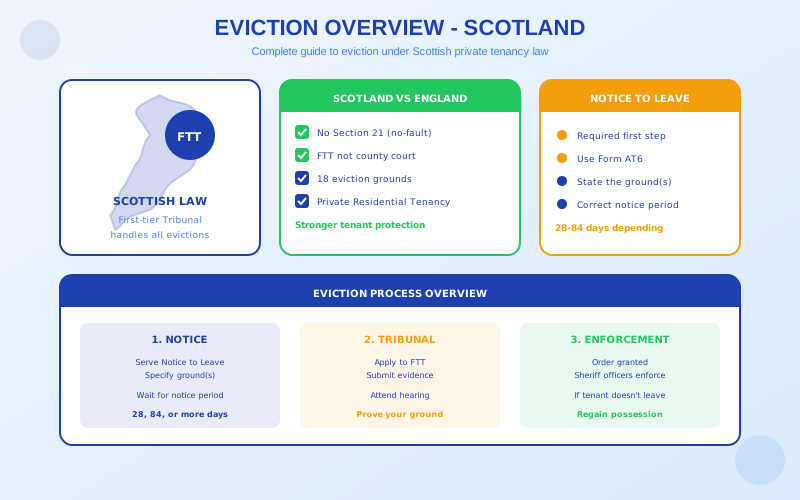
step-by-step UK eviction process Overview
The Scottish eviction process for Private Residential Tenancies (PRTs) follows these mandatory steps:
New tenancy
Setting up a tenancy? Choose the right agreement
If the next job is getting the tenancy in place, choose the agreement route that matches the property and arrangement now.
- Choose the right England agreement route for the tenancy you are setting up.
- Avoid old wording that causes problems later.
- Preview it before you pay.

Five Steps to Eviction:
- 1Identify a valid eviction ground
Choose from the 18 statutory grounds - you must have evidence
- 2Serve a Notice to Leave
Give the correct notice period (28-84 days depending on ground and tenancy length)
- 3Apply to the First-tier Tribunal
Submit your application with evidence after the notice period expires
- 4Attend the Tribunal hearing
Present your case - the Tribunal decides whether to grant an eviction order
- 5Enforce the order
If the tenant doesn't leave, instruct sheriff officers to carry out the eviction
Never Self-Evict
Changing locks, removing belongings, cutting utilities, or harassing a tenant to leave is illegal eviction in Scotland. It's a criminal offence punishable by unlimited fines and imprisonment. The tenant can also claim substantial damages. Always follow the legal process.
Step 1: Identify Your Ground
You must have a valid reason (ground) to evict a PRT tenant. There are 18 grounds in total, divided into mandatory and discretionary grounds.
Most Common Grounds for Landlords
| Ground | Reason | Type |
|---|---|---|
| Ground 1 | Landlord intends to sell the property | Mandatory |
| Ground 4 | Landlord or family member intends to live in property | Mandatory |
| Section 8 notice guide | Tenant has breached the tenancy agreement | Discretionary |
| Ground 12 | Rent arrears | Both* |
| Ground 14 | Tenant has behaved antisocially | Discretionary |
* Ground 12 is mandatory if arrears are 3+ consecutive months at both notice and hearing; otherwise discretionary
Mandatory vs Discretionary
- Mandatory: If you prove the ground applies, the Tribunal MUST grant an eviction order
- Discretionary: Even if the ground applies, the Tribunal will only grant eviction if it's reasonable in all the circumstances
Step 2: Serve Notice to Leave
Before applying to the Tribunal, you must serve a Notice to Leave on the tenant. This is a formal notice stating your intention to seek eviction and the ground(s) you're relying on.
Notice Periods
| Ground | Under 6 Months | 6 Months or More |
|---|---|---|
| Grounds 1-8, 10 | 28 days | 84 days |
| Grounds 9, 11-18 | 28 days | 28 days |

Step 3: Apply to the Tribunal
Once the notice period has expired (and the tenant hasn't left), apply to the First-tier Tribunal (Housing and Property Chamber) for an eviction order.
Application Requirements
- Completed application form
- Copy of the tenancy agreement
- Copy of the Notice to Leave
- Proof of service
- Evidence supporting your ground(s)
- Application fee
Step 4: The Tribunal Hearing
After your application is accepted, the Tribunal schedules a Case Management Discussion (CMD) and possibly a full hearing.
Case Management Discussion
The CMD is a preliminary hearing, usually by phone or video. The Tribunal checks the application, identifies issues, and decides if a full hearing is needed.
Full Hearing
At the full hearing, you present your evidence and arguments. The tenant can present their case. The Tribunal decides whether to grant the eviction order.
Step 5: Enforcement
If the tenant doesn't leave after the eviction order is granted, you'll need to enforce it using sheriff officers.
Instructing Sheriff Officers
- Contact a sheriff officer firm
- Provide them with the eviction order
- They charge the tenant and give a deadline
- If necessary, they physically remove the tenant

Realistic Timescales
Typical Timeline:
- 28-84 days: Notice period
- 1-2 weeks: Preparing and submitting application
- 4-8 weeks: Tribunal processing and CMD
- 2-6 weeks: Full hearing (if needed)
- 1-2 weeks: Decision
- 2-4 weeks: Enforcement (if needed)
Total: 3-7 months
Eviction FAQ
Can I use multiple grounds?
Yes. You can state multiple grounds in your Notice to Leave to have backup options.
What if the tenant pays arrears before the hearing?
For Ground 12, arrears must exist at both notice and hearing for the mandatory element. If paid, the ground becomes discretionary.
Do I need a solicitor?
You can represent yourself at the Tribunal. It's designed for self-representation.
Can the tenant appeal?
Yes, to the Upper Tribunal within 30 days on a point of law.
Need Help With Your Eviction?
Landlord Heaven provides Scotland-specific eviction guides and templates to help you navigate the Tribunal process.
View Eviction Products ?Prefer us to prepare it with you?
Free consultation before any assisted eviction preparation is agreed
We discuss the facts first. If we can help, we confirm the scope and send a secure Stripe payment link afterwards.
Unsure about grounds or dates?
Landlord Section 8 notice assistance
Free consultation · £149.00 only if we confirm we can help
Before you serve, we help organise your Form 3A, tenant details, notice timing, service plan and evidence prompts around the facts you approve.
Book free consultation
Want the full case, including court forms?
Landlord eviction assistance service
Free consultation · £399.00 only if we confirm we can help
Our £399 full-case service can cover your Section 8 notice, service record, N5, N119 particulars of claim and supporting bundle. If you have already served notice, we focus on the court-stage pack.
Book free consultationWhat to do next
Core eviction guides landlords usually need next
These are the core possession guides landlords usually need after notice or arrears problems start.
FAQs for landlords

Have a landlord question?
Ask Heaven is our free AI assistant that can help with eviction advice, tenancy questions, and more.