
Rated4.8/5 | 3008 reviews
Scotland First-tier Tribunal - Landlord Guide 2026
Complete guide to the First-tier Tribunal (Housing and Property Chamber) in Scotland. Learn how to apply for eviction orders, what to expect at hearings, and...
Use this guide when
You need a practical landlord answer, not just a definition
Use this page when you need to understand first tier tribunal scotland landlord in landlord terms, check the evidence or compliance points that matter, and decide whether the next step is a guide, free tool, notice pack, court pack, tenancy agreement, rent increase pack, or money claim route.
This guide explains first tier tribunal scotland landlord in plain English, including the rules, common mistakes and practical next steps.
Key Points
- All PRT evictions must go through the Tribunal
- Designed for self-representation
- Less formal than court
- Decisions can be appealed

What Is the First-tier Tribunal?
The First-tier Tribunal (Housing and Property Chamber) is a specialist tribunal handling housing disputes including evictions, rent disputes, and repairing standard complaints.
Next step for landlords
Problem clear? Create the right notice before you serve
If the issue now points toward possession, move from guidance into a notice route that keeps grounds, dates, service, and evidence together.
- Choose the right route before you serve anything.
- Answer plain-English questions. We handle the legal logic.
- Preview the paperwork before you pay.

How It Differs From Courts
- Less formal: More accessible proceedings
- Specialist: Members are housing experts
- Accessible: Designed for self-representation
- Inquisitorial: Tribunal can ask questions
- Lower costs: Generally cheaper than court
Applying to the Tribunal
When to Apply
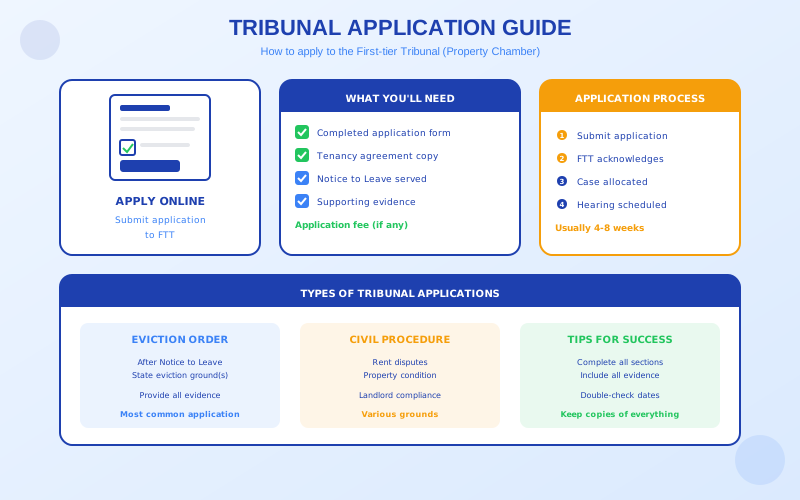
Apply once your Notice to Leave has expired and the tenant hasn't left.
Required Documents
- Completed application form
- Copy of tenancy agreement
- Copy of Notice to Leave
- Proof of service
- Evidence for your ground(s)
Evidence by Ground:
- Ground 1: Estate agent instructions, marketing materials
- Ground 4: Statement of intention, current accommodation details
- Section 8 notice guide: Details of breaches, warnings, photos
- Ground 12: Rent statements, payment demands
- Ground 14: Incident log, witness statements
Application Fee
Typically £50-100 - check current fees on the Scottish Courts website.
After You Apply
You'll receive an acknowledgment with your case reference. The Tribunal validates the application (1-2 weeks), serves it on the tenant, and the tenant has time to respond.
Tenant Response Options
- Not respond (case may proceed without hearing)
- Accept and agree to leave
- Contest the application
Case Management Discussion
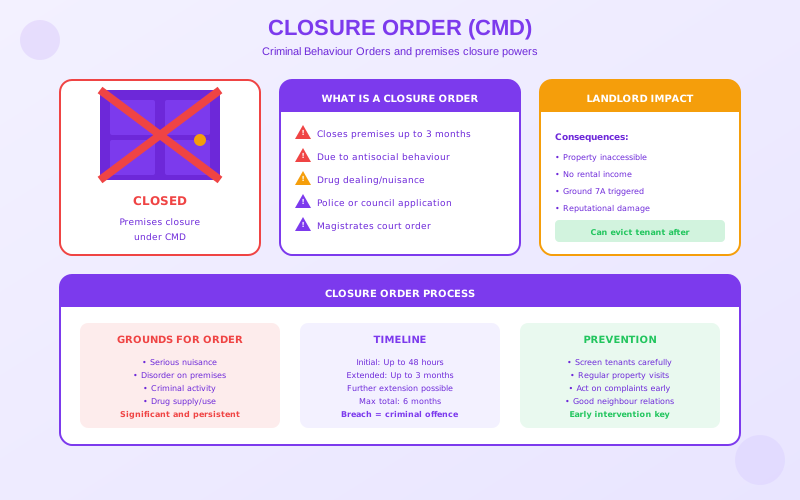
A Case Management Discussion (CMD) is a preliminary hearing, usually by phone or video, to prepare for the case.
Purpose
- Check parties understand the process
- Identify what's in dispute
- See if resolution is possible without full hearing
- Give directions for next steps
- Schedule full hearing if necessary
Possible Outcomes
- Decision made at CMD
- Full hearing scheduled
- Directions for more information
- Case adjourned
The Full Hearing
Format
- Location: Usually video call
- Duration: 30-60 minutes typically
- Formality: Less formal than court
What Happens
- Tribunal introduces the case
- You present your case and evidence
- Tenant presents their response
- Tribunal asks questions
- Closing statements
- Decision reserved
Tips for the Hearing
- Test video/audio beforehand
- Have all documents organized
- Write notes on key points
- Speak clearly
- Ask for clarification if needed
The Decision
The written decision is usually issued within 2-4 weeks. If successful, the eviction order specifies when the tenant must leave (usually 14 days).
If Unsuccessful
The decision explains why. You may apply again if circumstances change, or appeal on a point of law within 30 days.
Costs and Expenses
- Application fee: Paid upfront, not recoverable
- Legal fees: Generally not recoverable
- Sheriff officers: Separate enforcement costs (£200-500+)
Tribunal FAQ
How long does the process take?
From application to decision, expect 2-4 months for straightforward cases.
Can I bring witnesses?
Yes. Inform the Tribunal in advance. They can attend the video hearing or provide written statements.
What if the tenant doesn't attend?
The hearing can proceed. You still need to prove your case - absence doesn't mean automatic success.
Can I claim rent arrears too?
Yes, you can apply for a payment order alongside the eviction order.
Can I postpone the hearing?
You can request postponement with good reason. Contact the Tribunal early if you have a problem.
Prepare for the Tribunal
Landlord Heaven provides comprehensive guides and templates for navigating the First-tier Tribunal process in Scotland.
View Eviction Products ?Prefer us to prepare it with you?
Free consultation before any assisted eviction preparation is agreed
We discuss the facts first. If we can help, we confirm the scope and send a secure Stripe payment link afterwards.
Unsure about grounds or dates?
Landlord Section 8 notice assistance
Free consultation · £149.00 only if we confirm we can help
Before you serve, we help organise your Form 3A, tenant details, notice timing, service plan and evidence prompts around the facts you approve.
Book free consultation
Want the full case, including court forms?
Landlord eviction assistance service
Free consultation · £399.00 only if we confirm we can help
Our £399 full-case service can cover your Section 8 notice, service record, N5, N119 particulars of claim and supporting bundle. If you have already served notice, we focus on the court-stage pack.
Book free consultationWhat to do next
Core eviction guides landlords usually need next
These are the core possession guides landlords usually need after notice or arrears problems start.
FAQs for landlords

Have a landlord question?
Ask Heaven is our free AI assistant that can help with eviction advice, tenancy questions, and more.