
Rated4.8/5 | 3008 reviews
UK Electrical Safety for Landlords - EICR Guide 2026
Complete guide to electrical safety requirements for UK landlords. Learn about EICR certificates, testing intervals, qualified electricians, and compliance.
Use this guide when
You need a practical landlord answer, not just a definition
Use this page when you need to understand landlord electrical safety requirements UK in landlord terms, check the evidence or compliance points that matter, and decide whether the next step is a guide, free tool, notice pack, court pack, tenancy agreement, rent increase pack, or money claim route.
You are trying to sort landlord electrical safety requirements uk before it causes a bigger problem later. This guide explains what you need to do, when it matters, and how it affects the rest of your case.
Key Compliance Dates
- New tenancies from 1 July 2020: EICR required before tenant moves in
- Existing tenancies: EICR required by 1 April 2021
- All private rentals in England must now have valid EICRs

Legal Requirements
The Electrical Safety Standards in the Private Rented Sector (England) Regulations 2020 require landlords to ensure electrical installations are inspected and tested by a qualified person at least every five years.
Next step for landlords
Problem clear? Create the right notice before you serve
If the issue now points toward possession, move from guidance into a notice route that keeps grounds, dates, service, and evidence together.
- Choose the right route before you serve anything.
- Answer plain-English questions. We handle the legal logic.
- Preview the paperwork before you pay.

| Requirement | Timing | Who Can Do It |
|---|---|---|
| EICR inspection | Every 5 years (or as recommended) | Qualified electrician |
| Provide EICR to tenant | Within 28 days of inspection | Landlord/agent |
| EICR to new tenant | Before they move in | Landlord/agent |
| Complete remedial work | Within 28 days (or as specified) | Qualified electrician |
| Provide EICR to local authority | Within 7 days if requested | Landlord/agent |
The regulations apply to all private residential tenancies in England, including assured shorthold tenancies, licences to occupy, and student accommodation.
EICR Explained
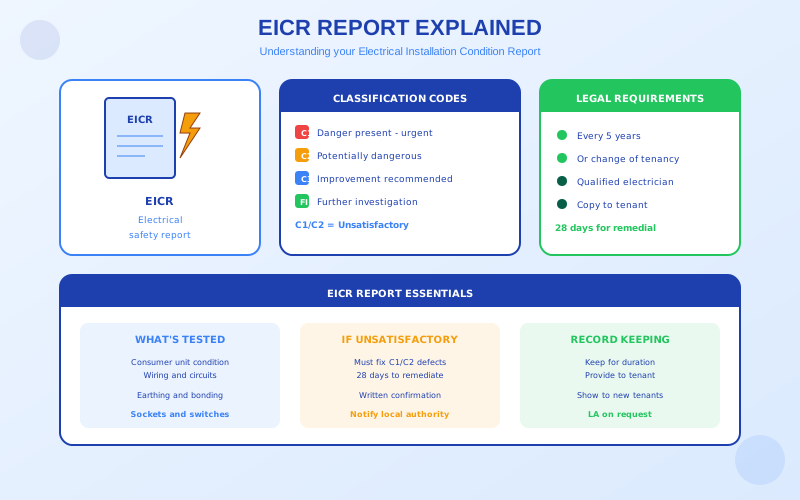
An Electrical Installation Condition Report (EICR) is a formal document produced after inspection and testing of the electrical installation in a property. It identifies any damage, deterioration, defects, or dangerous conditions.
What an EICR Covers
- Consumer unit (fuse box) condition and safety
- Wiring condition and adequacy
- Earthing and bonding
- Socket outlets and switches
- Light fittings and accessories
- Fixed electrical installations throughout
The EICR does not cover portable appliances - that's what PAT testing is for. It focuses on the fixed electrical installation that's part of the property.
Testing Frequency
While the regulations specify a maximum of five years between inspections, the electrician may recommend a shorter interval based on the installation's condition. You must follow the recommended timescale.
When to Get an EICR
- Before a new tenancy: Must be valid when tenant moves in
- Every 5 years: Maximum interval required by law
- After major works: Following electrical renovations
- When recommended: If previous EICR states shorter interval
- Change of property use: Converting to rental
Properties with older wiring or identified issues may need testing every three years or even annually. The condition report will specify the recommended interval.
Qualified Persons
The regulations require inspections by a "qualified and competent person." This typically means an electrician registered with a competent person scheme recognized by the government.
| Scheme | Website |
|---|---|
| NICEIC | niceic.com |
| NAPIT | napit.org.uk |
| ELECSA | elecsa.co.uk |
| STROMA | stroma.com |
| BRE | bregroup.com |
Always verify an electrician's registration before commissioning work. Ask for their registration number and check it online with the relevant scheme.
Understanding EICR Codes
EICRs use classification codes to indicate the severity of any issues found. Understanding these codes is essential for knowing what action you need to take.
| Code | Description | Action Required |
|---|---|---|
| C1 | Danger present - risk of injury | Immediate remedial action required |
| C2 | Potentially dangerous | Urgent remedial action required |
| C3 | Improvement recommended | Recommended but not mandatory |
| FI | Further investigation required | Investigation needed before rating |
?? C1 and C2 Codes
If your EICR contains any C1 or C2 codes, the overall result will be "Unsatisfactory" and you must complete remedial work within 28 days (or less if the report specifies). C1 issues should be addressed immediately.

Remedial Work Requirements
If your EICR identifies C1, C2, or FI codes, you must take action. The regulations set specific timescales for completing remedial work.
- Receive EICR with unsatisfactory result
- Complete remedial work within 28 days (or shorter if specified)
- Obtain written confirmation from a qualified person
- Supply confirmation to tenant within 28 days of completion
- Supply to local authority within 28 days if requested
The written confirmation of remedial work can be a new EICR, a Minor Electrical Installation Works Certificate, or a signed statement from a qualified person.
PAT Testing
Portable Appliance Testing (PAT) covers electrical items that plug into sockets rather than the fixed installation. While not a legal requirement for landlords, it's strongly recommended for any appliances you provide.
Appliances to Consider PAT Testing
- Washing machines and dishwashers
- Fridges and freezers
- Electric cookers (freestanding)
- Microwaves and kettles
- Vacuum cleaners
- Any portable electrical items you provide
Even though PAT testing isn't mandatory, you have a duty to ensure provided appliances are safe. Regular testing protects both tenants and your liability.
Penalties for Non-Compliance
Local authorities can enforce electrical safety standards and impose significant penalties for non-compliance.
| Breach | Penalty |
|---|---|
| No valid EICR | Up to £30,000 civil penalty |
| Failure to complete remedial work | Up to £30,000 civil penalty |
| Not providing EICR to tenant | Up to £30,000 civil penalty |
| Not providing EICR to local authority | Up to £30,000 civil penalty |
Additionally, a valid EICR is required before you can serve a valid Section 21 notice in England. Without it, you cannot regain possession using the no-fault eviction route.
Electrical Safety Tracking
Landlord Heaven helps you track EICR expiry dates, store certificates securely, and receive reminders before your next inspection is due.
Manage EICR Records ?Electrical Safety FAQ
How much does an EICR cost?
Typically £150-£350 depending on property size and location. Larger properties with more circuits cost more. Get multiple quotes from registered electricians. Be wary of very cheap quotes - thorough testing takes time.
What if remedial work can't be done in 28 days?
You must provide written evidence to your local authority explaining the delay and demonstrating you've taken all reasonable steps. Document everything - parts shortages, contractor availability, etc. The authority may grant an extension.
Does the EICR cover the whole building?
The EICR should cover all parts of the electrical installation that serve your tenant's dwelling. In flats, this includes the individual unit and any landlord supply. Common areas may need separate testing.
Can my tenant refuse access for electrical testing?
Tenants cannot unreasonably refuse access for electrical inspections. Give reasonable notice (24-48 hours), offer alternative times, and document all attempts. If access is consistently refused, seek legal advice.
What to do next
Core eviction guides landlords usually need next
These are the core possession guides landlords usually need after notice or arrears problems start.
FAQs for landlords

Question about electrical safety?
Ask Heaven is our free AI assistant that can help with eviction advice, tenancy questions, and more.