
Rated4.8/5 | 3008 reviews
Contract-Holder Rights Wales - What Landlords Must Know 2026
Understanding contract-holder rights under Welsh law. Landlord obligations, tenant protections, and avoiding disputes under the Renting Homes (Wales) Act.
Use this guide when
You need a practical landlord answer, not just a definition
Use this page when you need to understand wales contract holder rights in landlord terms, check the evidence or compliance points that matter, and decide whether the next step is a guide, free tool, notice pack, court pack, tenancy agreement, rent increase pack, or money claim route.
You are setting up a new tenancy and you do not want to rely on an old template. This guide explains which agreement you need and what to sort before the tenant moves in.
Rights Overview
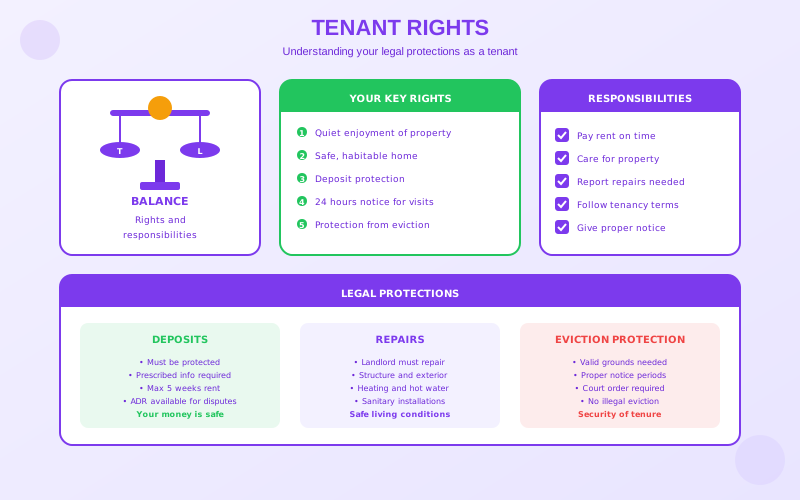
Under Welsh law, contract-holders have various rights that landlords must respect. These come from:
New tenancy
Setting up a tenancy? Choose the right agreement
If the next job is getting the tenancy in place, choose the agreement route that matches the property and arrangement now.
- Choose the right England agreement route for the tenancy you are setting up.
- Avoid old wording that causes problems later.
- Preview it before you pay.

- The Renting Homes (Wales) Act 2016
- Fundamental terms incorporated into every contract
- Supplementary terms (unless varied)
- Additional terms in the written statement
- General consumer protection law
Key Principle
Fundamental terms cannot be changed or removed - they apply to every occupation contract regardless of what the written statement says. These provide minimum standards of protection.
Fundamental Terms
Fundamental terms are built into every standard occupation contract by law. Key rights include:
Right to Occupy
- Right to occupy the dwelling as a home
- Right to occupy the whole dwelling (not just part)
- Right for permitted occupiers to live there
- Cannot be excluded except by court order
Right to Information
- Written statement within 14 days of occupation
- Landlord's name and contact address
- Any agent's details
- Information about rent and payment
Property Condition
- Dwelling fit for human habitation at start
- Kept fit throughout the contract
- Structure and exterior in repair
- Installations for utilities in working order
Repair and Maintenance Rights
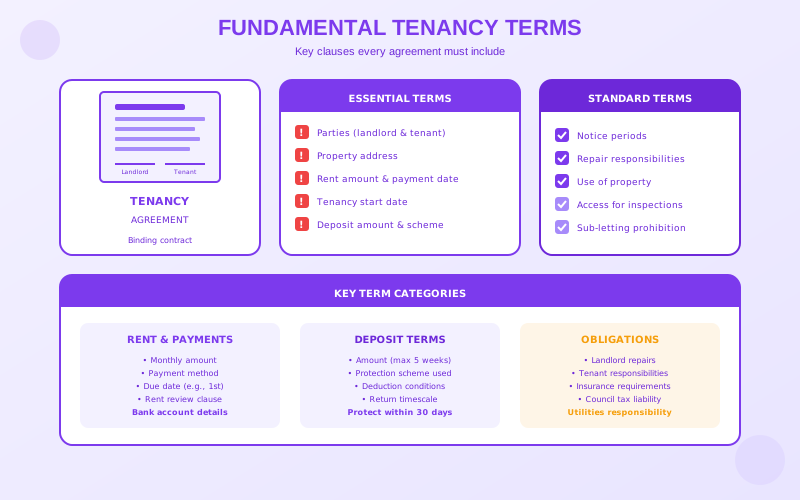
Contract-holders have significant rights regarding property condition and repairs:
Landlord's Repair Obligations
- Keep the structure and exterior in repair
- Keep installations for water, gas, electricity in working order
- Keep sanitation installations in working order
- Keep heating and hot water installations in working order
Contract-Holder's Rights
- Report disrepair and expect timely response
- Have repairs carried out at no cost (for landlord obligations)
- Claim compensation for failure to repair
- Apply to court if repairs not done
Response Timeframes
While the law doesn't specify exact timeframes, repairs should be done within a reasonable time. Emergencies (no heating, water leak) should be addressed within 24 hours. Routine repairs typically within 28 days.
Right to Quiet Enjoyment
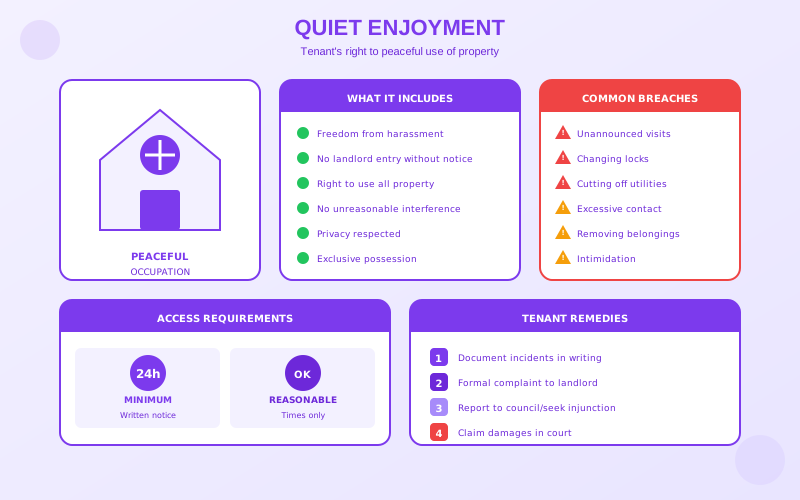
Contract-holders have a fundamental right to peaceful enjoyment of their home. This means landlords must not:
- Enter without proper notice (except emergencies)
- Harass or intimidate contract-holders
- Interfere with utilities or services
- Make life uncomfortable to force them out
- Enter at unreasonable times
Access Rights
Landlords can access the property, but must:
- Give at least 24 hours' notice (except emergencies)
- Have a valid reason (inspections, repairs, viewings)
- Attend at reasonable times
- Not be excessive in frequency
Illegal Eviction
Entering without permission or changing locks to exclude a contract-holder is illegal eviction - a criminal offence. Always use proper legal processes to regain possession.
Security of Tenure
Welsh law provides contract-holders with significant security:
Protection from Eviction
- Cannot be evicted without a court order
- Minimum 6 months' notice for no-fault possession
- Possession requires proper grounds or Section 173
- Right to challenge notices in court
Retaliatory Eviction Protection
Contract-holders are protected if they:
- Complained about property condition
- Contacted the local authority about disrepair
- Improvement notice served on landlord
In these cases, a Section 173 notice may be invalid if served within 6 months of the complaint or notice.
Avoiding Disputes
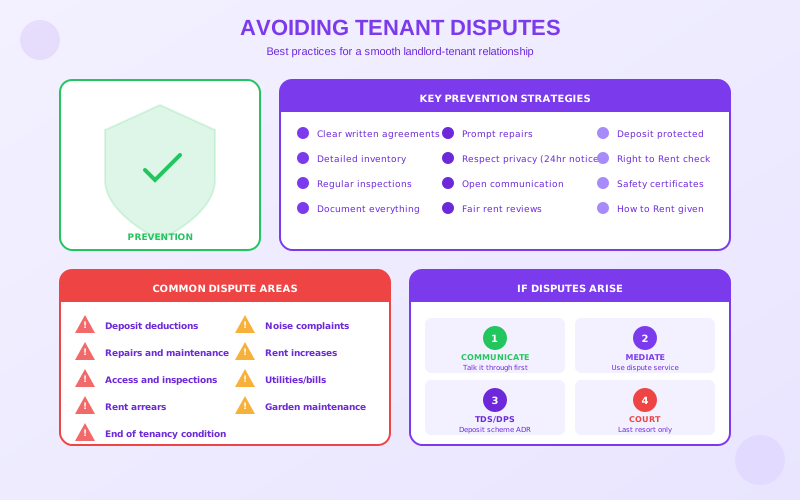
Understanding rights helps you avoid common disputes:
Best Practices
- Provide complete written statement within 14 days
- Respond promptly to repair requests
- Always give proper notice before visiting
- Keep clear records of all communications
- Use proper legal processes for all actions
- Never threaten or pressure contract-holders
Common Mistakes to Avoid
| Mistake | Risk | Solution |
|---|---|---|
| Entering without notice | Harassment claim | Always give 24 hours notice |
| Ignoring repair requests | Disrepair claim, council action | Log and action all requests |
| Changing locks | Criminal prosecution | Use court process only |
| Withholding deposit unfairly | Adjudication loss, penalties | Follow scheme rules strictly |
Professional Approach
Treating contract-holders fairly and respecting their rights isn't just legally required - it leads to better relationships, longer tenancies, and fewer voids.
Compliance Resources
Landlord Heaven provides templates and checklists to help you respect contract-holder rights while protecting your interests.
View Landlord Resources ?Rights FAQ
Can I restrict pets or smoking?
Yes, these can be included as additional terms in the occupation contract. However, you cannot change these terms during a contract without the contract-holder's agreement.
Can contract-holders refuse viewings?
Contract-holders can refuse access for viewings if not in the contract terms. Even if allowed, viewings must be at reasonable times with proper notice. They cannot be excessive in the final months.
What if a contract-holder damages the property?
Contract-holders must not damage the property deliberately or through neglect. You can claim from the deposit and/or pursue them for costs beyond the deposit. Keep evidence of condition at start and end.
Can I increase rent whenever I want?
No. Rent can only be increased once every 12 months, with at least 2 months' notice, using the prescribed form. Contract-holders can challenge excessive increases through the Rent Assessment Committee.
What to do next
Core eviction guides landlords usually need next
These are the core possession guides landlords usually need after notice or arrears problems start.
FAQs for landlords

Have a landlord question?
Ask Heaven is our free AI assistant that can help with eviction advice, tenancy questions, and more.