
Rated4.8/5 | 3008 reviews
UK Rent Arrears - Landlord Recovery Guide 2026
Comprehensive guide to handling rent arrears for UK landlords. Learn about communication strategies, legal options, Section 8 notices, and debt recovery.
Use this guide when
You need a practical landlord answer, not just a definition
Use this page when you need to understand rent arrears UK landlords in landlord terms, check the evidence or compliance points that matter, and decide whether the next step is a guide, free tool, notice pack, court pack, tenancy agreement, rent increase pack, or money claim route.
Your tenant owes rent and you need to know whether a Section 8 notice guide notice is the right move. This guide explains how it works, what can trip you up, and what to do next.
Act Early
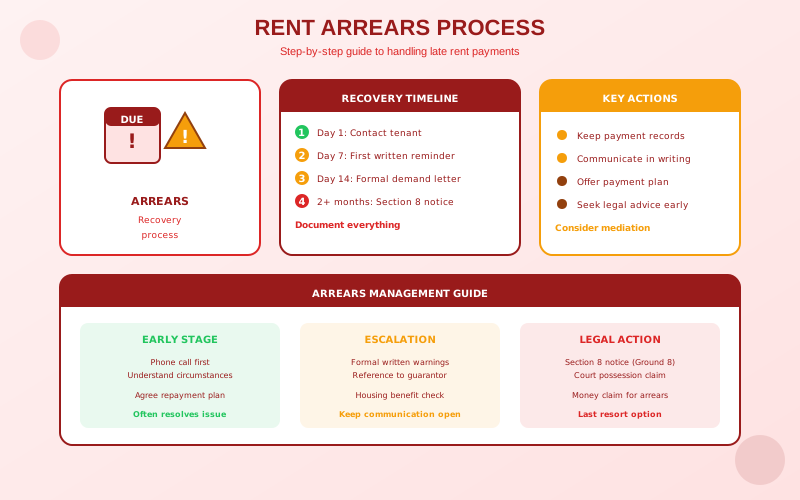
The sooner you address arrears, the better your chances of recovery. Most tenants who fall behind want to resolve the situation - early, supportive contact often prevents escalation to legal action.
Early Intervention
The first missed payment requires immediate attention. Waiting and hoping the tenant will catch up often leads to mounting arrears that become unrecoverable.
Unpaid rent
Tenant still owes money? Prepare the claim file
If the arrears keep growing, turn the problem into a clearer debt record and claim narrative before the evidence gets harder to untangle.
- Set out what is owed clearly before the numbers get harder to untangle.
- Build the claim in plain English.
- Get the court paperwork ready for the next step.

| Day | Action |
|---|---|
| Day 1 | Rent due - check if payment received |
| Day 2-3 | Friendly reminder by text/email |
| Day 7 | Phone call to discuss |
| Day 14 | Formal letter requesting payment |
| Day 21+ | Consider formal legal action |
Keep records of all communication attempts, including dates, times, and what was discussed. This documentation is essential if you later need to take legal action.
Communication Strategies
Effective communication can resolve many arrears situations without legal action. The goal is to understand the problem and find a solution.
Key Questions to Ask
- Is this a temporary issue or ongoing problem?
- When can you realistically make a payment?
- Are you receiving any benefits that could help?
- Would a payment plan help you catch up?
- Have you contacted any support organizations?
Remain professional but firm. Express willingness to work with the tenant while being clear about the seriousness of the situation and potential consequences.

Payment Plans
A structured payment plan can help tenants catch up on arrears while maintaining the tenancy. Put any agreement in writing.
Payment Plan Essentials
- Total arrears amount agreed
- Regular rent continues to be paid on time
- Additional amount toward arrears each payment
- Clear timescale to clear the debt
- Consequences if the plan isn't followed
- Both parties sign and keep copies
Be realistic about what the tenant can afford. A plan they can't stick to wastes time and delays proper action. Review progress regularly.
Formal Notices
If informal approaches fail, formal written notices demonstrate the seriousness of the situation and create a paper trail for potential court action.
- State the exact amount owed with breakdown
- Reference the tenancy agreement clause on rent
- Give a clear deadline for payment (usually 7-14 days)
- Explain consequences of non-payment
- Send by recorded delivery and keep proof
Section 8 Notices
Section 8 of the Housing Act 1988 allows landlords to seek possession for rent arrears using mandatory and discretionary grounds.
| Ground | Type | Requirement |
|---|---|---|
| Ground 8 | Mandatory | England after 1 May 2026: 3 months' rent, or 13 weeks' rent if paid weekly or fortnightly, at notice AND hearing |
| Ground 10 | Discretionary | Some rent is due and unpaid |
| Ground 11 | Discretionary | Persistently late payment |
Ground 8 - Mandatory Possession
In England after 1 May 2026, Ground 8 requires at least 3 months' rent, or 13 weeks' rent if paid weekly or fortnightly, at both the time you serve the Form 3A notice AND at the step-by-step UK eviction process. If the tenant pays down below the Ground 8 threshold before the hearing, Ground 8 fails.
Using Grounds 10 and 11 as backup gives the court discretion to award possession even if Ground 8 doesn't apply at the hearing.

Court Action
If the tenant doesn't leave after the Section 8 notice expires, you'll need to apply to the court for a possession order.
- Complete possession claim form (N5 and N119)
- Pay court fee (currently £355 for standard claims)
- Attend hearing and present evidence
- If successful, court grants possession order
- If tenant still doesn't leave, apply for warrant/bailiffs
| Court Track | Typical Timeframe | When Used |
|---|---|---|
| Standard | 8-12 weeks to hearing | Most possession claims |
| Accelerated | 6-10 weeks (no hearing) | Section 21 only (not rent arrears) |
money claim for unpaid rent After Eviction
Eviction doesn't end your right to recover the money owed. You can pursue the debt through the courts even after the tenant has left.
Debt Recovery Options
- Money Claim Online: For debts under £10,000
- County Court Judgment (CCJ): Formal court debt order
- High Court Enforcement: For larger debts
- Debt Collection Agencies: Third-party recovery
- Attachment of Earnings: Deductions from wages
Consider whether recovery is cost-effective. If the tenant has no assets or income, pursuing the debt may be futile. Sometimes accepting the loss is the pragmatic choice.
Preventing Rent Arrears
Prevention is always better than cure. Good practices at the start of a tenancy significantly reduce arrears risk.
Prevention Strategies
- Thorough tenant referencing before letting
- Affordability checks (rent no more than 40% of income)
- Request a guarantor for higher-risk tenants
- Set up standing order on the day rent is paid
- Consider rent guarantee insurance
- Build good landlord-tenant relationship

Rent Arrears Management Tools
Landlord Heaven provides rent tracking, arrears alerts, letter templates, and guidance to help you manage rent collection and address arrears promptly.
View Rent Management Tools ?Rent Arrears FAQ
Can I change the locks if rent isn't paid?
No. Changing locks or forcing a tenant out is illegal eviction, regardless of rent arrears. You must follow the legal process through the courts. Illegal eviction is a criminal offense.
Should I accept partial payment?
Generally yes - any payment reduces your loss. However, be clear in writing that accepting partial payment doesn't waive your right to pursue the full amount or take possession action.
Can I use the deposit for evict tenant not paying rent guide?
Only at the end of the tenancy. During the tenancy, the deposit should remain protected. At the end, you can claim for unpaid rent through the deposit scheme's dispute process.
What if Universal Credit is paid late?
Consider requesting an Alternative Payment Arrangement (APA) where housing element is paid directly to you. This requires tenant consent or specific circumstances like 2+ months' arrears.
Prefer us to prepare it with you?
Free consultation before any assisted eviction preparation is agreed
We discuss the facts first. If we can help, we confirm the scope and send a secure Stripe payment link afterwards.
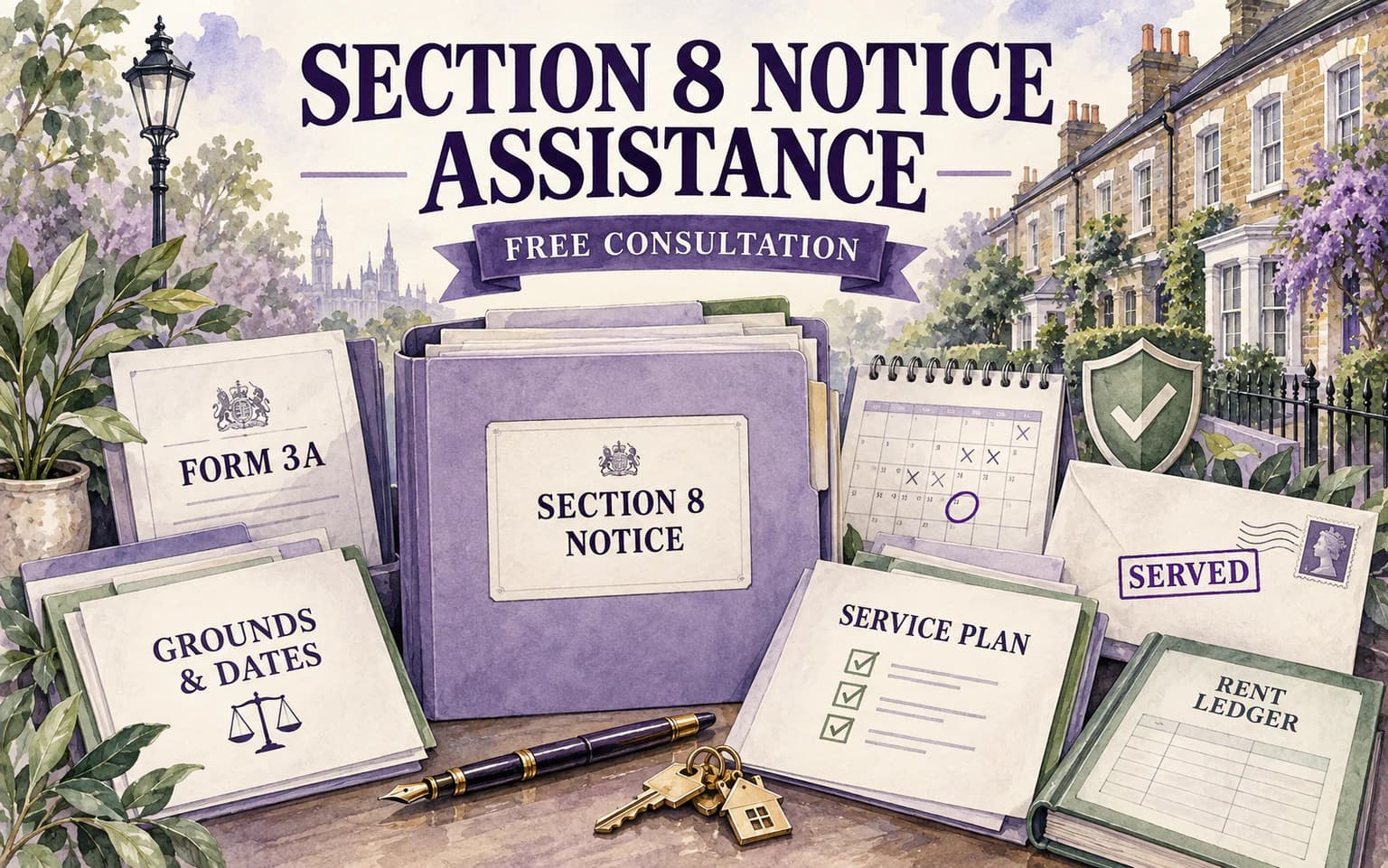
Unsure about grounds or dates?
Landlord Section 8 notice assistance
Free consultation · £149.00 only if we confirm we can help
Before you serve, we help organise your Form 3A, tenant details, notice timing, service plan and evidence prompts around the facts you approve.
Book free consultation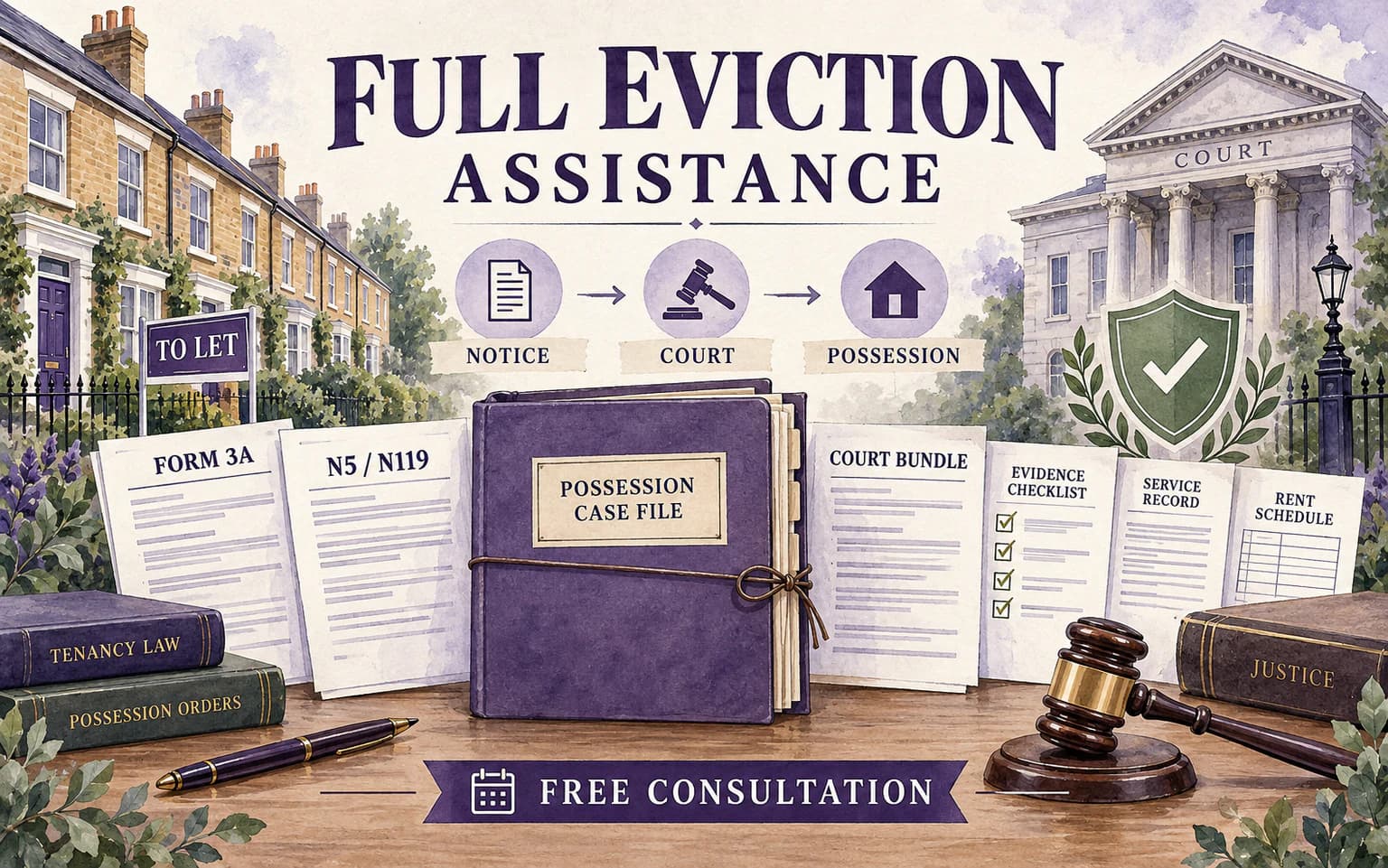
Want the full case, including court forms?
Landlord eviction assistance service
Free consultation · £399.00 only if we confirm we can help
Our £399 full-case service can cover your Section 8 notice, service record, N5, N119 particulars of claim and supporting bundle. If you have already served notice, we focus on the court-stage pack.
Book free consultationWhat to do next
Core eviction guides landlords usually need next
These are the core possession guides landlords usually need after notice or arrears problems start.
FAQs for landlords

Have a landlord question?
Ask Heaven is our free AI assistant that can help with eviction advice, tenancy questions, and more.