Rated4.8/5 | 3008 reviews
Scottish Repairing Standard - Landlord Obligations Guide 2026
Complete guide to the Repairing Standard in Scotland. Learn what landlords must provide, how to comply, and what happens if you breach the standard.
Use this guide when
You need a practical landlord answer, not just a definition
Use this page when you need to understand scotland repairing standard landlord in landlord terms, check the evidence or compliance points that matter, and decide whether the next step is a guide, free tool, notice pack, court pack, tenancy agreement, rent increase pack, or money claim route.
You are trying to sort scotland repairing standard landlord before it causes a bigger problem later. This guide explains what you need to do, when it matters, and how it affects the rest of your case.
Repairing Standard Key Points
- Applies to: All private rented properties in Scotland
- When: From start of tenancy and throughout
- Enforcement: First-tier Tribunal
- Consequence: Repairing Standard Enforcement Orders
Overview
The Housing (Scotland) Act 2006 established the Repairing Standard, which was enhanced by the Housing (Scotland) Act 2014. It applies to all private residential tenancies, including PRTs, assured tenancies, and short assured tenancies.
Next step for landlords
Problem clear? Create the right notice before you serve
If the issue now points toward possession, move from guidance into a notice route that keeps grounds, dates, service, and evidence together.
- Choose the right route before you serve anything.
- Answer plain-English questions. We handle the legal logic.
- Preview the paperwork before you pay.

The standard covers the physical condition of the property - structure, installations, fixtures, and furnishings provided by the landlord.
The Requirements
A property meets the Repairing Standard if:
- 1. The property is wind and watertight and reasonably fit for human habitation
- 2. The structure and exterior are in reasonable repair
- 3. Installations for water, gas, electricity, sanitation, heating, and hot water are in reasonable repair and proper working order
- 4. Any fixtures, fittings, and appliances provided by the landlord are in reasonable repair and proper working order
- 5. Any furnishings provided by the landlord are capable of safe use
- 6. There is adequate fire detection (interlinked smoke and heat alarms)
- 7. There are carbon monoxide detectors in rooms with fixed combustion appliances
- 8. There is access to safe food preparation and storage facilities
- 9. An electrical safety inspection has been carried out and any necessary work done
What Must Be Provided
Structure and Exterior
- Roof in good condition, no leaks
- Walls free from significant damp
- Windows that open, close, and lock properly
- External doors secure and weatherproof
- Gutters and drains functioning
Installations
- Working boiler and heating system
- Hot and cold water to bathroom and kitchen
- Working toilet with flushing mechanism
- Electrical system that's safe (EICR required)
- Gas system that's safe (annual Gas Safety Certificate)
Safety Equipment
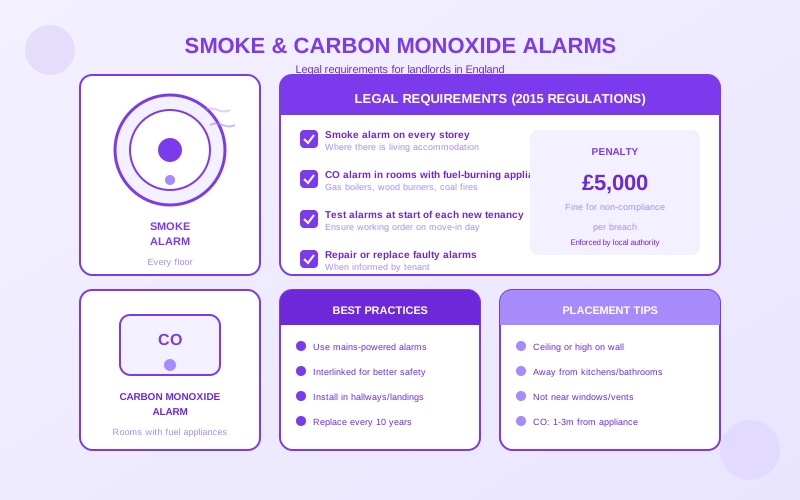
- Interlinked smoke alarms on each level
- Heat detector in kitchen
- Carbon monoxide detector near any fuel-burning appliance
Fire Safety (Since February 2022)
All smoke and heat alarms must be interlinked (when one sounds, they all sound). This applies to all private rented properties.
Landlord Responsibilities
Before Tenancy Starts
- Ensure property meets the full Repairing Standard
- Get Gas Safety Certificate (within last 12 months)
- Get EICR (within last 5 years)
- Install interlinked fire detection
- Install CO detectors where needed
During Tenancy
- Maintain the property to the standard
- Respond to repair requests promptly
- Renew Gas Safety Certificate annually
- Keep copies of safety certificates
- Carry out repairs within reasonable time
Response Times
While the law doesn't specify exact timescales, "reasonable" typically means: emergency repairs (hours/1 day), urgent repairs (1-7 days), routine repairs (28 days). Document everything.
Tenant Responsibilities
Tenants are expected to:
- Report defects and damage promptly
- Allow access for inspections and repairs
- Use the property reasonably
- Not cause damage through misuse
- Keep the property reasonably clean
Tenant-Caused Damage
If damage is caused by the tenant, you can charge for repairs. However, you still need to carry out the repair to maintain the standard - you just recover the cost from the tenant.
Enforcement
First-tier Tribunal
If you don't meet the Repairing Standard, tenants can apply to the First-tier Tribunal (Housing and Property Chamber). The Tribunal can:
- Inspect the property
- Determine if the standard is met
- Issue a Repairing Standard Enforcement Order (RSEO)
Repairing Standard Enforcement Order
An RSEO requires you to:
- Carry out specified repairs
- Complete them by a set deadline
- The order goes on the Landlord Registration record
Non-Compliance with RSEO
If you don't comply with an RSEO:
- The Tribunal can authorise the council to do the work
- Costs are recovered from you
- Rent Payment Orders can redirect rent to pay for repairs
- It affects your landlord registration status
Repairing Standard FAQ
What is "reasonable repair"?
It means the property functions properly and is safe. It doesn't mean brand new or perfect. The age and character of the property are considered.
Can the tenant withhold rent for disrepair?
Tenants should not withhold rent - they should apply to the Tribunal instead. Withholding rent can lead to eviction for rent arrears, even if there are genuine repair issues.
What if I can't get access to repair?
Document your attempts to arrange access. If the tenant unreasonably refuses access, this is a breach of their tenancy obligations. Keep written records.
Am I responsible for appliances I didn't provide?
No. The Repairing Standard covers items provided by you as landlord. If the tenant brings their own appliances, those are the tenant's responsibility.
What about wear and tear?
Normal wear and tear is your responsibility to address. You can't claim decoration costs from the tenant for normal use, but you should redecorate between tenancies as needed.
Maintaining Your Property?
Landlord Heaven provides maintenance checklists and compliance guides for Scottish landlords to meet the Repairing Standard.
View All Products ?What to do next
Core eviction guides landlords usually need next
These are the core possession guides landlords usually need after notice or arrears problems start.
FAQs for landlords

Have a landlord question?
Ask Heaven is our free AI assistant that can help with eviction advice, tenancy questions, and more.