
Rated4.8/5 | 3008 reviews
Deposit Protection Wales - Complete Landlord Guide 2026
Complete guide to protecting tenancy deposits in Wales. Learn about approved schemes, prescribed information, and compliance requirements under Welsh law.
Use this guide when
You need a practical landlord answer, not just a definition
Use this page when you need to understand deposit protection wales in landlord terms, check the evidence or compliance points that matter, and decide whether the next step is a guide, free tool, notice pack, court pack, tenancy agreement, rent increase pack, or money claim route.
You are trying to sort deposit protection wales before it causes a bigger problem later. This guide explains what you need to do, when it matters, and how it affects the rest of your case.
Welsh Deposit Rules
Deposit protection in Wales follows similar rules to England, but with some differences under the Renting Homes (Wales) Act 2016. The maximum deposit is 2 months' rent, and failure to protect blocks eviction notices.
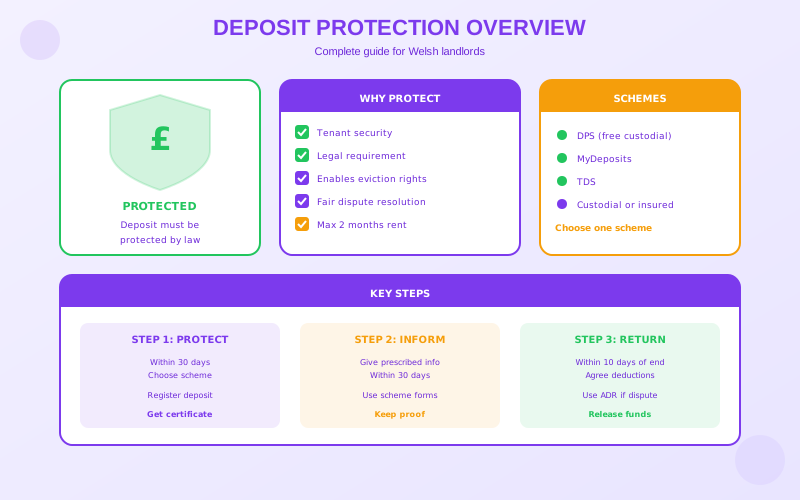
Deposit Protection Overview
Since 2007, landlords in Wales have been required to protect tenancy deposits. This requirement continues under the Renting Homes (Wales) Act 2016, which now governs all residential lettings in Wales.
Next step for landlords
Problem clear? Create the right notice before you serve
If the issue now points toward possession, move from guidance into a notice route that keeps grounds, dates, service, and evidence together.
- Choose the right route before you serve anything.
- Answer plain-English questions. We handle the legal logic.
- Preview the paperwork before you pay.

Key requirements include:
- Protect the deposit in an approved scheme within 30 days
- Provide prescribed information to the contract-holder
- Keep the deposit protected throughout the tenancy
- Follow proper procedures when returning or disputing the deposit
Deposit Limits in Wales
Under the Renting Homes Act, the maximum deposit you can take is limited:
Maximum Deposit: 2 Months' Rent
The total deposit (including any holding deposit) cannot exceed the equivalent of 2 months' rent. This applies to all standard occupation contracts in Wales.
If you take more than 2 months' rent as a deposit, the contract-holder can apply to court to recover the excess. You may also face difficulties enforcing the contract.
Approved Protection Schemes
There are three government-approved deposit protection schemes that operate in Wales. You can use any of these:
DPS
Deposit Protection Service
Custodial (free) or Insured
MyDeposits
MyDeposits Wales
Custodial or Insured
TDS
Tenancy Deposit Scheme
Custodial or Insured
Custodial vs Insured Schemes
- Custodial: You pay the deposit to the scheme, which holds it. Usually free to landlords.
- Insured: You keep the deposit but pay a fee to insure it. The scheme guarantees protection.
Protection Deadlines
You must protect the deposit within 30 days of receiving it. This deadline applies regardless of when the occupation contract actually starts.
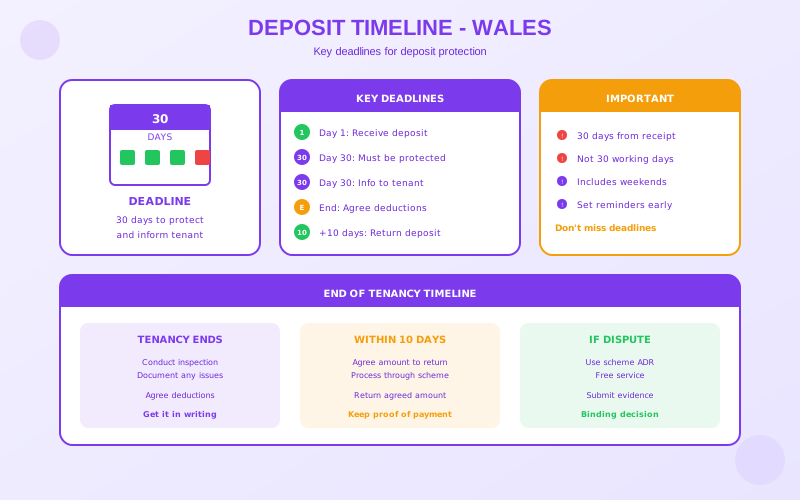
Best Practice
Protect deposits as soon as you receive them—don't wait until close to the deadline. This gives you time to serve the prescribed information and correct any errors.
Prescribed Information
After protecting the deposit, you must give the contract-holder certain "prescribed information" within 30 days. This includes:
- The amount of the deposit
- The address of the property
- Your name and contact details
- Details of the protection scheme used
- Information about the scheme's dispute resolution service
- Information about what the deposit can be used for
- The circumstances when deductions may be made
The protection schemes provide standard prescribed information documents that you can use. Make sure the contract-holder signs to confirm receipt.
Handling Deposit Disputes
At the end of the tenancy, you should:
- Conduct a thorough check-out inspection
- Compare the property condition to the inventory
- Calculate any deductions you wish to make
- Propose deductions to the contract-holder in writing
- If agreed, release the deposit accordingly
- If disputed, use the scheme's free dispute resolution service
Free Dispute Resolution
All approved schemes offer free alternative dispute resolution (ADR). This is usually quicker and cheaper than court. Either party can request ADR if you cannot agree on deductions.
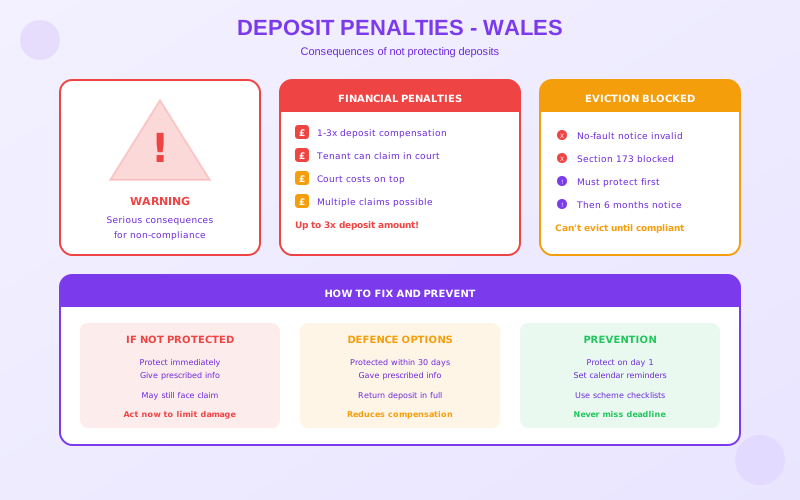
Penalties for Non-Compliance
Failing to protect a deposit or provide prescribed information has serious consequences:
Cannot Serve Section 173 Notice
You cannot use the no-fault eviction procedure (Section 173) until you have:
- Protected the deposit properly
- Served the prescribed information
- Returned the deposit (if the tenancy has ended)
Compensation Claims
The contract-holder can apply to court for compensation of between 1x and 3x the deposit amount if you:
- Failed to protect the deposit within 30 days
- Failed to provide prescribed information
- Provided incorrect prescribed information
Need Deposit Documentation?
Landlord Heaven provides inventory templates, check-out forms, and deposit protection guidance for Welsh landlords.
View Landlord Templates ?Wales Deposit Protection FAQ
Do I need to re-protect the deposit if rent increases?
No. You only need to protect the deposit once, when you first receive it. If the rent increases later, you don't need to take a higher deposit or re-protect the existing one.
What if I inherit tenants with an unprotected deposit?
If you buy a property with existing tenants and the previous landlord didn't protect the deposit, you should protect it immediately. You may still face liability for the previous landlord's failure.
Can I keep the deposit if the tenant leaves without notice?
You can make deductions for rent arrears and any damage beyond fair wear and tear. However, you cannot simply keep the entire deposit. Any dispute should go through the scheme's ADR process.
How long does ADR take?
Typically 4-6 weeks from submission to decision. Both parties submit evidence, an adjudicator reviews it, and a binding decision is made. The process is free for both landlords and tenants.
What if I use a letting agent?
Your agent may protect the deposit on your behalf, but you remain responsible as the landlord. Ensure your agent is protecting deposits correctly and providing the prescribed information.
What to do next
Core eviction guides landlords usually need next
These are the core possession guides landlords usually need after notice or arrears problems start.
FAQs for landlords

Question about deposit protection?
Ask Heaven is our free AI assistant that can help with eviction advice, tenancy questions, and more.