
Rated4.8/5 | 3008 reviews
Wales Notice Periods - Complete Landlord Reference Guide 2026
Complete reference guide to all notice periods for landlords in Wales. Section 173, Section 186, and other notices under the Renting Homes (Wales) Act .
Use this guide when
You need a practical landlord answer, not just a definition
Use this page when you need to understand wales landlord notice periods in landlord terms, check the evidence or compliance points that matter, and decide whether the next step is a guide, free tool, notice pack, court pack, tenancy agreement, rent increase pack, or money claim route.
This guide explains wales landlord notice periods in plain English, including the rules, common mistakes and practical next steps.

Notice Periods Overview
Welsh landlord notices fall into several categories depending on the type of contract and the reason for seeking possession:
Next step for landlords
Problem clear? Create the right notice before you serve
If the issue now points toward possession, move from guidance into a notice route that keeps grounds, dates, service, and evidence together.
- Choose the right route before you serve anything.
- Answer plain-English questions. We handle the legal logic.
- Preview the paperwork before you pay.

| Notice Type | Minimum Period | When Used |
|---|---|---|
| Section 173 | 6 months | No-fault notice for periodic standard contracts |
| Section 186 | As per contract | Break clause in fixed-term contracts |
| Possession grounds | 1-2 months | Specific grounds (rent arrears, breach, etc.) |
| Rent increase | 2 months | Increasing rent during contract |
Key Difference from England
Wales requires 6 months' notice for no-fault possession (Section 173), compared to 2 months in England. This is one of the most significant differences in Welsh tenancy law.
Section 173 No-Fault Notice
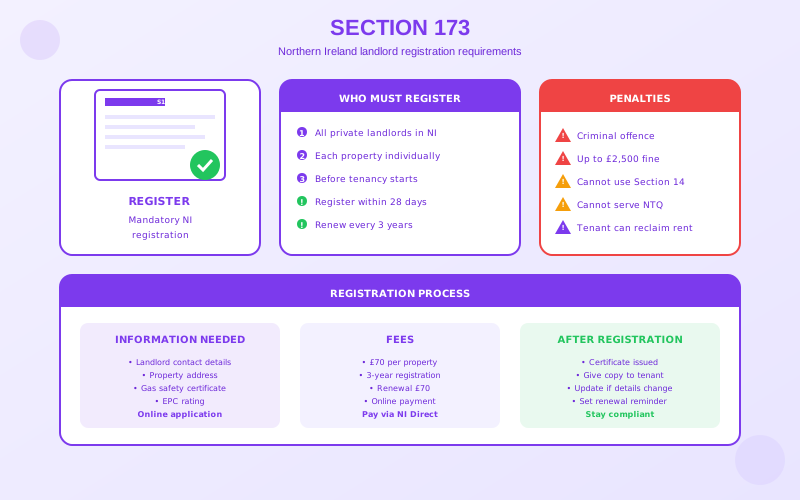
Section 173 allows landlords to end a periodic standard occupation contract without giving a reason. Key requirements:
Notice Period
- Minimum 6 months' notice required
- Cannot be served during the first 6 months of occupation
- Notice expires 6 months after service date
Restrictions
You cannot serve a valid Section 173 notice if:
- The property is not registered with Rent Smart Wales
- You are not licensed (if required to be)
- The written statement was not provided within 14 days
- Required safety certificates were not provided
- The deposit was not protected correctly
Section 186 Break Notice
For fixed-term contracts with a break clause, Section 186 governs how landlords can end the contract early.
Requirements
- Break clause must be included in the written statement
- Notice period as specified in the contract (minimum 2 months)
- Can only be exercised after any minimum term specified
- Must be in writing
Contract Wording
Your break clause should clearly state:
- When the break can be exercised
- How much notice is required
- How notice must be given
- Any conditions (e.g., rent up to date)
Break Clause Tip
Include a break clause in fixed-term contracts to give flexibility. Without one, you may need to wait for the fixed term to end before seeking possession under Section 173.
Possession Ground Notices
When using specific possession grounds, notice periods vary:
| Ground | Reason | Notice Period |
|---|---|---|
| Ground 1 | Landlord wants to live in property | 2 months |
| Ground 2 | Property required for family member | 2 months |
| Ground 5 | Sale of property | 2 months |
| Section 8 notice guide | Redevelopment | 2 months |
| Ground 12 | Anti-social behaviour | 1 month |
| Ground 13 | Serious rent arrears | 14 days (if 2+ months arrears) |
| Ground 14 | Breach of contract | 1 month |

Other Important Notices
Rent Increase Notice
- Minimum 2 months' notice required
- Must use prescribed form
- Cannot increase within first 12 months
- Only one increase per 12-month period
Access Notices
- 24 hours' notice for routine inspections
- Reasonable notice for repairs (unless emergency)
- Must be at reasonable times
Contract Variation Notices
- 2 months' notice for most contract changes
- Contract-holder must agree to variations
- Must be in writing
How to Serve Notices
Proper service of notices is essential. Invalid service can make the entire notice ineffective.
Valid Service Methods
- Personal delivery: Hand to contract-holder directly
- Post: First class post to the property address
- Leaving at property: Put through letterbox or fixed to door
- Email: Only if contract specifically allows electronic service
Service Dates
| Method | Deemed Served |
|---|---|
| Personal delivery | Date of delivery |
| First class post | 2 working days after posting |
| Second class post | 4 working days after posting |
| Left at property | Date of leaving |
Best Practice
Use recorded delivery or obtain a signature when serving important notices. This provides evidence of service if disputed. Keep copies of all notices served.

Wales Notice Templates
Landlord Heaven provides all notice templates compliant with Welsh law, including Section 173, Section 186, and possession ground notices.
View Notice Templates ?Notice FAQ
Can I give more notice than the minimum?
Yes, you can always give more notice than the minimum required. This can be helpful if you want to give the contract-holder extra time to find alternative accommodation.
What if my notice has an error?
Minor errors may not invalidate a notice, but significant errors can. If in doubt, serve a new corrected notice. The court will consider whether the error was prejudicial to the contract-holder.
Can I withdraw a notice once served?
Yes, you can choose not to act on a notice after serving it. However, you cannot shorten the notice period. If you change your mind, simply don't proceed with court action.
Do weekends count in notice periods?
Generally, yes. Notice periods are calculated in calendar days or months unless specified otherwise. The exception is postal service dates which count working days.
Prefer us to prepare it with you?
Free consultation before any assisted eviction preparation is agreed
We discuss the facts first. If we can help, we confirm the scope and send a secure Stripe payment link afterwards.
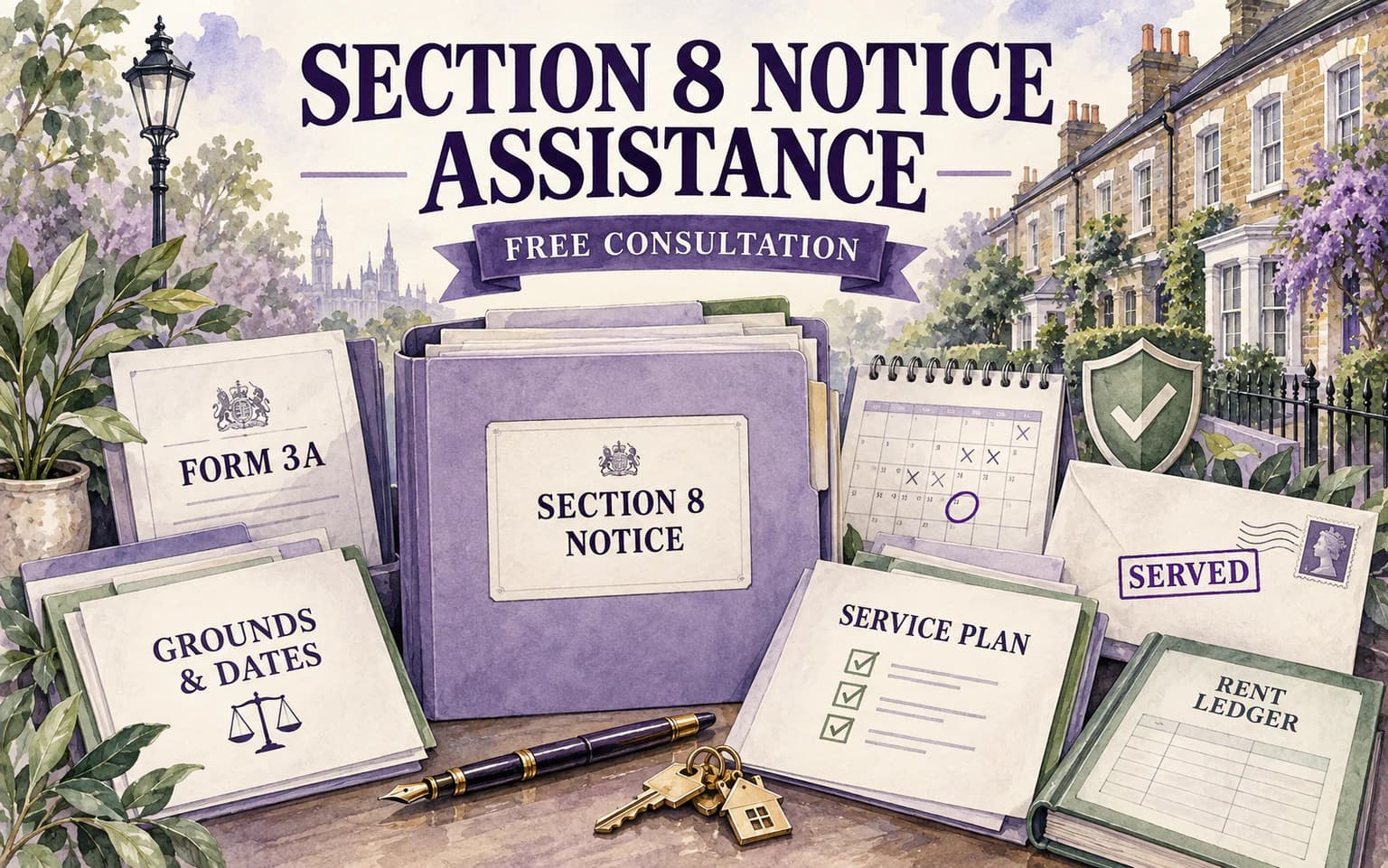
Unsure about grounds or dates?
Landlord Section 8 notice assistance
Free consultation · £149.00 only if we confirm we can help
Before you serve, we help organise your Form 3A, tenant details, notice timing, service plan and evidence prompts around the facts you approve.
Book free consultation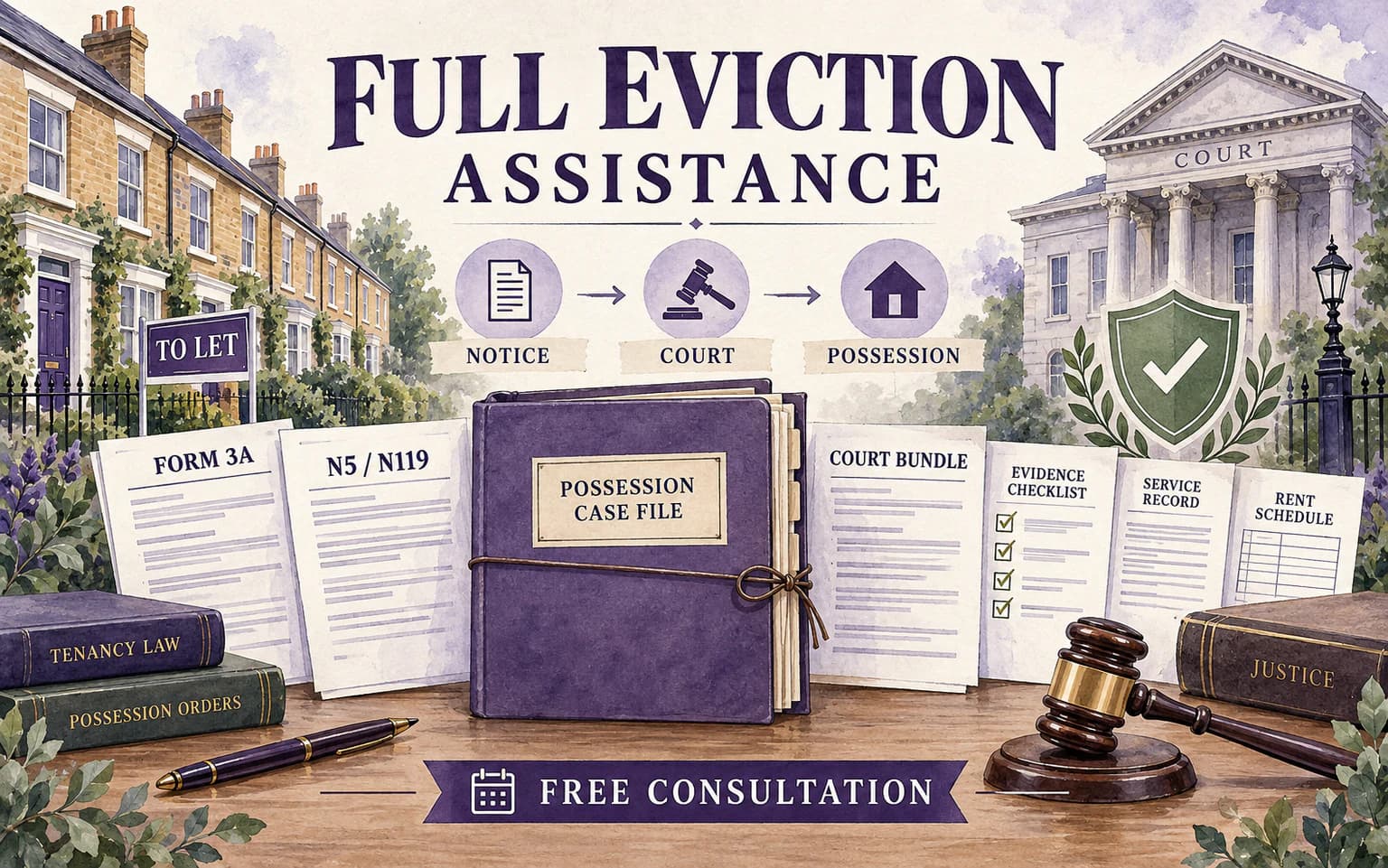
Want the full case, including court forms?
Landlord eviction assistance service
Free consultation · £399.00 only if we confirm we can help
Our £399 full-case service can cover your Section 8 notice, service record, N5, N119 particulars of claim and supporting bundle. If you have already served notice, we focus on the court-stage pack.
Book free consultationWhat to do next
Core eviction guides landlords usually need next
These are the core possession guides landlords usually need after notice or arrears problems start.
FAQs for landlords

Have a landlord question?
Ask Heaven is our free AI assistant that can help with eviction advice, tenancy questions, and more.