
Rated4.8/5 | 3008 reviews
Wales Eviction Process Explained - Landlord Guide 2026
Step-by-step guide to evicting tenants in Wales under the Renting Homes Act. Learn about Section 173, Section 181, notice periods, and court procedures.
Use this guide when
You need a practical landlord answer, not just a definition
Use this page when you need to understand wales eviction process in landlord terms, check the evidence or compliance points that matter, and decide whether the next step is a guide, free tool, notice pack, court pack, tenancy agreement, rent increase pack, or money claim route.
This guide explains wales step-by-step UK eviction process in plain English, including the rules, common mistakes and practical next steps.
Wales uses different notices. See the Wales eviction notice guide for Renting Homes Act steps.
Wales-Only Procedures
The eviction procedures in this guide apply only to Wales. English Section 21 and Section 8 notice guide notices do not work for Welsh properties. Using the wrong notice will invalidate your eviction.
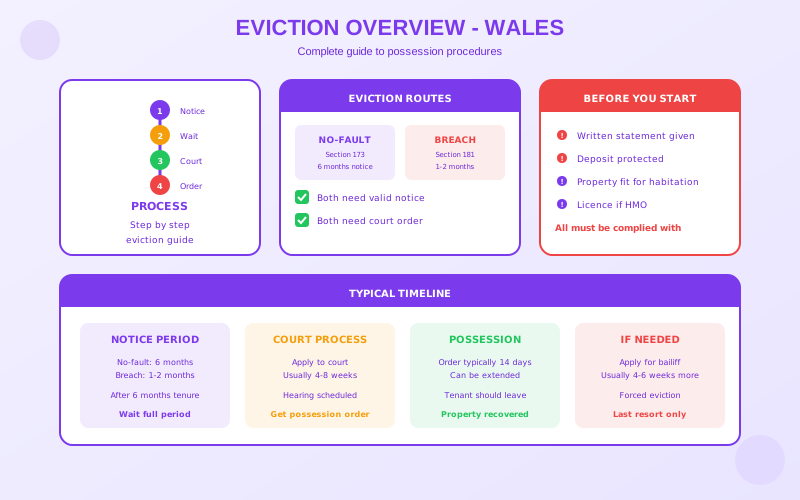
Eviction in Wales Overview
Under the Renting Homes (Wales) Act, there are two main routes to eviction:
Court stage
Heading toward court? Prepare the possession file
If the problem has moved beyond serving notice, keep the notice, claim forms, and evidence aligned from the start.
- Keep the notice and court forms consistent.
- Avoid paying court fees on a weak file.
- Get the next-stage paperwork together in one place.

- Section 173 - No-fault eviction (landlord doesn't need a reason)
- Section 181 - Fault-based eviction (breach of contract)
Before you can evict, you must ensure you've complied with all your landlord obligations. Any failures can block your eviction.
Pre-Requisites for Eviction
To serve any eviction notice, you must have:
- Registered with Rent Smart Wales
- Provided a written statement of the occupation contract
- Protected any deposit and served prescribed information
- Provided required safety certificates (gas, electrical)
- Not committed any retaliatory eviction
Check Compliance First
If you haven't complied with these requirements, fix them before serving notice. A court can refuse possession if you haven't met your obligations, regardless of which eviction route you use.
Section 173 - No-Fault Eviction
Section 173 allows landlords to end a standard occupation contract without needing to prove the contract-holder has done anything wrong. This is the Welsh equivalent of the English Section 21 (now repealed in England).
Key Requirements
- Minimum 6 months' notice - you must give at least 6 months
- Cannot serve in first 6 months - notice can only be served after 6 months from start
- Use correct form - must use the prescribed Section 173 form
- Specify correct end date - must be at least 6 months after service
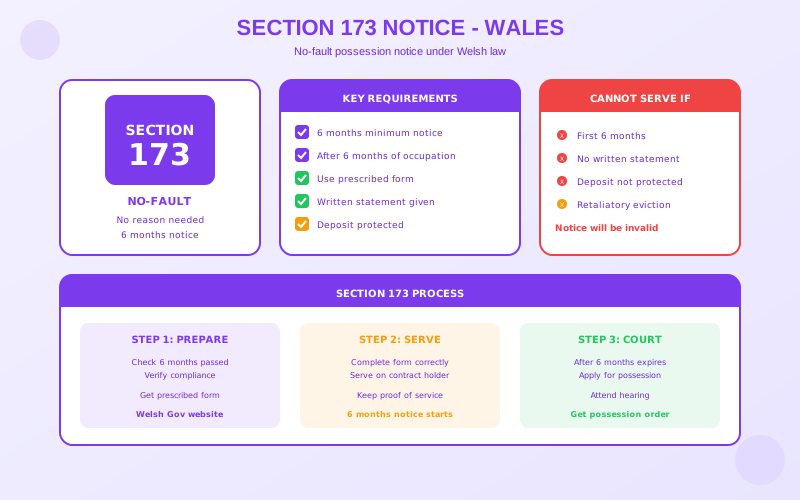
Section 173 Timeline
| Stage | Timing | Notes |
|---|---|---|
| Contract starts | Day 1 | Protected period begins |
| Can serve notice | After month 6 | Notice can now be served |
| Notice expires | 6 months after service | Minimum month 12 |
| Apply to court | After notice expires | If contract-holder hasn't left |
| Possession order | Court hearing | Usually 6-8 weeks after application |
Section 173 Notice Validity
A Section 173 notice remains valid for 6 months after it expires. This means:
- You can apply to court any time within 6 months of the notice end date
- If the contract-holder stays, you don't need to serve a new notice immediately
- After 6 months, the notice lapses and you'd need to start again
Section 181 - Fault-Based Eviction
Section 181 allows landlords to seek possession where the contract-holder has breached the occupation contract. Unlike Section 173, you must prove a breach.
When to Use Section 181
- Rent arrears (the most common ground)
- Breach of contract terms
- Anti-social behaviour
- Damage to the property
- Using the property for illegal purposes
Notice Periods for Section 181
The notice period depends on the ground for possession:
| Ground | Notice Period | Mandatory? |
|---|---|---|
| Serious rent arrears (2+ months) | 14 days | Yes (if arrears remain) |
| Less serious rent arrears | 1 month | No - discretionary |
| Breach of contract | 1 month | No - discretionary |
| Serious anti-social behaviour | Immediate or 48 hours | No - discretionary |
Mandatory vs Discretionary
For mandatory grounds, if you prove the ground exists, the court must order possession. For discretionary grounds, the court considers whether it's reasonable to make an order, even if the ground is proven.
Grounds for Possession
The Renting Homes Act includes various grounds for possession. Here are the most commonly used:
Rent Arrears Grounds
- Serious rent arrears (mandatory): 2+ months' rent unpaid at notice AND hearing
- Persistent rent arrears (discretionary): Frequent late payment pattern
- Some rent arrears (discretionary): Any arrears, but court considers reasonableness
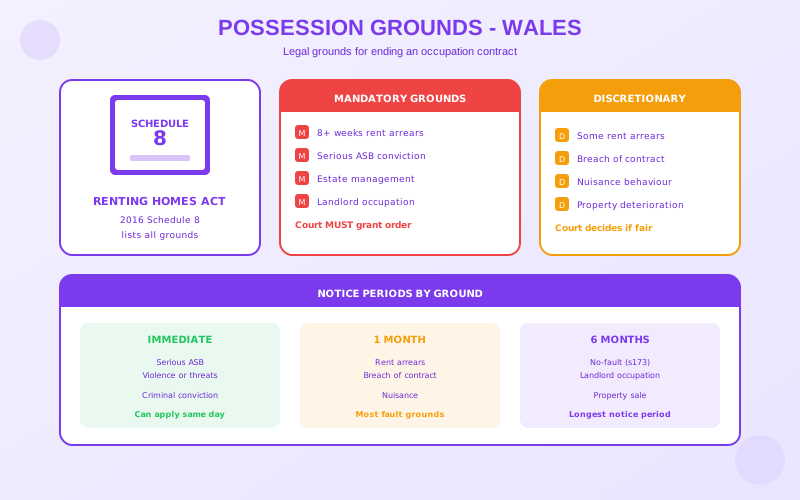
Estate Management Grounds
- Landlord wants to sell the property (6 months' notice)
- Landlord wants to live in the property (6 months' notice)
- Major works required (2 months' notice)
Contract-Holder Behaviour Grounds
- Anti-social behaviour
- Damage to property
- Illegal use of property
- False statement to obtain the contract
- Domestic abuse (by one joint contract-holder)
Court Process
If the contract-holder doesn't leave after your notice expires, you must apply to court for a possession order.
Step 1: Apply to Court
Complete claim form N5 (for standard cases) and submit to your local County Court. You'll need:
- Completed N5 claim form
- Copy of the occupation contract
- Copy of the notice you served
- Proof of service
- Court fee (currently around £355)
Step 2: Court Hearing
A hearing will be scheduled, usually 6-8 weeks after your application. At the hearing:
- Present your case for possession
- The contract-holder can present a defence
- The judge will decide whether to grant possession
Step 3: Possession Order
If successful, the court will make a possession order. This usually gives the contract-holder 14 days to leave (28 days in exceptional circumstances).
Step 4: Warrant of Possession
If the contract-holder still doesn't leave, apply for a warrant of possession (N325 form). County Court bailiffs will then enforce the order and physically remove the occupants if necessary.
Never Self-Evict
Never try to physically remove a contract-holder yourself, change locks while they're living there, or cut off utilities. This is illegal eviction and a criminal offence. Always use the court process.
Common Mistakes to Avoid
Using English Forms
Section 21 and Section 8 notices don't work in Wales. Using them wastes time and means starting again with the correct Welsh forms.
Serving Notice Too Early
A Section 173 notice served in the first 6 months is invalid. Wait until day 183 to be safe, then serve notice.
Not Providing Written Statement
If you haven't given the contract-holder a written statement of the contract, you cannot use Section 173. Provide it first, then wait 14 days before serving notice.
Deposit Not Protected
Unprotected deposits block Section 173 notices. Protect the deposit and serve prescribed information before serving eviction notice.
Need Eviction Documents?
Landlord Heaven provides Welsh eviction notice templates and guidance packs to help you navigate the possession process correctly.
View Eviction Templates ?Wales Eviction FAQ
How long does eviction take in Wales?
For a Section 173 no-fault eviction, the minimum is 12 months from start of contract (6 months before serving notice + 6 months notice). Court proceedings add another 2-4 months if needed.
Can I evict for rent arrears faster?
Yes. If there are 2+ months' arrears, you can serve a Section 181 notice with only 14 days' notice. If arrears remain at the hearing, possession is mandatory.
What if the contract-holder has children?
Having children doesn't prevent eviction, but the court may consider it when deciding timelines. For discretionary grounds, it may be a factor in reasonableness. Local authority homelessness duties also apply.
Can I evict in winter?
Yes. Unlike some countries, there is no winter eviction ban in Wales. The normal procedures apply year-round.
What about retaliatory eviction?
If the contract-holder has made a legitimate complaint about the property condition, a Section 173 notice may be defended as retaliatory. You cannot evict someone simply because they complained about repairs.
Prefer us to prepare it with you?
Free consultation before any assisted eviction preparation is agreed
We discuss the facts first. If we can help, we confirm the scope and send a secure Stripe payment link afterwards.
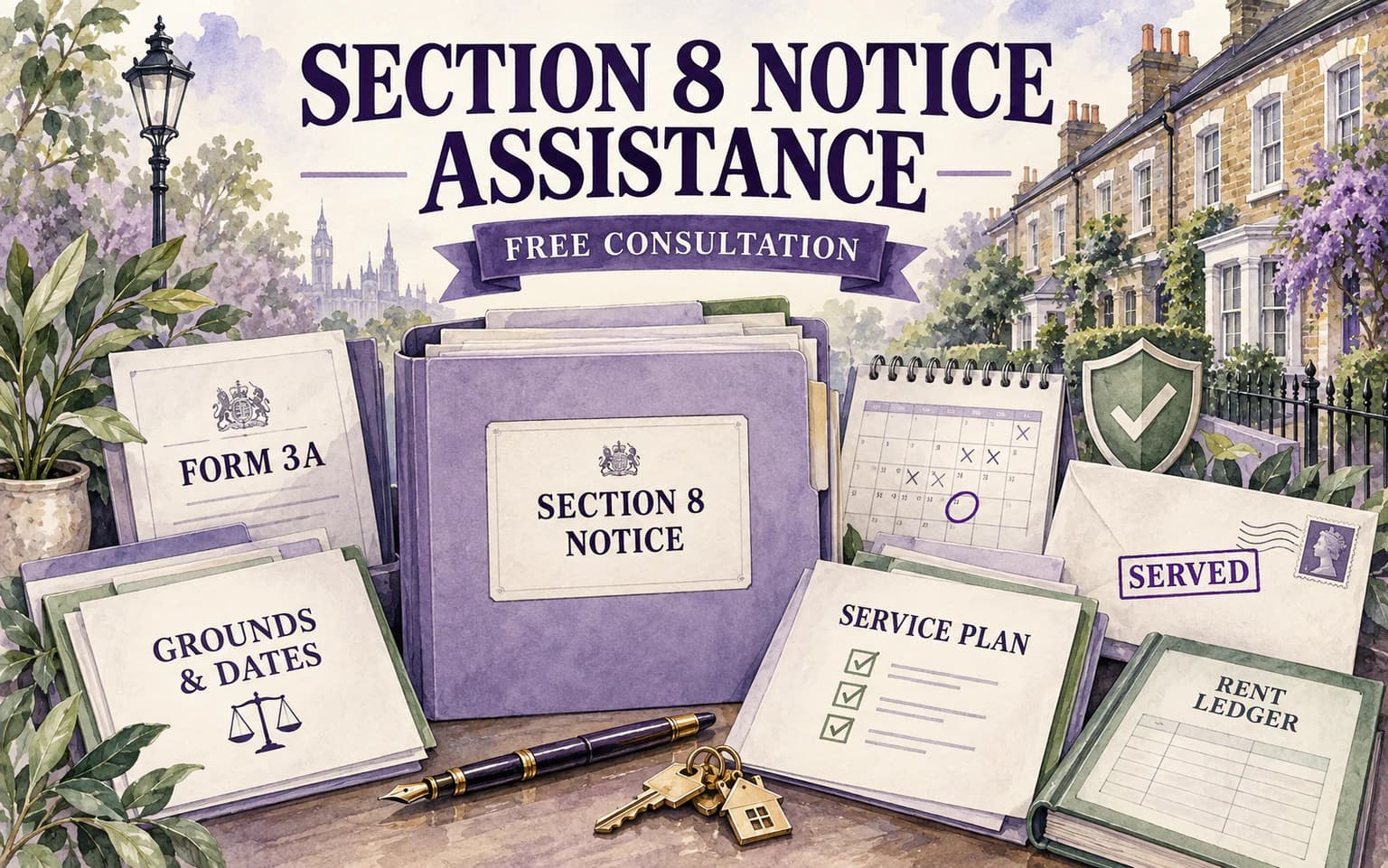
Unsure about grounds or dates?
Landlord Section 8 notice assistance
Free consultation · £149.00 only if we confirm we can help
Before you serve, we help organise your Form 3A, tenant details, notice timing, service plan and evidence prompts around the facts you approve.
Book free consultation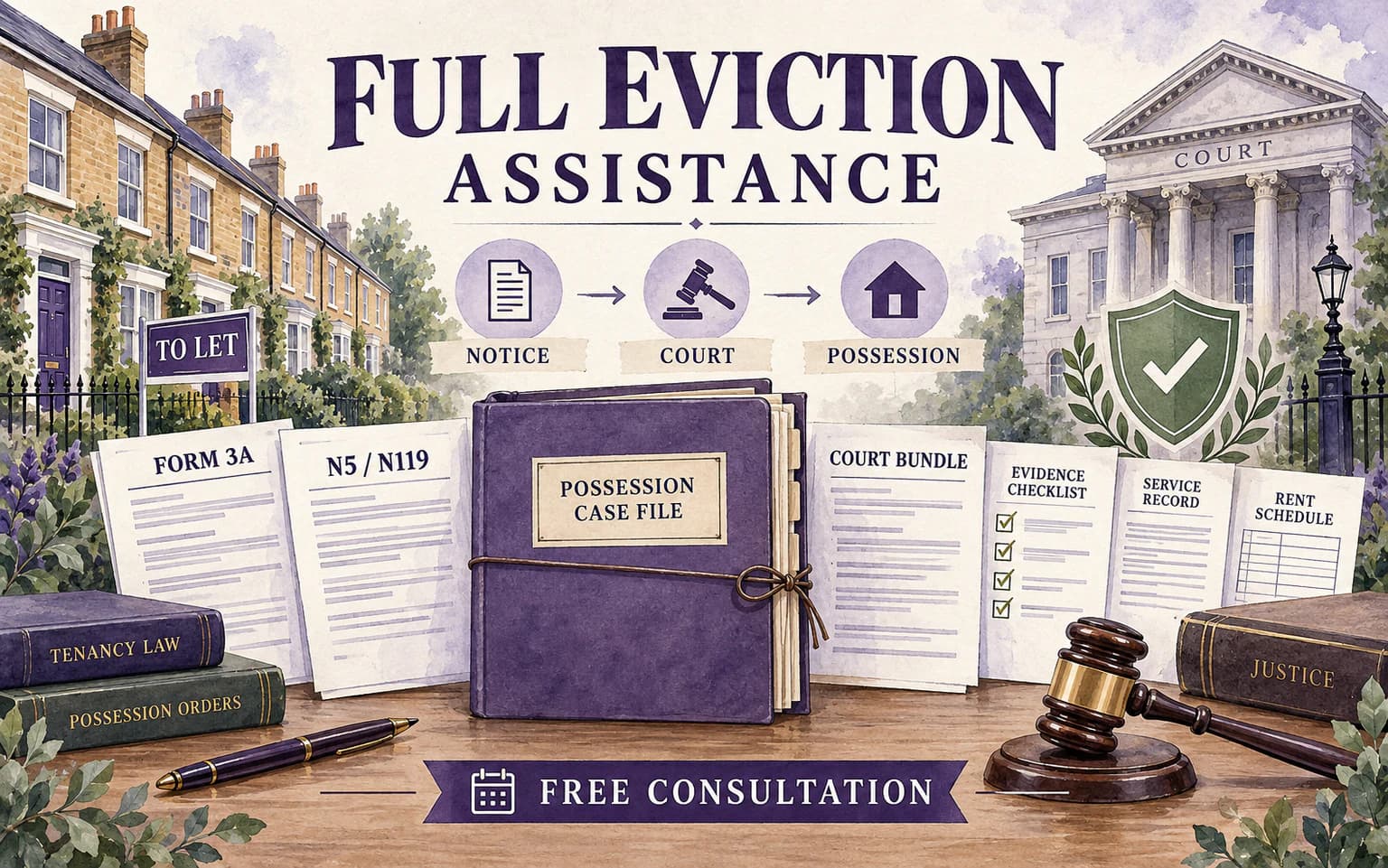
Want the full case, including court forms?
Landlord eviction assistance service
Free consultation · £399.00 only if we confirm we can help
Our £399 full-case service can cover your Section 8 notice, service record, N5, N119 particulars of claim and supporting bundle. If you have already served notice, we focus on the court-stage pack.
Book free consultationWhat to do next
Core eviction guides landlords usually need next
These are the core possession guides landlords usually need after notice or arrears problems start.
FAQs for landlords

Have a landlord question?
Ask Heaven is our free AI assistant that can help with eviction advice, tenancy questions, and more.