
Rated4.8/5 | 3008 reviews
Wales Possession Grounds - Complete Guide to Eviction Reasons 2026
Complete guide to all possession grounds under the Renting Homes (Wales) Act. Learn about mandatory and discretionary grounds for eviction in Wales.
Use this guide when
You need a practical landlord answer, not just a definition
Use this page when you need to understand wales possession grounds eviction in landlord terms, check the evidence or compliance points that matter, and decide whether the next step is a guide, free tool, notice pack, court pack, tenancy agreement, rent increase pack, or money claim route.
This guide explains wales possession grounds eviction in plain English, including the rules, common mistakes and practical next steps.
Use Correct Grounds
Using the wrong ground or incorrect procedure can invalidate your claim. Always ensure you use the correct form and notice period for your chosen ground.
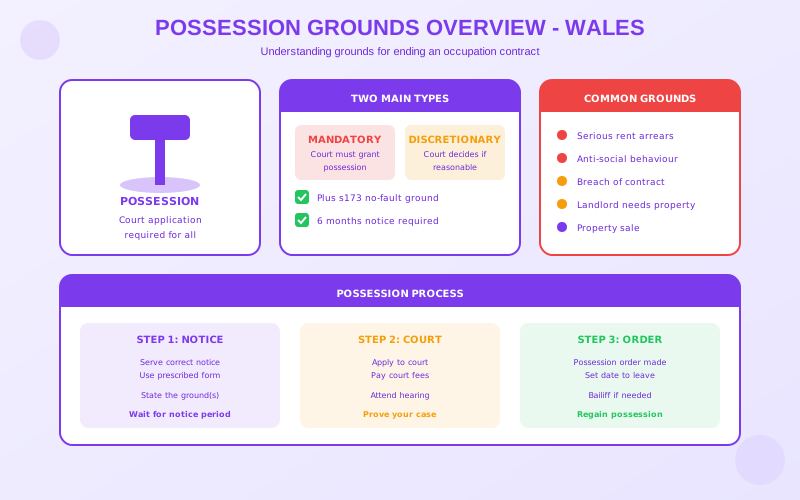
Possession Grounds Overview
The Renting Homes Act provides two categories of possession grounds:
Next step for landlords
Problem clear? Create the right notice before you serve
If the issue now points toward possession, move from guidance into a notice route that keeps grounds, dates, service, and evidence together.
- Choose the right route before you serve anything.
- Answer plain-English questions. We handle the legal logic.
- Preview the paperwork before you pay.

- Mandatory grounds: If proven, the court must order possession
- Discretionary grounds: The court considers if it's reasonable to order possession
You can use multiple grounds in the same claim if several apply to your situation.
Mandatory Grounds
With mandatory grounds, if you prove the ground exists at the hearing, the court must order possession. There is no discretion.
Serious Rent Arrears (Ground 1)
This is the most commonly used mandatory ground. Requirements:
- At least 2 months' rent must be outstanding
- Arrears must exist at the date of the notice AND at the hearing
- Only 14 days' notice is required
Arrears Must Persist
If the contract-holder pays down the arrears to below 2 months before the hearing, this ground fails. You would need to rely on discretionary grounds instead.
Other Mandatory Grounds
- Death of contract-holder: Where there is no successor
- Prohibited conduct (final warning): After formal warning for serious issues
Discretionary Grounds
With discretionary grounds, the court considers whether it's reasonable to order possession, even if the ground is proven.
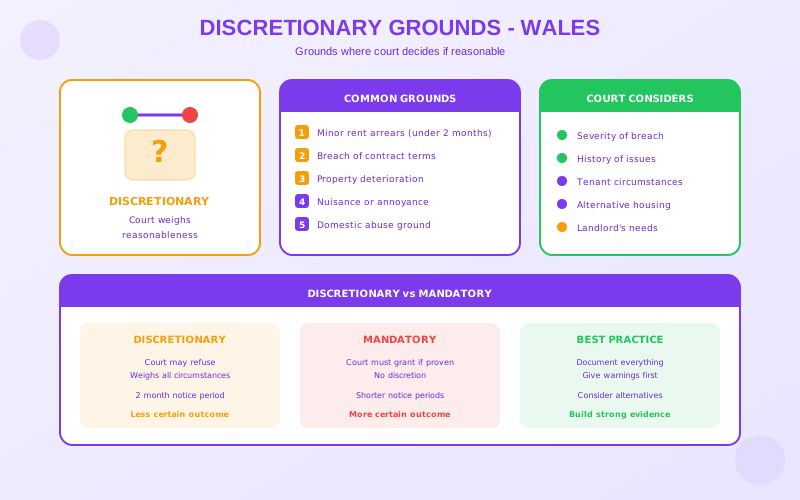
Breach of Contract (Ground 12)
The contract-holder has breached a term of the occupation contract. Examples:
- Unauthorized subletting
- Keeping pets contrary to the contract
- Running a business from the property
- Causing damage beyond fair wear and tear
Anti-Social Behaviour (Ground 13)
The contract-holder (or their visitors) has engaged in anti-social behaviour. This includes:
- Noise nuisance affecting neighbours
- Harassment of neighbours
- Criminal activity at the property
- Violence or threats of violence
Evidence is Key
For anti-social behaviour, you'll need strong evidence such as incident logs, witness statements, police reports, or local authority records.
Some Rent Arrears (Section 8 notice guide)
Any rent is outstanding. Unlike the mandatory ground, there's no minimum amount, but the court considers whether it's reasonable to evict.
Estate Management Grounds
These grounds relate to the landlord's plans for the property:
Landlord Wants to Sell (Ground 3)
- You intend to sell the property
- Sale would be significantly harder with tenant in situ
- 6 months' notice required
Landlord Wants to Live There (Ground 4)
- You or a family member intends to live in the property
- Must be a genuine intention
- 6 months' notice required
Major Works Required (Ground 5)
- Substantial works are needed that require vacant possession
- Works cannot reasonably be carried out with tenant present
- 2 months' notice required
Notice Requirements
| Ground | Notice Period | Type |
|---|---|---|
| Serious rent arrears | 14 days | Mandatory |
| Some rent arrears | 1 month | Discretionary |
| Breach of contract | 1 month | Discretionary |
| Anti-social behaviour | 48 hours to 1 month | Discretionary |
| Landlord sale/occupation | 6 months | Discretionary |
| Major works | 2 months | Discretionary |
Need Eviction Guidance?
Landlord Heaven provides Welsh eviction notice templates and step-by-step guides for each possession ground.
View Eviction Templates ?Possession Grounds FAQ
Can I use multiple grounds in one claim?
Yes. You can rely on multiple grounds in the same claim. This is often advisable as a backup - for example, claiming serious arrears (mandatory) and some arrears (discretionary) together.
What factors does the court consider for discretionary grounds?
The court considers all circumstances including: the severity of the breach, whether it's ongoing, the tenant's housing needs, any vulnerability, and whether the landlord has contributed to the situation.
Can I evict for a single incident of anti-social behaviour?
Possibly, if it's serious enough. A single serious incident (like violence) could justify eviction. Minor one-off incidents are less likely to succeed as courts want to see a pattern or serious harm.
Do I need to prove I really want to sell/live there?
Yes. For estate management grounds, you must demonstrate a genuine intention. If you claim you want to live there then immediately re-let, the tenant could claim damages for misrepresentation.
Prefer us to prepare it with you?
Free consultation before any assisted eviction preparation is agreed
We discuss the facts first. If we can help, we confirm the scope and send a secure Stripe payment link afterwards.
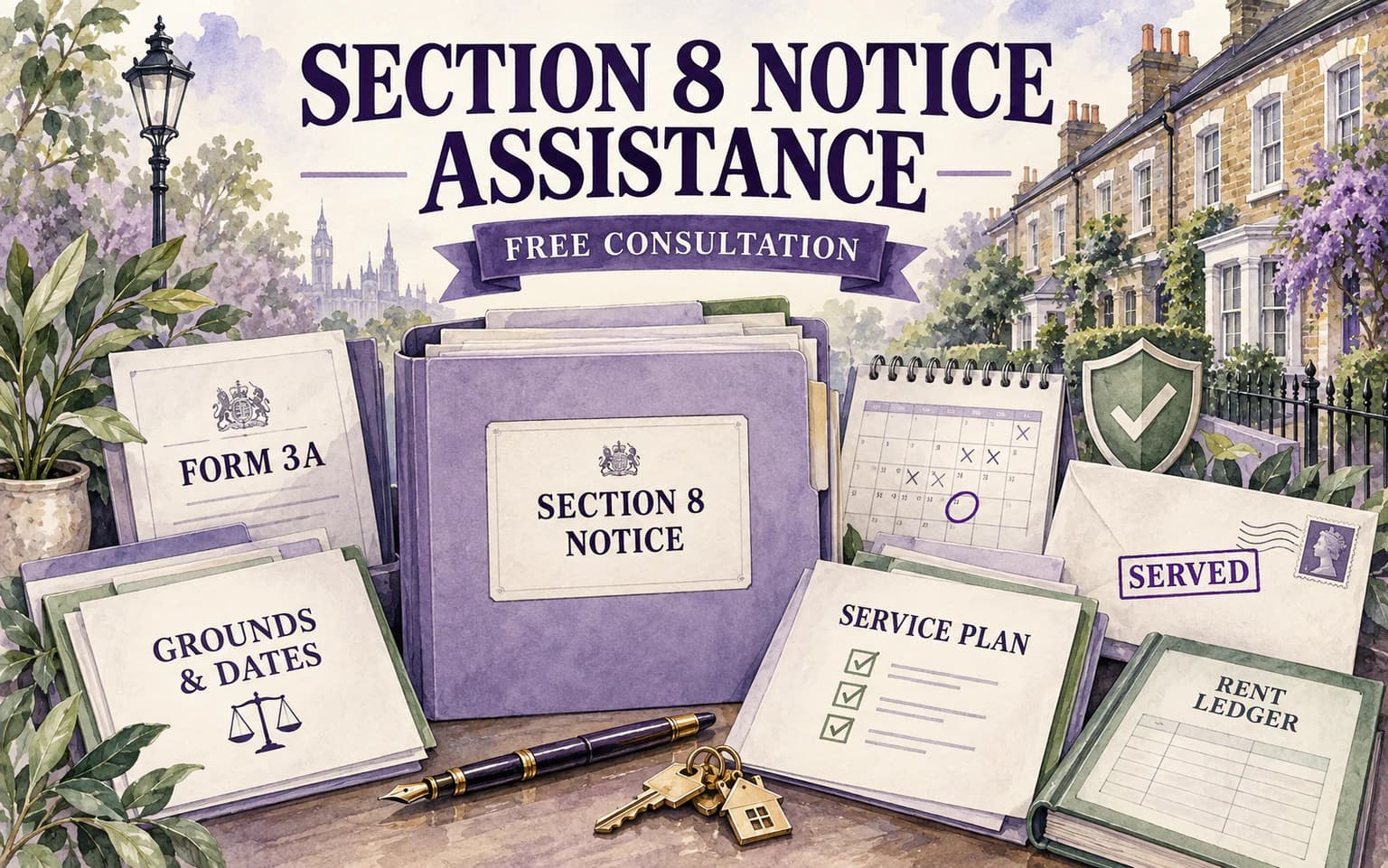
Unsure about grounds or dates?
Landlord Section 8 notice assistance
Free consultation · £149.00 only if we confirm we can help
Before you serve, we help organise your Form 3A, tenant details, notice timing, service plan and evidence prompts around the facts you approve.
Book free consultation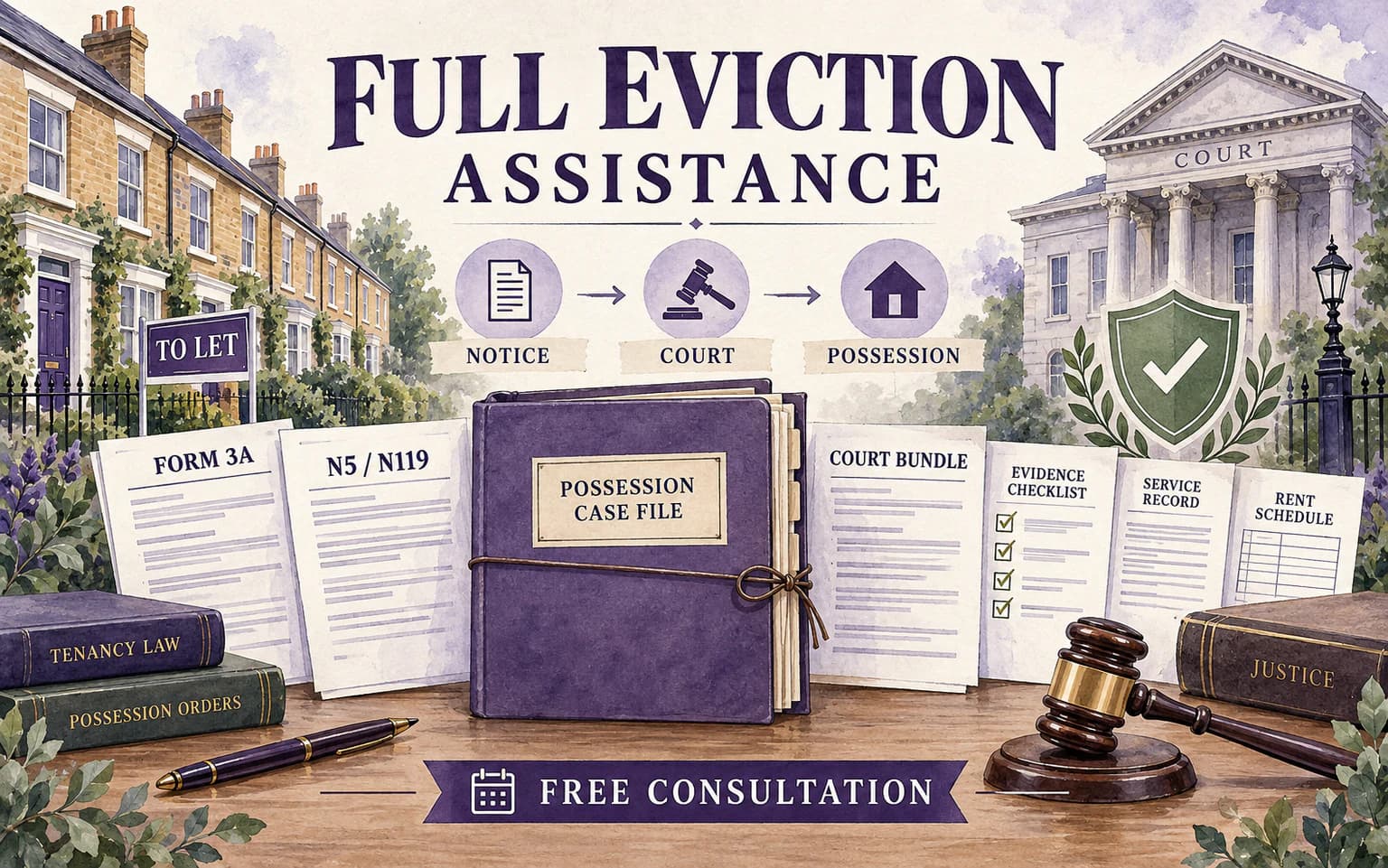
Want the full case, including court forms?
Landlord eviction assistance service
Free consultation · £399.00 only if we confirm we can help
Our £399 full-case service can cover your Section 8 notice, service record, N5, N119 particulars of claim and supporting bundle. If you have already served notice, we focus on the court-stage pack.
Book free consultationWhat to do next
Core eviction guides landlords usually need next
These are the core possession guides landlords usually need after notice or arrears problems start.
FAQs for landlords

Have a landlord question?
Ask Heaven is our free AI assistant that can help with eviction advice, tenancy questions, and more.