
Rated4.8/5 | 3008 reviews
Standard Occupation Contract Wales - Complete Landlord Guide 2026
Comprehensive guide to Standard Occupation Contracts under the Renting Homes (Wales) Act . Understand your legal obligations as a Welsh landlord.
Use this guide when
You need a practical landlord answer, not just a definition
Use this page when you need to understand standard occupation contract wales in landlord terms, check the evidence or compliance points that matter, and decide whether the next step is a guide, free tool, notice pack, court pack, tenancy agreement, rent increase pack, or money claim route.
You are setting up a new tenancy and you do not want to rely on an old template. This guide explains which agreement you need and what to sort before the tenant moves in.
Key Change for Landlords
The Renting Homes Act fundamentally changed Welsh tenancy law. Tenants are now "contract-holders" and landlords must provide a written statement of the occupation contract within 14 days of occupation.
What is a Standard Occupation Contract?
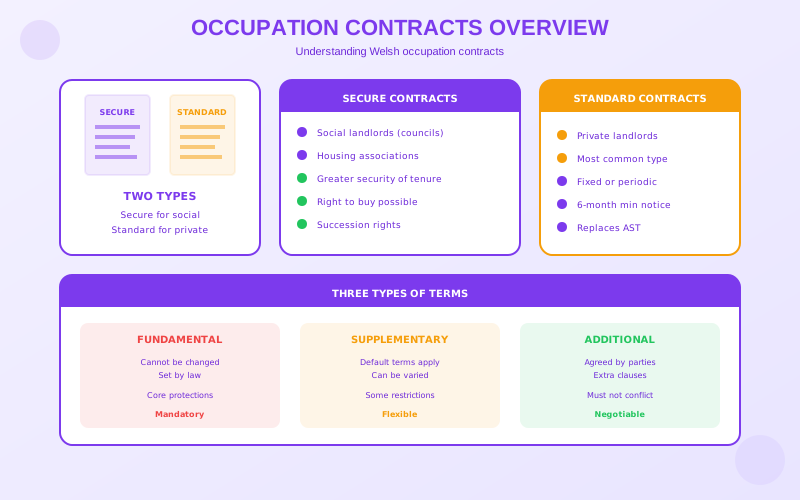
A Standard Occupation Contract (SOC) is the default contract type for private landlords letting residential property in Wales. It replaces the assured shorthold tenancy (AST) that still applies in England.
New tenancy
Setting up a tenancy? Choose the right agreement
If the next job is getting the tenancy in place, choose the agreement route that matches the property and arrangement now.
- Choose the right England agreement route for the tenancy you are setting up.
- Avoid old wording that causes problems later.
- Preview it before you pay.

The key features of a Standard Occupation Contract include:
- Clear written terms that both parties must follow
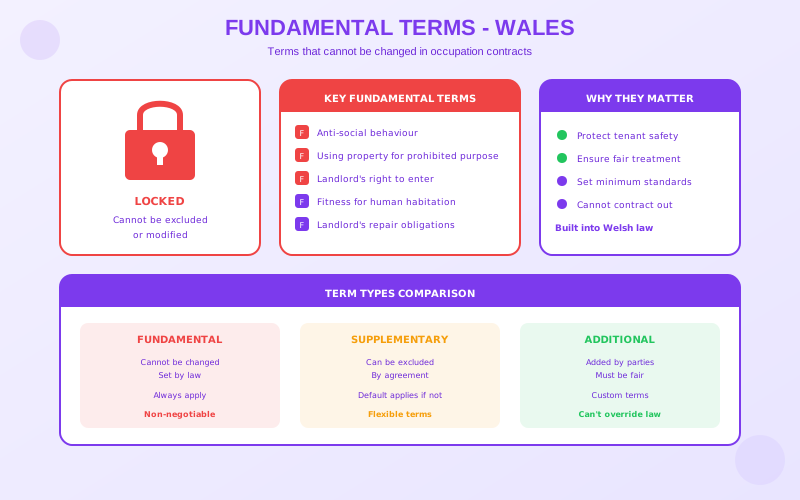
- Mandatory "fundamental terms" set by law
- Optional "supplementary terms" that can be modified
- Stronger rights for contract-holders (tenants)
- New requirements for landlords around fitness for human habitation
The Welsh Government provides model contracts that landlords can use, though you can also create your own as long as it includes all mandatory terms.
Types of Occupation Contracts
There are two main types of occupation contract under the Renting Homes Act:
| Contract Type | Used By | Key Features |
|---|---|---|
| Standard Contract | Private landlords | Periodic or fixed-term, landlord can end with notice |
| Secure Contract | Local authorities, housing associations | Stronger security, can only end on specific grounds |
As a private landlord, you'll issue Standard Occupation Contracts. These can be:
- Periodic contracts - rolling on a weekly or monthly basis
- Fixed-term contracts - for a set period (e.g., 6 or 12 months)
Fundamental Terms
Fundamental terms are mandatory provisions set by law that cannot be changed or removed from the contract. They protect both landlords and contract-holders.
Cannot Be Modified
Any attempt to change fundamental terms in a way that disadvantages the contract-holder is void and unenforceable. Courts will apply the statutory version instead.
Key fundamental terms include:
- The landlord must keep the property fit for human habitation
- The landlord must keep the structure and exterior in repair
- The landlord must keep installations for water, gas, electricity, heating, and sanitation in repair
- The contract-holder must not use the property for illegal purposes
- The contract-holder must not cause nuisance or annoyance
- Anti-social behaviour provisions
- Provisions about joint contract-holders
Supplementary Terms
Supplementary terms are default provisions that apply unless both parties agree to modify or remove them. They cover practical matters of the tenancy.
Common supplementary terms include:
- Requirements about pets (can be modified)
- Provisions about decoration and alterations
- Garden maintenance responsibilities
- Requirements to notify of absences
- Provisions about keys and access
Pets Default Position
Under the Act, the default position is that pets are allowed unless you specifically modify this term. If you want a "no pets" clause, you must include it as a modified supplementary term.
Written Statement Requirements
You must provide a written statement of the occupation contract to the contract-holder within 14 days of them moving in. This is a legal requirement.
The written statement must include:
- Names of the landlord and contract-holder(s)
- The address of the property
- The occupation date
- All fundamental terms
- All supplementary terms (including any modifications)
- Any additional terms agreed between the parties
- Information about the deposit (if taken)
- The amount of rent and when it's due
Penalty for Non-Compliance
If you fail to provide a written statement within 14 days, the contract-holder can apply to court. The court can order you to provide it and may award compensation of up to two months' rent.
Landlord Obligations
The Renting Homes Act places significant obligations on landlords. Key responsibilities include:
Fitness for Human Habitation
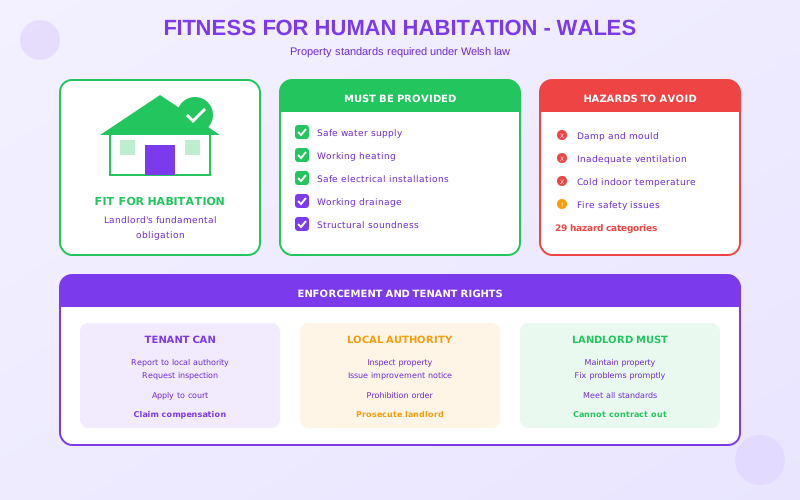
You must ensure the property is fit for human habitation at the start of the contract and throughout. This covers 29 matters including:
- Repair and stability of the structure
- Freedom from damp
- Adequate ventilation and natural light
- Water supply and drainage
- Fire safety
- Electrical safety
- Carbon monoxide risks
Repair Obligations
As landlord, you must keep in repair:
- The structure and exterior (including drains, gutters, external pipes)
- Installations for water, gas, electricity, heating, and hot water
- Common parts in multi-let properties
Safety Certifications
Before the contract-holder moves in, you must provide:
- A valid Gas Safety Certificate (if gas appliances present)
- An Electrical Installation Condition Report (EICR)
- An Energy Performance Certificate (EPC)
- Smoke alarms on each storey
- Carbon monoxide alarms where required
Contract-Holder Rights
Contract-holders under the Renting Homes Act have stronger rights than under the previous AST regime. Key rights include:
- Right to a written statement - must be provided within 14 days
- Right to a fit property - home must be fit for human habitation
- Right to repairs - landlord must maintain the property
- Protection from retaliatory eviction - if they report issues
- Minimum notice periods - cannot be evicted without proper notice
- Succession rights - certain people can inherit the contract
Ending an Occupation Contract
There are specific rules about how occupation contracts can be ended:
Landlord Ending the Contract
To end a standard occupation contract, you must:
- Give at least 6 months' notice (for no-fault eviction)
- Cannot serve notice in the first 6 months of the contract
- Use the correct form (Section 173 notice)
- Have provided a written statement of the contract
- Have protected any deposit properly
- Have provided required safety certificates
Minimum 12-Month Protection
Combining the 6-month restriction on serving notice with the 6-month notice period means contract-holders effectively have 12 months' security from the start of the contract.
Contract-Holder Ending the Contract
A contract-holder can end the contract by giving at least 4 weeks' notice (or one rental period, whichever is longer). They don't need to give a reason.
Need a Compliant Welsh Contract?
Landlord Heaven offers Welsh occupation contract templates that comply with the Renting Homes (Wales) Act 2016.
View Contract Templates ?Standard Occupation Contract FAQ
Do existing tenancies convert automatically?
Yes. All existing assured shorthold tenancies in Wales automatically converted to standard occupation contracts on 1 December 2022. You should have issued a written statement to existing tenants.
Can I use an English AST for a Welsh property?
No. Properties in Wales must use occupation contracts under Welsh law. Using an English AST would not comply with the Renting Homes Act and could cause legal problems.
What if I don't provide a written statement?
The contract-holder can apply to court for an order requiring you to provide it. You may also be ordered to pay compensation. Additionally, you cannot use the no-fault eviction procedure until you've provided the statement.
Can I ban pets completely?
Yes, but you must specifically include a "no pets" term as a modified supplementary term. The default position under the Act is that pets are allowed.
What's the minimum tenancy length?
There's no minimum fixed term, but given you cannot serve a no-fault notice in the first 6 months and must give 6 months' notice, contract-holders effectively have 12 months' security from day one.
What to do next
Core eviction guides landlords usually need next
These are the core possession guides landlords usually need after notice or arrears problems start.
FAQs for landlords

Have a landlord question?
Ask Heaven is our free AI assistant that can help with eviction advice, tenancy questions, and more.