
Rated4.8/5 | 3008 reviews
Renting Homes (Wales) Act 2016 - Complete Landlord Guide
Everything landlords need to know about the Renting Homes (Wales) Act . Key changes, compliance requirements, and practical guidance for Welsh landlords.
Use this guide when
You need a practical landlord answer, not just a definition
Use this page when you need to understand renting homes wales act 2016 in landlord terms, check the evidence or compliance points that matter, and decide whether the next step is a guide, free tool, notice pack, court pack, tenancy agreement, rent increase pack, or money claim route.
You are setting up a new tenancy and you do not want to rely on an old template. This guide explains which agreement you need and what to sort before the tenant moves in.
Wales-Specific Legislation
This Act only applies to properties in Wales. English properties continue to use assured shorthold tenancies under the Housing Act 1988. If your property is on the Welsh side of the border, you must comply with Welsh law.
Overview of the Act
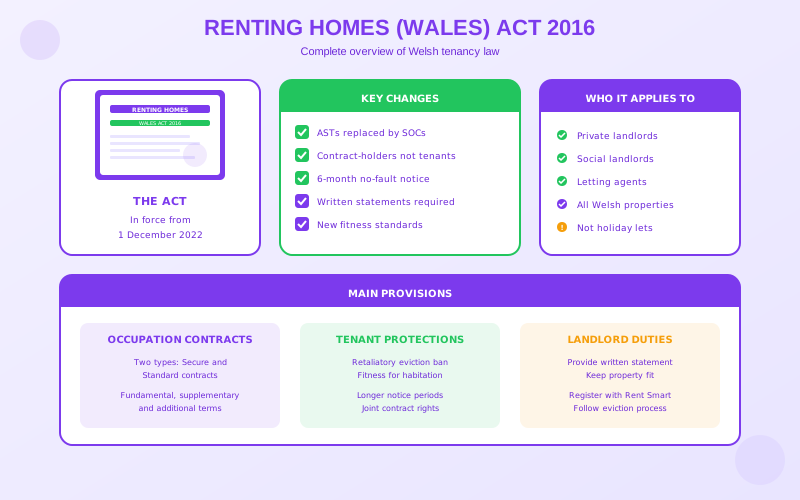
The Renting Homes (Wales) Act 2016 was passed by the Welsh Parliament (Senedd) to simplify and modernize Welsh tenancy law. It replaces various pieces of legislation that previously governed renting in Wales.
New tenancy
Setting up a tenancy? Choose the right agreement
If the next job is getting the tenancy in place, choose the agreement route that matches the property and arrangement now.
- Choose the right England agreement route for the tenancy you are setting up.
- Avoid old wording that causes problems later.
- Preview it before you pay.

The Act aims to:
- Simplify the law by replacing multiple complex acts
- Create clearer rights and responsibilities for all parties
- Improve property conditions through fitness requirements
- Provide greater security for those renting their homes
- Standardize contract terms across the sector
Under the Act, tenants become "contract-holders" and tenancies become "occupation contracts." This isn't just a name change—it reflects a fundamental shift in how the law treats rental relationships.
Key Changes from ASTs
If you previously let properties in Wales using assured shorthold tenancies, here are the major changes you need to understand:
| Area | Previous (AST) | Now (Occupation Contract) |
|---|---|---|
| Written contract | Recommended but not required | Mandatory within 14 days |
| No-fault notice | 2 months (Section 21) | 6 months (Section 173) |
| When notice can be served | After 4 months | After 6 months |
| Property standards | Fit for habitation implied | 29 specific fitness matters |
| Pets | Usually prohibited | Allowed by default |
Landlord Requirements
The Act places specific requirements on landlords. Failure to comply can result in penalties and may prevent you from evicting contract-holders.
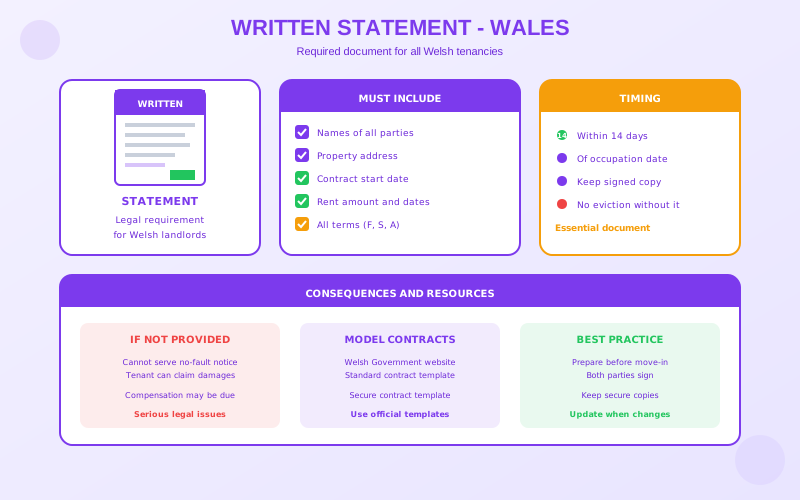
Written Statement
You must provide a written statement of the occupation contract within 14 days of the contract-holder taking up occupation. The statement must include:
- All fundamental terms (set by law)
- All supplementary terms (with any agreed modifications)
- Any additional terms agreed between you
- Key information about the property and parties
Rent Smart Wales Registration
All landlords in Wales must be registered with Rent Smart Wales. If you use a letting agent, they must be licensed. This requirement predates the Renting Homes Act but remains essential.
Registration is Mandatory
Landlords who fail to register with Rent Smart Wales cannot legally serve eviction notices. The penalty for non-registration can be up to £150,000 under Rent Repayment Orders.
Safety Requirements
Before occupation begins, you must:
- Obtain a valid Gas Safety Certificate (annual)
- Obtain an Electrical Installation Condition Report (every 5 years)
- Provide an Energy Performance Certificate (minimum rating E)
- Install smoke alarms on each storey
- Install carbon monoxide alarms where there are fixed combustion appliances
Fitness for Human Habitation
One of the most significant changes under the Act is the comprehensive fitness for human habitation requirement. Your property must be fit at the start of the contract and throughout.
The 29 matters of fitness include:
Structure & Safety
- Repair and structural stability
- Stability of the building
- Freedom from damp
- Internal arrangement
- Natural lighting
Services & Facilities
- Ventilation
- Water supply
- Drainage and sanitation
- Facilities for preparation of food
- Heating
Hazards
- Fire safety
- Carbon monoxide
- Lead
- Asbestos
- Other environmental hazards
Energy & Utilities
- Energy performance
- Electrical installations
- Gas installations
- Domestic water supply systems
- Sanitary installations
Notice Periods
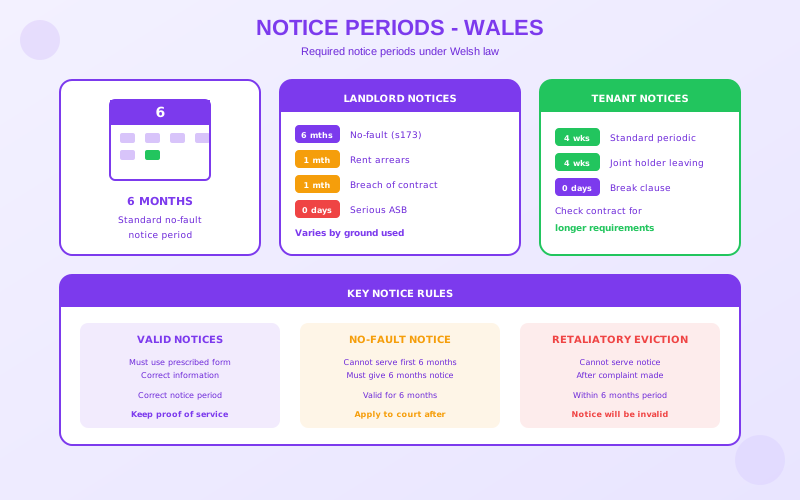
The Act significantly extended notice periods for landlords, providing greater security for contract-holders.
No-Fault Eviction (Section 173)
- You must give at least 6 months' notice
- You cannot serve notice in the first 6 months of the contract
- This means contract-holders have at least 12 months' security
Fault-Based Eviction (Section 181)
Where there are grounds for possession (such as rent arrears or breach of contract), different notice periods apply depending on the ground:
- Serious rent arrears (2+ months): 14 days' notice
- Anti-social behaviour: Can be immediate in serious cases
- Breach of contract: 1 month's notice
Deposit Rules
Deposit protection continues to apply in Wales. Key rules include:
- Maximum deposit is equivalent to 2 months' rent (holding deposit counts)
- Must be protected in an approved scheme within 30 days
- Prescribed information must be provided to the contract-holder
- Failure to comply prevents serving Section 173 notices
Deposit Scheme Options
You can use any of the government-approved deposit protection schemes. The Deposit Protection Service (DPS), MyDeposits, and Tenancy Deposit Scheme (TDS) all operate in Wales.
Compliance Checklist
Use this checklist to ensure you're complying with the Renting Homes Act:
Before Letting
- ? Register with Rent Smart Wales
- ? Obtain Gas Safety Certificate
- ? Obtain EICR (electrical safety)
- ? Obtain EPC (minimum E rating)
- ? Install smoke alarms on each storey
- ? Install CO alarms where required
- ? Prepare written statement of occupation contract
At Start of Tenancy
- ? Provide written statement within 14 days
- ? Provide copy of Gas Safety Certificate
- ? Provide copy of EPC
- ? Provide How to Rent Wales guide
- ? Protect deposit within 30 days
- ? Serve deposit prescribed information
Need Compliance Help?
Landlord Heaven provides comprehensive compliance packs for Welsh landlords including contract templates, checklists, and guidance.
View Welsh Landlord Products ?Renting Homes Act FAQ
Does the Act apply to lodgers?
No. If you live in the property and share accommodation with the person renting a room, the Renting Homes Act doesn't apply. This arrangement creates a "licensee" relationship instead.
What happened to existing tenancies?
All existing assured shorthold tenancies, assured tenancies, and other residential tenancies automatically converted to occupation contracts on 1 December 2022. Landlords should have provided written statements.
Can I still use Section 21?
No. Section 21 notices don't exist in Wales. The equivalent is a Section 173 notice under the Renting Homes Act, but it requires 6 months' notice and cannot be served in the first 6 months.
What if my property crosses the border?
The law that applies depends on where the property is located. If the dwelling is in Wales, Welsh law applies regardless of where you or the tenant live. Border cases should seek legal advice.
Are HMO rules different in Wales?
HMO licensing requirements remain similar, but occupation contracts apply to each HMO room let. You must provide a written statement to each contract-holder in an HMO.
What to do next
Core eviction guides landlords usually need next
These are the core possession guides landlords usually need after notice or arrears problems start.
FAQs for landlords

Have a landlord question?
Ask Heaven is our free AI assistant that can help with eviction advice, tenancy questions, and more.