
Rated4.8/5 | 2645 reviews
Simple Procedure Scotland - Recovering Rent Arrears Guide 2026
Complete guide to using Simple Procedure in Scotland to recover rent arrears from tenants. Learn court fees, forms, and the step-by-step process.
Use this guide when
You need a practical landlord answer, not just a definition
Use this page when you need to understand scotland simple procedure rent arrears in landlord terms, check the evidence or compliance points that matter, and decide whether the next step is a guide, free tool, notice pack, court pack, tenancy agreement, rent increase pack, or money claim route.
Your tenant owes you money and you need to know the fastest lawful way to chase it. This guide explains the route, the paperwork, and the mistakes that can slow you down.
Simple Procedure Key Points
- Claim limit: Up to £5,000
- Court: Sheriff Court
- Fees: £19 to £104 depending on claim amount
- Timeline: Typically 8-12 weeks to decision
What Is Simple Procedure?
Simple Procedure replaced the Small Claims procedure in Scotland in 2016. It's designed to be accessible to people without legal representation, with simplified forms and informal hearings.
Unpaid rent
Tenant still owes money? Prepare the claim file
If the arrears keep growing, turn the problem into a clearer debt record and claim narrative before the evidence gets harder to untangle.
- Set out what is owed clearly before the numbers get harder to untangle.
- Build the claim in plain English.
- Get the court paperwork ready for the next step.

Key features:
- Claims up to £5,000
- Streamlined court forms
- Informal hearing process
- Limited expenses awards (so losing rarely costs much)
- No need for a solicitor
When to Use Simple Procedure
Good for:
- Recovering rent arrears from current tenants
- Claiming evict tenant not paying rent guide from former tenants
- Recovering property damage costs
- Claiming deposit shortfalls (after scheme deductions)
- Utility bills left unpaid
Not suitable for:
- Evicting tenants (use First-tier Tribunal)
- Claims over £5,000 (use Ordinary Cause)
- Complex legal disputes
Before Going to Court
Send a letter before action giving the tenant 14-28 days to pay. This shows you tried to resolve matters and is expected by the court. Keep a copy for your evidence.
Court Fees
Court fees depend on the amount you're claiming:
| Claim Amount | Court Fee |
|---|---|
| Up to £200 | £19 |
| £200.01 - £300 | £34 |
| £300.01 - £500 | £50 |
| £500.01 - £1,500 | £73 |
| £1,500.01 - £3,000 | £89 |
| £3,000.01 - £5,000 | £104 |
You can usually add the court fee to your claim, so the tenant pays if you win.
Step-by-Step Process
- 1Send Letter Before Action
Write to the tenant demanding payment within 14-28 days
- 2Complete Form 3A (Claim Form)
Fill in the claimant (you) and respondent (tenant) details, plus the amount claimed
- 3Submit to Sheriff Court
Submit online or in person at the court covering the tenant's address
- 4Court Serves the Claim
The court sends the claim to the tenant (respondent)
- 5Tenant Responds (or Doesn't)
The tenant has 21 days to respond. If they don't, you may get automatic judgment
- 6Discussion or Hearing
If disputed, a discussion or hearing is scheduled
- 7Decision
The Sheriff makes a decision on the claim
Forms Required
Main Forms
- Form 3A: Claim Form (you complete this)
- Form 4A: Response Form (tenant uses this)
Evidence to Prepare
- Tenancy agreement
- Rent statements showing arrears
- Bank statements showing missed payments
- Letter before action and proof of postage
- Any relevant correspondence
- Calculation of the amount claimed
The Hearing
If the Tenant Doesn't Respond
If the tenant doesn't respond within 21 days, you can apply for a Decision without a hearing (Form 10A). The Sheriff will grant your claim if it's properly documented.
If the Tenant Disputes
If the tenant responds and disputes the claim, there will be a Discussion (informal meeting with the Sheriff) or a Hearing (more formal).
At the Hearing
- Arrive on time with all your documents
- Dress appropriately
- Address the Sheriff as "Sheriff"
- Explain your case clearly and calmly
- Have your evidence organised and ready
- Answer questions honestly
Enforcing the Decision
If you win but the tenant doesn't pay, you can enforce the decision using:
Sheriff Officers
- Earnings Arrestment: Deductions from wages
- Bank Arrestment: Freeze and seize bank funds
- Attachment: Seize and sell goods
You'll need an Extract Decree (certified copy of the decision) from the court to instruct Sheriff Officers.
Add Interest
You can claim interest on the debt at the judicial rate (currently 8%). This continues to accrue until the debt is paid.
Simple Procedure FAQ
Can I claim more than £5,000?
Not through Simple Procedure. For claims over £5,000, you need to use the Ordinary Cause procedure, which is more complex and usually requires a solicitor.
Which court do I use?
Use the Sheriff Court covering the area where the tenant lives (or lived, if a former tenant). You can find the correct court on the Scottish Courts website.
Do I need a solicitor?
No. Simple Procedure is designed for people to use without legal representation. However, you can use a solicitor if you prefer - but costs are rarely awarded.
What if I can't find the tenant?
You can apply to the court for alternative service methods. The court may allow service by advertisement or posting to the last known address.
Can I claim legal expenses?
In Simple Procedure, expenses are rarely awarded. You can add the court fee to your claim, but don't expect to recover solicitor costs.
Need to money claim for unpaid rent?
Landlord Heaven provides templates and guidance for recovering unpaid rent through the Scottish courts.
View Money Claim Products ?Prefer us to prepare it with you?
Free consultation before any assisted eviction preparation is agreed
We discuss the facts first. If we can help, we confirm the scope and send a secure Stripe payment link afterwards.
Unsure about grounds or dates?
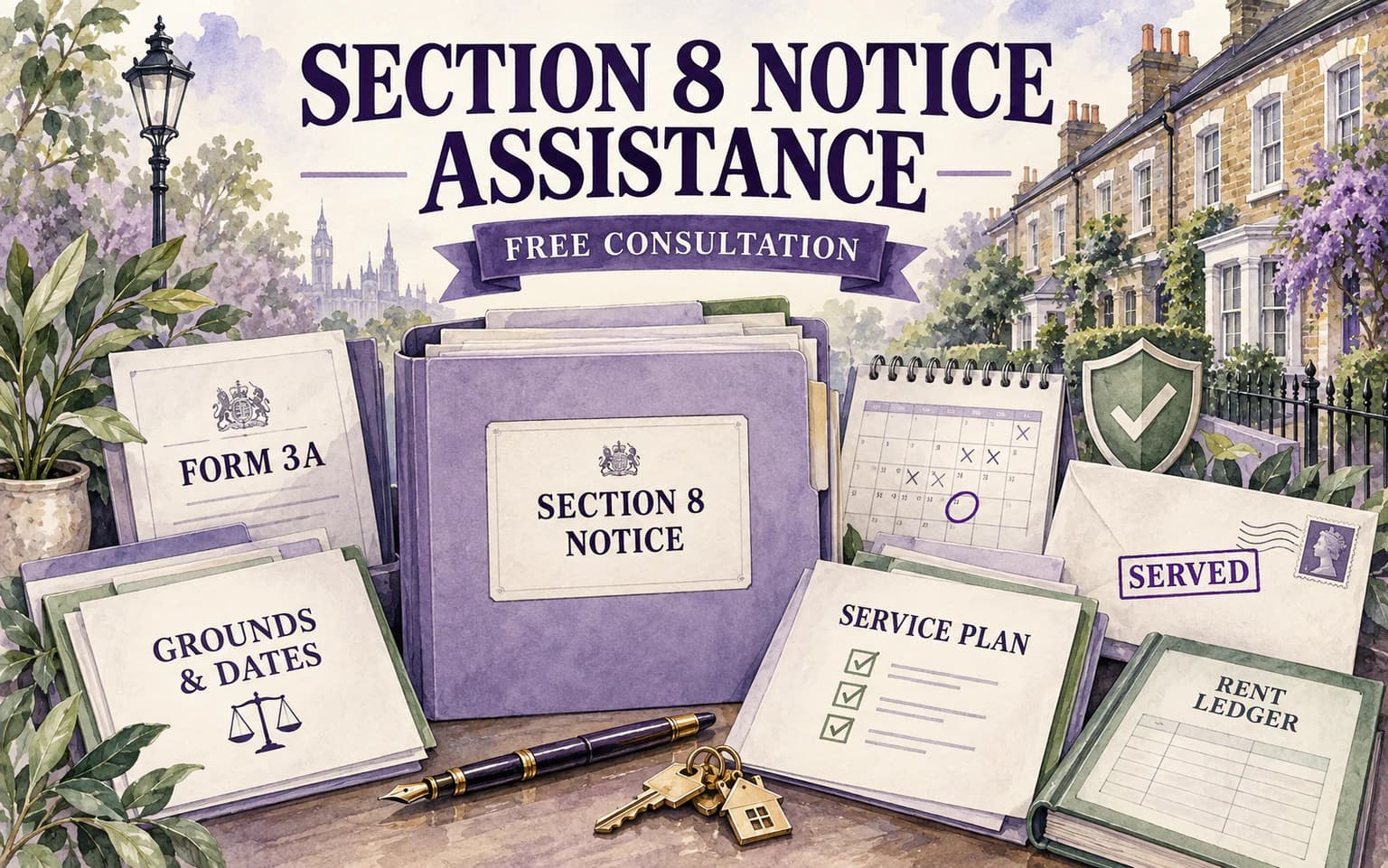
Landlord Section 8 notice assistance
Free consultation · £149.00 only if we confirm we can help
Before you serve, we help organise your Form 3A, tenant details, notice timing, service plan and evidence prompts around the facts you approve.
Book free consultation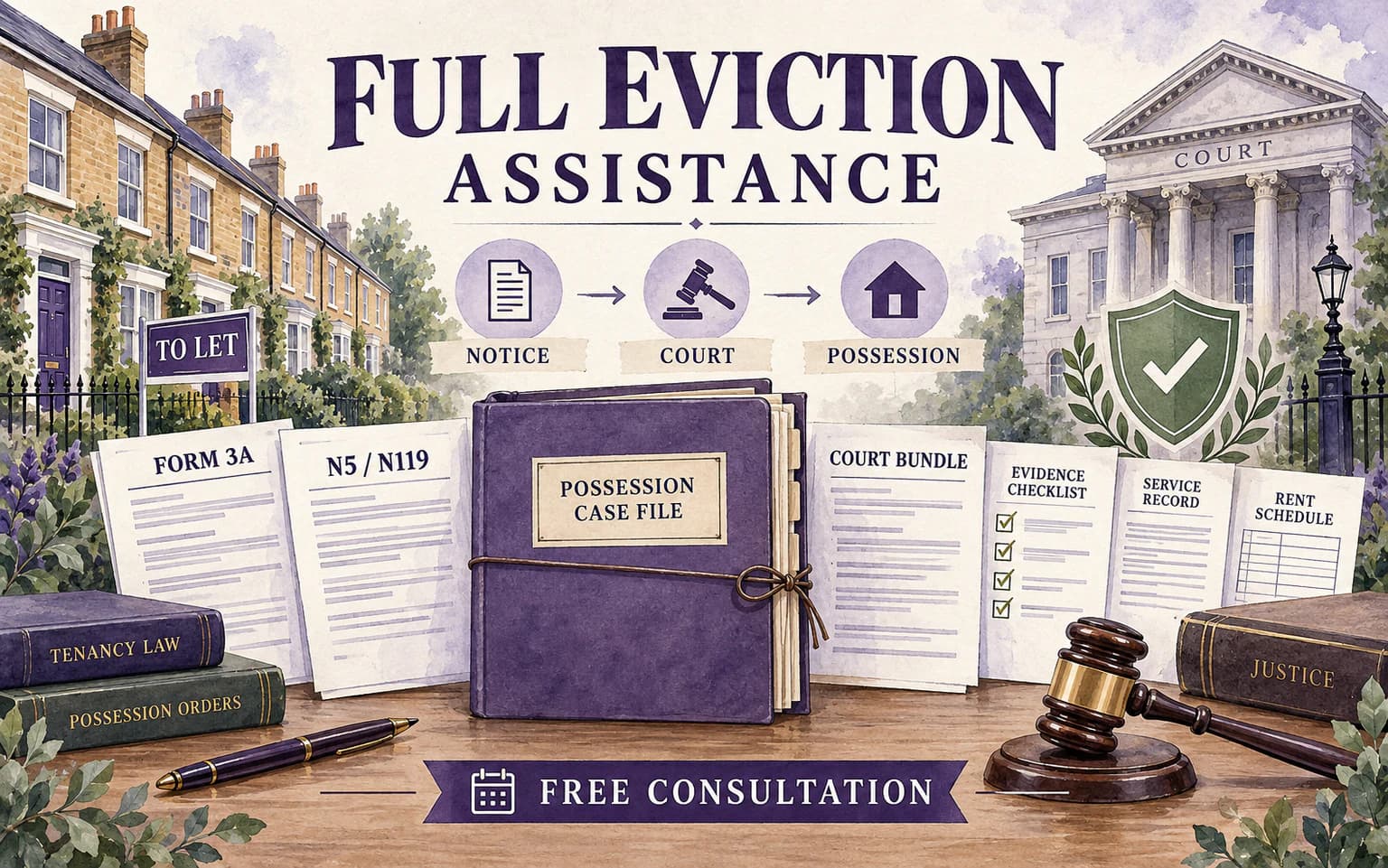
Want the full case, including court forms?
Landlord eviction assistance service
Free consultation · £399.00 only if we confirm we can help
Our £399 full-case service can cover your Section 8 notice, service record, N5, N119 particulars of claim and supporting bundle. If you have already served notice, we focus on the court-stage pack.
Book free consultationWhat to do next
Core eviction guides landlords usually need next
These are the core possession guides landlords usually need after notice or arrears problems start.
FAQs for landlords

Have a landlord question?
Ask Heaven is our free AI assistant that can help with eviction advice, tenancy questions, and more.