
Rated4.8/5 | 3008 reviews
HMO Licensing Scotland - Complete Guide 2026
Complete guide to HMO licensing in Scotland. Learn when you need a licence, application process, conditions, fees, and penalties for non-compliance.
Use this guide when
You need a practical landlord answer, not just a definition
Use this page when you need to understand scotland hmo licensing requirements in landlord terms, check the evidence or compliance points that matter, and decide whether the next step is a guide, free tool, notice pack, court pack, tenancy agreement, rent increase pack, or money claim route.
You are trying to sort scotland hmo licensing requirements before it causes a bigger problem later. This guide explains what you need to do, when it matters, and how it affects the rest of your case.
HMO Licensing Key Points
- Definition: 3+ unrelated people sharing facilities
- Licence from: Local council
- Duration: Up to 3 years
- Penalty: Up to £50,000 and rent repayment orders
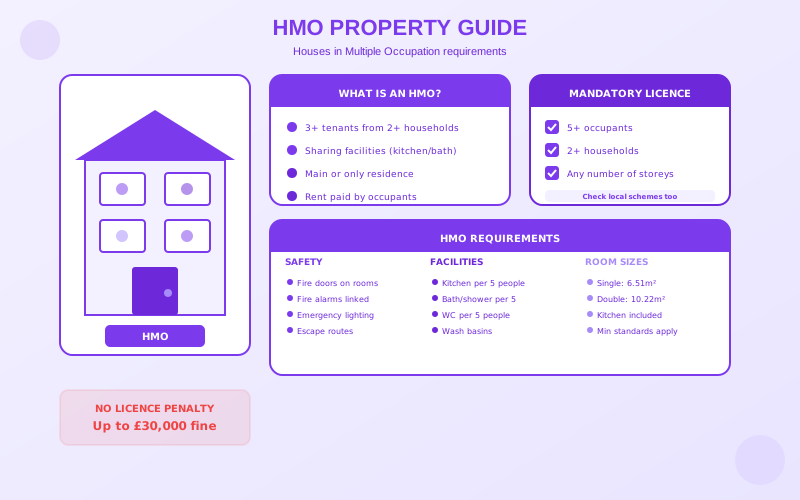
What Is an HMO?
Under the Housing (Scotland) Act 2006, a property is an HMO (House in Multiple Occupation) if:
Next step for landlords
Problem clear? Create the right notice before you serve
If the issue now points toward possession, move from guidance into a notice route that keeps grounds, dates, service, and evidence together.
- Choose the right route before you serve anything.
- Answer plain-English questions. We handle the legal logic.
- Preview the paperwork before you pay.

- It is the only or main residence of 3 or more people
- From 3 or more families (i.e., unrelated people)
- They share facilities (bathroom, kitchen, or toilet)
Examples of HMOs
- Student flats with 3+ students from different families
- Professional house-shares with 3+ unrelated adults
- Bedsit properties with shared facilities
- Hostels and guest houses
Not Usually HMOs
- Properties let to one family
- Properties let to couples
- Owner-occupied with lodgers (under 3 unrelated)
- Properties where each unit is self-contained
When You Need a Licence
You need an HMO licence if your property meets the HMO definition. Unlike England, Scotland requires licensing for all HMOs regardless of size - there's no "mandatory" vs "additional" distinction.
Apply Before Letting
You must have a licence before using a property as an HMO. Don't let to tenants and then apply - this is operating illegally. Apply well in advance as processing takes weeks or months.
Application Process
- 1Contact your local council
Find the HMO licensing team - usually in environmental health or housing
- 2Complete the application form
Provide property details, floor plans, and landlord information
- 3Submit supporting documents
Gas safety certificate, EICR, fire safety documents, floor plans
- 4Pay the application fee
Fees vary by council and property size
- 5Property inspection
Council officers visit to check compliance with standards
- 6Consultation period
Neighbours and relevant parties are consulted
- 7Decision
Licence granted (with conditions) or refused
Licence Fees
Fees are set by each council, so they vary. Typical ranges:
| Application Type | Typical Fee Range |
|---|---|
| New licence (3-4 occupants) | £500 - £1,000 |
| New licence (5+ occupants) | £800 - £1,500 |
| Renewal | £400 - £800 |
| Variation (change to existing) | £100 - £300 |
Check your specific council's website for exact fees. Some councils charge per occupant; others have fixed rates.
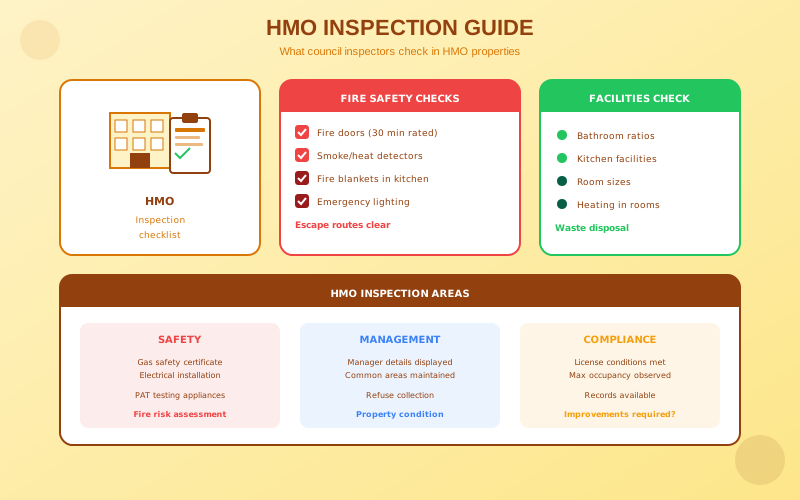
Licence Conditions
HMO licences come with mandatory conditions and may include additional conditions specific to your property. Common conditions include:
Mandatory Conditions
- Maximum number of occupants
- Annual gas safety checks
- Electrical installation inspection (EICR)
- Smoke and heat detectors
- Fire doors where required
- Provision of fire extinguisher/blanket
- Display of fire escape routes
Additional Conditions
- Provision of specific furniture or facilities
- Refuse storage requirements
- Garden maintenance
- Management standards
- Reporting changes to the council
Safety Standards
Fire Safety
HMOs have stricter fire safety requirements than standard lets:
- Fire doors to kitchens, living rooms, and bedrooms
- Interlinked smoke alarms on each level
- Heat detector in kitchen
- Emergency lighting in escape routes (larger HMOs)
- Fire blanket in kitchen
- Clear escape routes
Room Sizes
Minimum room sizes typically apply:
- Single bedroom: Usually 6.5-7 m—
- Double bedroom: Usually 10-11 m—
- Kitchen: Depends on occupants
- Living space: May be required
Facilities
- Adequate bathroom facilities for the number of occupants
- Sufficient kitchen facilities and storage
- Heating in all habitable rooms
- Adequate ventilation
Penalties
Operating Without a Licence
- Criminal offence
- Fine up to £50,000
- Rent Repayment Order (tenant claims back rent)
- Difficulty evicting tenants
Breaching Licence Conditions
- Warning and requirement to remedy
- Licence revocation
- Prosecution for serious breaches
- Rent Repayment Orders
HMO Licensing FAQ
Can I let while my application is being processed?
Only if you've been granted temporary permission. Don't assume you can let just because you've applied. Ask the council about their policy.
What if neighbours object to my application?
The council considers objections but must make decisions based on the legal criteria. Mere opposition from neighbours isn't grounds for refusal if you meet all requirements.
Do I need planning permission too?
Possibly. In some areas, changing a property to an HMO requires planning permission (change of use). Check with the planning department separately from the licensing team.
What about short-term let licensing?
That's different. Short-term let licensing applies to holiday lets and short stays. HMO licensing is for longer-term accommodation. You may need both depending on how you use the property.
Can my HMO licence be transferred?
No. If you sell the property, the new owner needs to apply for their own licence. The licence is personal to you and specific to the property.
Managing an HMO?
Landlord Heaven provides guidance and compliance checklists for HMO landlords in Scotland.
View All Products ?What to do next
Core eviction guides landlords usually need next
These are the core possession guides landlords usually need after notice or arrears problems start.
FAQs for landlords

Have a landlord question?
Ask Heaven is our free AI assistant that can help with eviction advice, tenancy questions, and more.