Accelerated Possession Procedure England - Complete Guide
The accelerated possession procedure offers landlords a faster route to eviction through Section 21. Learn eligibility, forms, timelines, and when to use thi...
Problem → education → solution → action
If you are dealing with this right now, use this guide to understand your options quickly, then move straight into the right landlord workflow.

Problem → solution

Need to act on this now?
- Notice, possession, and court flow in one place
- Step-by-step process from notice to filing
- Court-ready bundle outputs
The accelerated possession procedure is a streamlined court process designed specifically for Section 21 evictions in England. Unlike standard possession claims, accelerated cases are typically decided without a court hearing, making them faster, simpler, and less stressful for landlords. Understanding when and how to use this procedure can save you months of waiting and significant legal costs.
Section 21 Deadline Approaching
Section 21 evictions end on 1 May 2026 under the Renters' Rights Act 2025. To use the accelerated procedure, you must serve a valid Section 21 notice before 30 April 2026 and begin court proceedings promptly. After this date, only Section 8 (with grounds) will be available.
What Is Accelerated Possession?
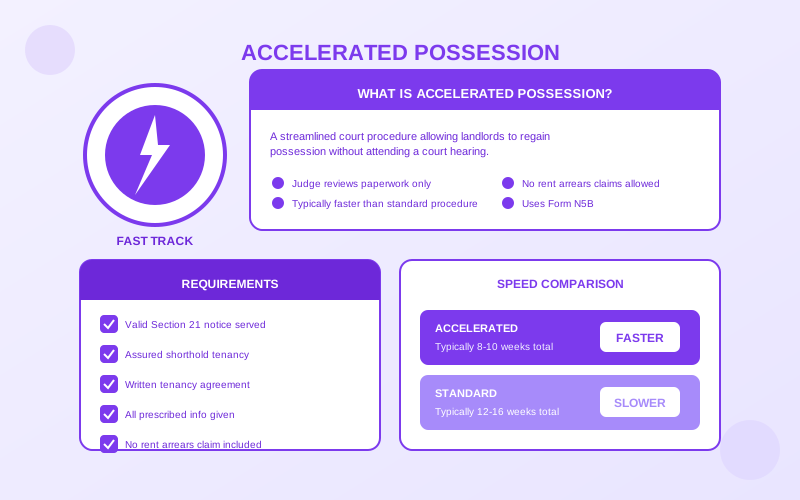
The accelerated possession procedure is a written (paper-based) court process that allows landlords to obtain a possession order without attending a court hearing. The judge reviews your claim and the tenant's response (if any) on paper and makes a decision based solely on the documents.
This procedure is available only for Section 21 claims where:
- You're seeking possession only (no rent arrears claim included)
- The tenancy is an assured shorthold tenancy (AST)
- Your Section 21 notice is valid and has expired
- All prescribed requirements have been met (EPC, gas safety, deposit protection, etc.)
The procedure is governed by Part 55 of the Civil Procedure Rules (CPR) and specifically by the Practice Direction 55A. It was introduced to reduce court workload and provide landlords with a quicker route to possession in straightforward cases.
Eligibility Requirements
Before using accelerated possession, you must confirm your case meets all eligibility criteria:
Tenancy Requirements
- Assured shorthold tenancy: Must be a valid AST under the Housing Act 1988
- Written agreement: There must be a written tenancy agreement (or at minimum, written evidence of the tenancy terms)
- Individual landlord or company: The landlord can be a person or a legal entity
Notice Requirements
- Valid Section 21 notice: Using Form 6A (from October 2015 onwards)
- Correct notice period: At least 2 months' notice given
- Notice has expired: The end date on the notice has passed
- Within validity period: Court claim issued within 6 months of notice expiry
Compliance Requirements
- Deposit protected: In a government-approved scheme with prescribed information served
- Gas safety certificate: Provided to tenant before they moved in (and annually)
- EPC: Valid Energy Performance Certificate provided to tenant
- How to Rent guide: Current version given to tenant at tenancy start
Possession Only
The accelerated procedure is possession only. If you want to claim rent arrears, you cannot use accelerated possession. Instead, you must use the standard possession procedure (which includes a hearing) or issue a separate money claim.
Advantages Over Standard Procedure
The accelerated procedure offers several significant advantages compared to standard possession claims:
| Aspect | Accelerated | Standard |
|---|---|---|
| Court hearing | Usually not required | Always required |
| Time to decision | 4-8 weeks | 8-12 weeks |
| Court fee | £365 | £365 |
| Attendance needed | No (paper-based) | Yes (in person or video) |
| Claim rent arrears | No | Yes |
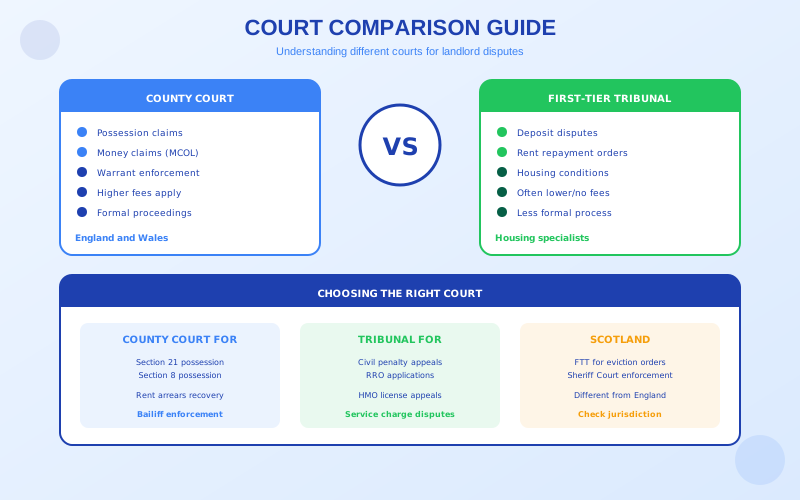
Forms and Documents Needed
To issue an accelerated possession claim, you need to complete and submit:
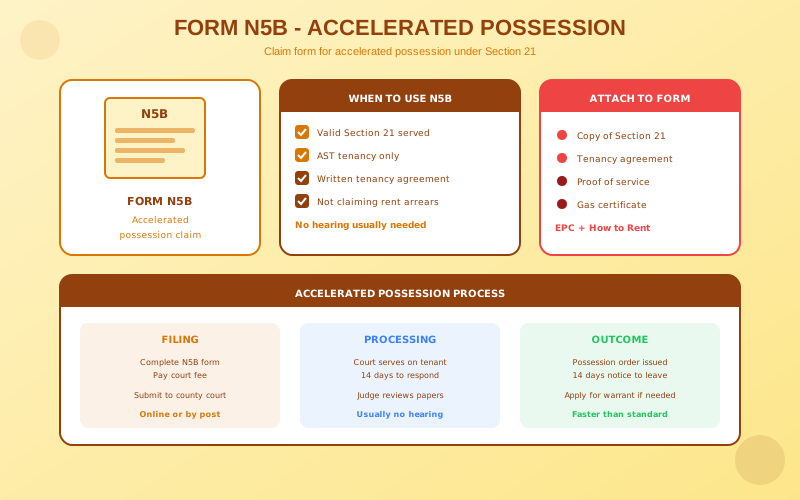
Form N5B - Claim Form
This is the specific claim form for accelerated possession. It's different from the standard N5 form used for other possession claims. Form N5B includes sections for:
- Landlord and tenant details
- Property address
- Tenancy details (start date, rent amount, type)
- Section 21 notice details (date served, expiry date)
- Confirmation of compliance with requirements
- Statement that you're not claiming rent arrears
Required Attachments
- Copy of tenancy agreement: The full written agreement
- Copy of Section 21 notice: The Form 6A you served
- Proof of service: Evidence showing how and when you served the notice
Evidence of Compliance
You must be able to prove compliance with all prescribed requirements if challenged:
- Deposit protection certificate and prescribed information
- Gas safety certificate (dated before tenancy start)
- EPC certificate
- How to Rent guide (with evidence of when provided)
Take action now
Problem → solution
Need to act on this now?
- Notice, possession, and court flow in one place
- Step-by-step process from notice to filing
- Court-ready bundle outputs
Step-by-Step Process
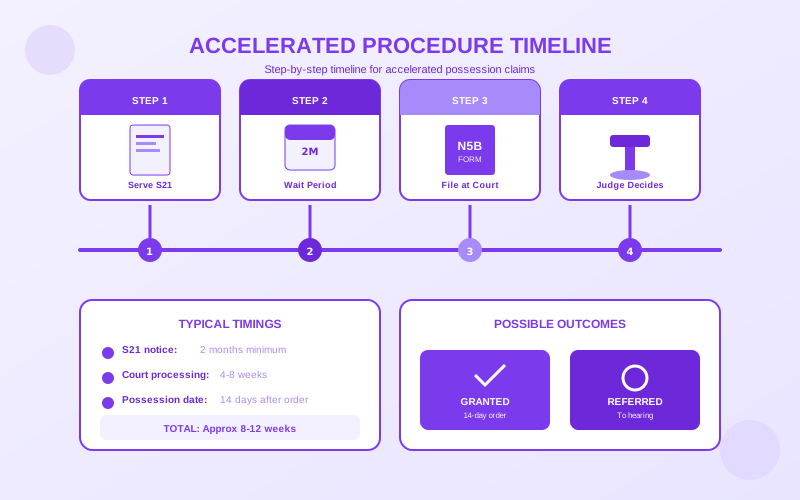
Here's the complete accelerated possession procedure:
Step 1: Verify Eligibility
Before starting, confirm you meet all requirements. Use our Section 21 validator to check your notice is valid.
Step 2: Complete Form N5B
Download Form N5B from the government website or use our document generator. Complete all sections accurately. Any errors may result in the claim being struck out.
Step 3: Gather Documents
Prepare copies of your tenancy agreement, Section 21 notice, and proof of service. Make two copies of everything—one for the court and one for the tenant.
Step 4: Submit to Court
Submit your claim to the county court that covers the property location. You can submit online through the Possession Claims Online (PCOL) service or by post. The court fee is £365.
Step 5: Court Serves the Tenant
The court sends the claim to the tenant, who has 14 days to respond. They can either accept the claim, do nothing, or file a defence.
Step 6: Judge Reviews the Case
After the response period, a judge reviews all papers. If everything is in order and the tenant hasn't raised a valid defence, the judge makes a possession order without a hearing.
Step 7: Possession Order Issued
The possession order typically gives the tenant 14 days to leave (or 42 days in cases of exceptional hardship). If they don't leave, you can apply for a bailiff warrant.
Realistic Timelines
While accelerated possession is faster than standard procedure, it still takes time:
| Stage | Typical Time |
|---|---|
| Section 21 notice period | 2 months |
| Court processing | 2-4 weeks |
| Tenant response period | 14 days |
| Judge decision (paper-based) | 2-4 weeks |
| Possession order compliance | 14-42 days |
| Bailiff (if needed) | 4-8 weeks |
| Total (without bailiff) | 3-4 months |
| Total (with bailiff) | 5-6 months |
What If the Tenant Defends?
If the tenant files a defence, the judge will review it. Common defences include:
Technical Defences
- Section 21 notice was invalid (wrong form, insufficient notice period)
- Deposit wasn't properly protected
- Prescribed documents weren't provided
- Notice served during prohibited period (first 4 months)
What Happens Next
If the judge believes the defence may have merit, they will list the case for a hearing. At this point, you lose the "accelerated" benefit and must attend court. However, if the defence is clearly without merit, the judge can still make a possession order on paper.
Judge's Discretion
Even in accelerated proceedings, the judge can order a hearing if they have concerns about the claim. This might happen if documents appear incomplete or there are questions about compliance.
Common Mistakes to Avoid
These errors can derail your accelerated possession claim:
1. Using the Wrong Form
You must use Form N5B for accelerated possession. Using the standard N5 form will result in your claim being processed as a standard (not accelerated) case.
2. Including a Rent Claim
If you claim rent arrears on the N5B form, your case cannot proceed as accelerated. You'll need to use the standard procedure or issue a separate money claim.
3. Invalid Section 21 Notice
If your Section 21 notice is invalid for any reason—wrong form, wrong notice period, non-compliance with requirements—your claim will fail. Always validate your notice before starting.
4. Missing Documents
Failing to attach the tenancy agreement, Section 21 notice, or proof of service will delay your claim. The court may return incomplete applications.
5. Wrong Court
You must issue the claim at the county court that covers the property's location, not your own address if different.
When NOT to Use Accelerated Procedure
There are situations where accelerated possession isn't appropriate:
When You Want to Claim Rent Arrears
If the tenant owes rent and you want to recover it through the same proceedings, use the standard procedure. You can claim both possession and a money judgment.
When Using Section 8
Accelerated possession only works with Section 21. Section 8 claims always require a hearing because the judge must assess the grounds and, for discretionary grounds, whether it's reasonable to grant possession.
When There Are Complex Issues
If there are genuine disputes about the tenancy, the validity of documents, or other complex matters, a hearing may be beneficial. You can present your case in person.
When You Need Urgency
For urgent cases (antisocial behaviour, serious arrears), the standard procedure with an expedited hearing may actually be faster than waiting for paper-based accelerated processing.
For more on standard procedure, see our Standard Possession Procedure guide.
Accelerated Possession FAQ
Can I use accelerated possession for a lodger?
No. Lodgers are excluded occupiers, not tenants. You don't need a court order to evict a lodger—only reasonable notice. The accelerated procedure is only for assured shorthold tenancies.
What if the tenant ignores the claim?
If the tenant doesn't respond within 14 days, the judge proceeds to make a decision based on your documents alone. No response is treated as no defence, making it more likely you'll get possession.
Can I represent myself?
Yes. The accelerated procedure is designed for self-representation. Since there's typically no hearing, you don't need to appear in court. However, ensure your paperwork is accurate.
What if the court orders a hearing?
If the judge decides a hearing is needed (due to a tenant defence or concerns), you'll be notified of the date. You can attend in person or, if the court offers it, by video. Prepare evidence of compliance.
Can I add rent arrears to my claim later?
No—once you've issued an accelerated claim, you can't add a rent claim to it. You would need to issue a separate money claim (using MCOL or form N1) to recover arrears.
Is accelerated possession available after May 2026?
Section 21 is abolished on 1 May 2026 under the Renters' Rights Act. After this date, accelerated possession (which is Section 21-only) will no longer be available. All evictions will require Section 8 with grounds.
Start Your Accelerated Possession Claim
Our Complete Eviction Pack includes all the documents you need for accelerated possession: validated Section 21 notice, Form N5B guidance, and a step-by-step process guide. Get court-ready documents today.
Get Complete Eviction Pack →
Have a landlord question?
Ask Heaven is our free AI assistant that can help with eviction advice, tenancy questions, and more.