
Rated4.8/5 | 3008 reviews
How Long Does Eviction Take in the UK? Complete Timeline (2026)
Realistic eviction timelines for England landlords after the Renters Rights Act changes. Learn how long Form 3A, Section 8, court, and bailiff stages take.
Short answer
What should I do first in this eviction process stage?
Identify the procedural stage, gather the required documents, and choose the matching legal action route.
- Confirm current stage (notice, claim, order, enforcement).
- Collect forms, dates, and service evidence.
- Start the targeted product route to prevent rework.
Use this guide when
You need a practical landlord answer, not just a definition
Use this page when you need to understand how long does eviction take uk in landlord terms, check the evidence or compliance points that matter, and decide whether the next step is a guide, free tool, notice pack, court pack, tenancy agreement, rent increase pack, or money claim route.
Pick the next step that fits your case
Use the option below that matches where you are now, so you do not waste time on the wrong paperwork.
This guide explains how long does eviction take uk in plain English, including the rules, common mistakes and practical next steps.
Quick Answer
Form 3A / Section 8 notice guide: notice periods now range from immediate application to 4 months, depending on the ground. Ground 8 rent arrears uses 4 weeks, but court and enforcement can still take several months. These times assume no errors in your paperwork.
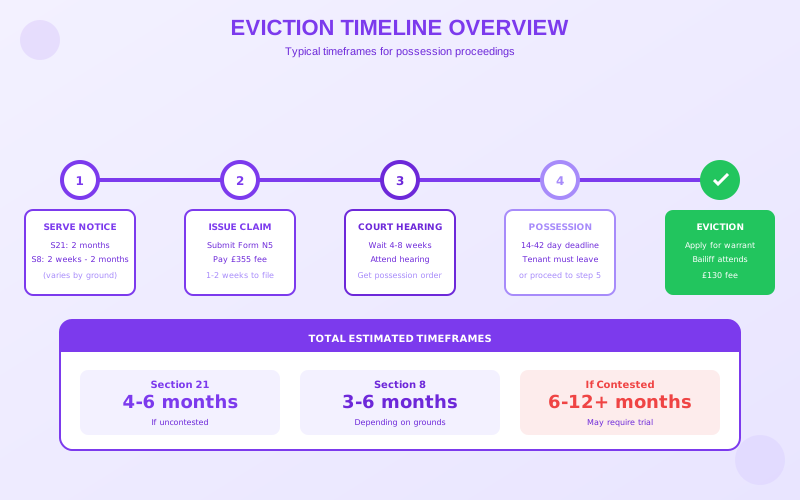
step-by-step UK eviction process Overview
Every eviction follows the same basic stages, though the duration of each stage varies depending on your ground, the tenant's response, and court delays.
Recommended next step
Heading toward court? Prepare the possession file
When the case moves toward court, keep the notice, possession forms, arrears schedule and filing checks consistent through enforcement.
Fixed price £69.99. Preview available before payment.
- Keep notice and claim details consistent.
- Prepare the possession forms and filing checks.
- See what the pack includes before starting.

- Notice Period: Immediate to 4 months depending on the Form 3A ground
- Court Application: Processing takes 4-8 weeks
- Possession Order: Issued if claim is successful
- Tenant Vacates: 14-42 days given to leave
- Bailiff Enforcement: If needed, add 4-8 weeks
The fastest evictions happen when tenants leave voluntarily during the notice period. The slowest occur when every stage is contested and you need bailiff enforcement.
Legacy Section 21 Timeline
Section 21 is now a legacy route for England, not the starting point for new notices. Old notices served before the deadline need deadline checks. Historically, a valid Section 21 route looked like this:
| Stage | Duration | Running Total |
|---|---|---|
| Notice Period | 2 months | 2 months |
| Court Application Processing | 4-8 weeks | 3-4 months |
| Possession Order Issued | 14-42 days for tenant to leave | 4-5 months |
| Bailiff Warrant (if needed) | 4-8 weeks | 5-7 months |
| Bailiff Execution | 1-2 weeks | 6-8 months |
Best case scenario: Tenant leaves during notice period = 2 months total. Worst case: Full court process with bailiff = 6-8 months.
Section 8 Eviction Timeline
Section 8 timelines vary significantly depending on which ground you're using. The mandatory Ground 8 route is commonly used for serious arrears, but it now uses a 4-week notice period and a higher arrears threshold:
Ground 8 (3 Months / 13 Weeks Rent Arrears)
| Stage | Duration | Running Total |
|---|---|---|
| Notice Period | 4 weeks | 4 weeks |
| Court Hearing Scheduled | 4-8 weeks | 6-10 weeks |
| Possession Order | 14 days typically | 8-12 weeks |
| Bailiff (if needed) | 4-8 weeks | 12-20 weeks |
Important: The tenant must still owe the Ground 8 threshold at the court hearing: 3 months' rent, or 13 weeks' rent if paid weekly or fortnightly. If they pay down below that, you lose the mandatory ground.

The Court Stage Explained
Once your notice period expires and the tenant hasn't left, you must apply to court. This is where most landlords see delays.
Accelerated Possession (Section 21 only)
Legacy Section 21 claims can use the "accelerated possession procedure," which is faster because it's usually dealt with on paper without a hearing. However:
- Only available if no rent is being claimed
- If tenant disputes, a hearing will be scheduled
- Processing takes 4-8 weeks on average
Standard Possession (Section 8 and disputed Section 21)
Cases requiring a hearing take longer. You'll receive a court date, attend (or have representation attend), and the judge will decide.
- Court dates typically 4-12 weeks from application
- May be adjourned if tenant requests more time
- Multiple hearings possible for complex cases
Bailiff Enforcement
If the tenant doesn't leave after the possession order, you'll need bailiff enforcement. This is the final step but adds significant time.
- Apply for warrant: Submit application and fee (£130 in 2026)
- Warrant processed: 2-4 weeks for processing
- Bailiff appointment: 2-6 weeks depending on court workload
- Eviction day: Bailiffs attend and remove tenant if necessary
On the eviction day, bailiffs will ask the tenant to leave. If they refuse, bailiffs can physically remove them and change the locks. You should arrange a locksmith in advance.
How to Speed Up Your Eviction
While you can't control court timelines, you can avoid delays caused by errors:
- Get the notice right first time: Invalid notices waste months
- Use the correct form: Form 3A for current England eviction rules notices
- Keep perfect records: Deposit protection, gas certificates, etc.
- Serve correctly: Follow proper service procedures
- Apply to court promptly: Don't wait after notice expires
- Complete forms accurately: Missing information delays processing
- Choose the right pack: Notice-stage only, or the full N5/N119 court pack
Eviction Timeline FAQ
What's the fastest possible eviction?
If your tenant leaves voluntarily during the notice period, that is the fastest outcome. For current England rent-arrears cases, Ground 8 uses 4 weeks, while some urgent anti-social behaviour grounds allow immediate application.
Can I speed up the bailiff stage?
You can request High Court enforcement instead of county court bailiffs. High Court Enforcement Officers (HCEOs) are often faster, sometimes within days, but cost more.
What if my tenant keeps paying rent during eviction?
You should accept rent payments—refusing could harm your case. Accepting rent during a valid notice period doesn't invalidate Section 21.
Do courts prioritize certain eviction cases?
Cases involving anti-social behaviour or serious rent arrears may get earlier hearing dates. Standard cases are processed in order received.
What delays evictions the most?
Invalid notices are the biggest delay—you have to start over. Other common delays include adjournments requested by tenants and incomplete court applications.
Start Your Eviction Right
The clock starts ticking when you serve your notice. Make sure you have a valid, usable document from day one.
Prefer us to prepare it with you?
Free consultation before any assisted eviction preparation is agreed
We discuss the facts first. If we can help, we confirm the scope and send a secure Stripe payment link afterwards.
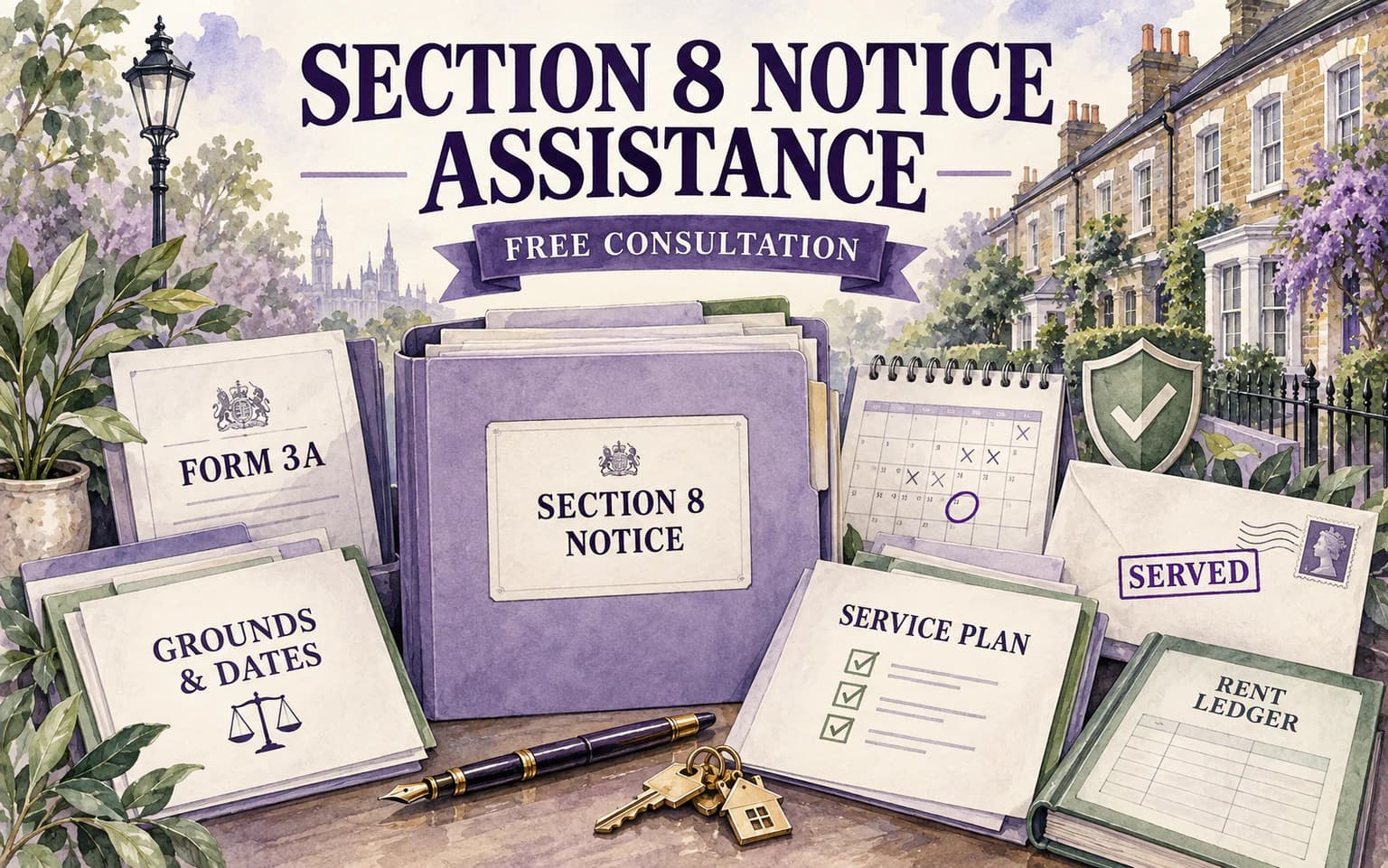
Unsure about grounds or dates?
Landlord Section 8 notice assistance
Free consultation · £149.00 only if we confirm we can help
Before you serve, we help organise your Form 3A, tenant details, notice timing, service plan and evidence prompts around the facts you approve.
Book free consultation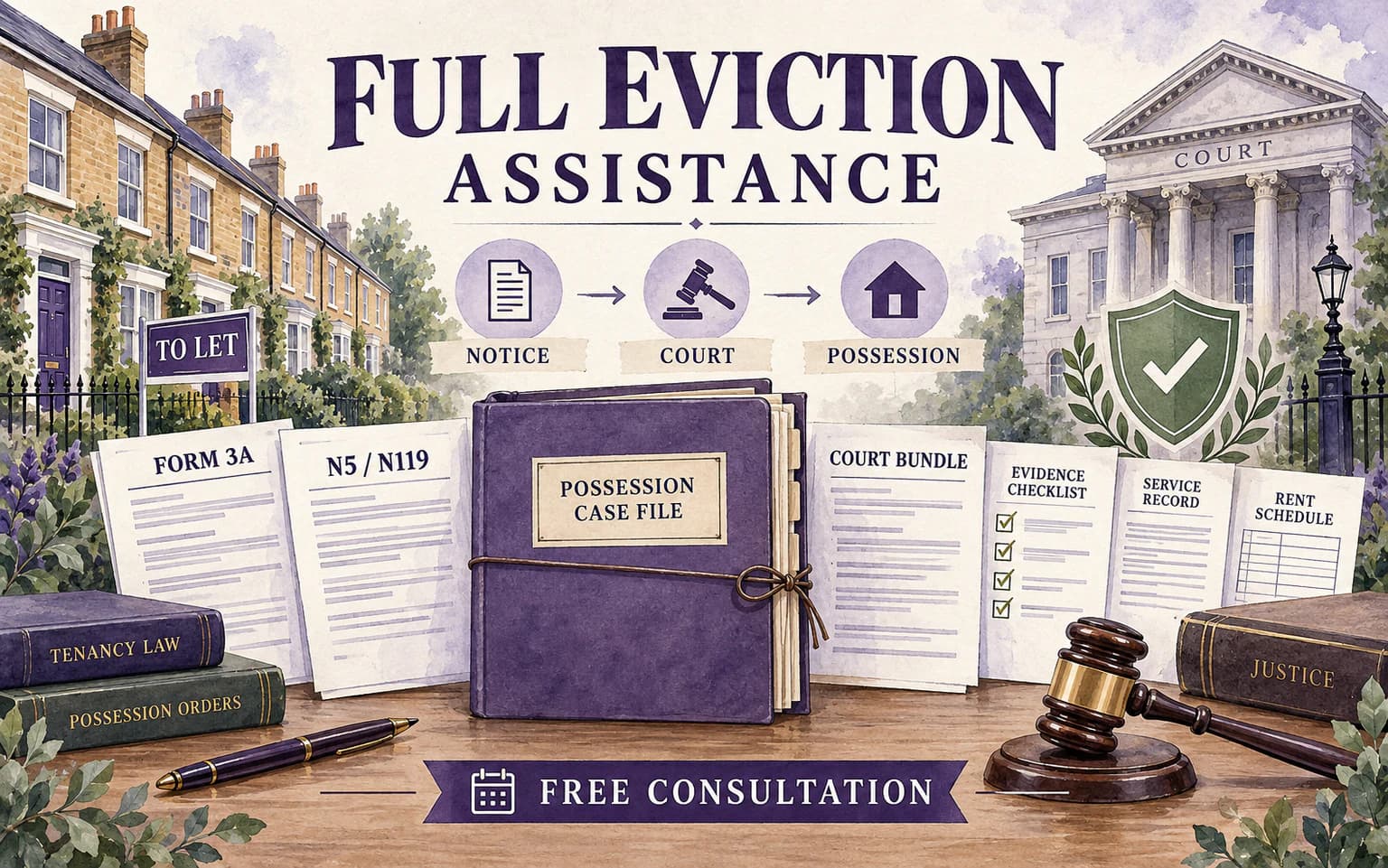
Want the full case, including court forms?
Landlord eviction assistance service
Free consultation · £399.00 only if we confirm we can help
Our £399 full-case service can cover your Section 8 notice, service record, N5, N119 particulars of claim and supporting bundle. If you have already served notice, we focus on the court-stage pack.
Book free consultationWhat to do next
Core eviction guides landlords usually need next
These are the core possession guides landlords usually need after notice or arrears problems start.
FAQs for landlords

Have a landlord question?
Ask Heaven is our free AI assistant that can help with eviction advice, tenancy questions, and more.