
Rated4.8/5 | 3008 reviews
Rent Arrears Eviction: England Landlord Guide After May 2026
How England landlords deal with rent arrears after the Renters Rights Act changes. Ground 8, Grounds 10 and 11, Form 3A, court forms, and unpaid rent recovery.
Short answer
What is the best route when rent remains unpaid?
Run arrears recovery as a staged process: quantify debt, choose possession/debt route, then enforce if required.
- Validate arrears schedule and supporting evidence.
- Pick possession-first, money-claim, or parallel strategy.
- Prepare enforcement options before judgment to avoid dead-end wins.
Use this guide when
You need a practical landlord answer, not just a definition
Use this page when you need to understand rent arrears eviction in landlord terms, check the evidence or compliance points that matter, and decide whether the next step is a guide, free tool, notice pack, court pack, tenancy agreement, rent increase pack, or money claim route.
Pick the next step that fits your case
Use the option below that matches where you are now, so you do not waste time on the wrong paperwork.
Your tenant owes rent and you need to know whether a Section 8 notice guide notice is the right move. This guide explains how it works, what can trip you up, and what to do next.
Need to act on an England possession ground now?
For post-1 May 2026 England cases, Section 21 has gone and the live route is the Form 3A possession notice. Choose the product that matches how far the case has gone.
- Eviction Notice Generator for the Form 3A notice, service instructions, validity checklist, compliance declaration, and arrears statement before you serve anything.
- Complete Eviction Pack if you want the notice, N5, N119, evidence checklist, witness material, and possession file working together from the start.
- Section 8 guide if you want the rule overview first.
- Ground-specific guides: Ground 1 occupation, Ground 1A sale, Ground 2 mortgagee sale, Ground 7A serious ASB, Ground 8 arrears, Ground 10 arrears, Ground 11 late rent, Ground 12 breach, Ground 13 property deterioration, Ground 14 ASB, Ground 15 furniture, and Ground 17 false statement.
Key Points
For mandatory possession under Ground 8, your tenant must owe at least 3 months' rent if the rent is monthly, or 13 weeks' rent if paid weekly or fortnightly both when you serve the notice AND at the step-by-step UK eviction process. If they pay down below this threshold, you lose the mandatory ground.
Understanding Rent Arrears
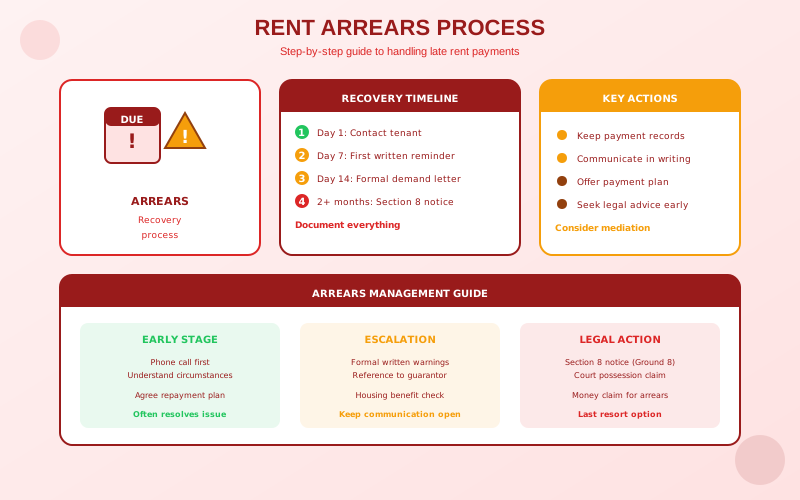
Rent arrears occur when a tenant fails to pay rent on time. The severity of the situation depends on how much is owed and for how long. Understanding the legal thresholds is crucial for choosing the right eviction route.
Unpaid rent
Tenant still owes money? Prepare the claim file
If the arrears keep growing, turn the problem into a clearer debt record and claim narrative before the evidence gets harder to untangle.
- Set out what is owed clearly before the numbers get harder to untangle.
- Build the claim in plain English.
- Get the court paperwork ready for the next step.

Legal Thresholds for Eviction
- Any arrears: Discretionary possession under Ground 10 or 11
- 3 months rent or 13 weeks arrears: Mandatory possession under Ground 8
- 4-week notice: Ground 8, Ground 10, and Ground 11 now use a 4-week Form 3A notice period in England
The post-May 2026 Ground 8 threshold is calculated differently depending on your rent payment schedule:
- Monthly rent: 3 full months' rent owed
- Weekly or fortnightly rent: 13 weeks' rent owed
- Other rent frequencies: Check the current Form 3A wording before relying on Ground 8
Pre-Action Steps: Before Eviction
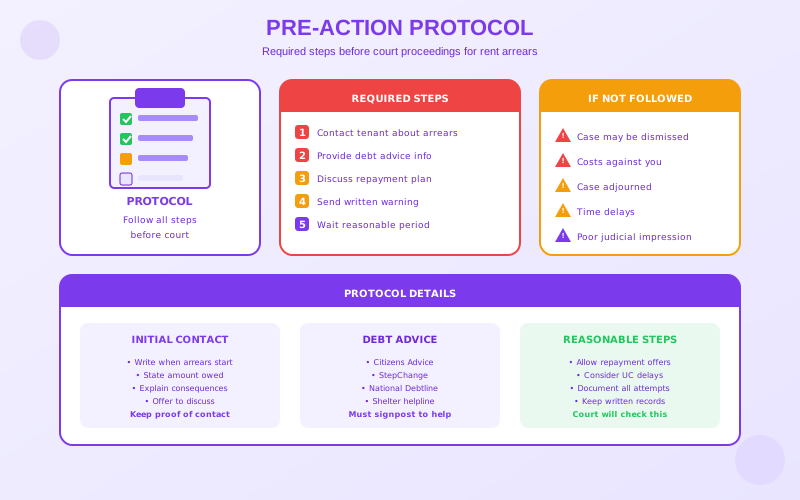
Courts expect landlords to follow a reasonable pre-action protocol before starting eviction proceedings. This doesn't mean you can't evict, but skipping these steps could harm your case.
Step 1: Communicate with Your Tenant
As soon as rent is late, contact your tenant. They may have a legitimate short-term problem (job change, illness, admin error). Many rent issues are resolved at this stage.
- Send a polite reminder when rent is 1-3 days late
- Call or email to check if there's a problem
- Keep records of all communications
Step 2: Formal Rent Demand Letter
If informal contact doesn't resolve the issue, send a formal rent demand letter. This creates a paper trail and shows the court you followed proper procedures.
- State the exact amount owed
- Set a clear deadline for payment (typically 7-14 days)
- Warn that legal action may follow
- Keep a copy and proof of sending
Create a free rent demand letter
Step 3: Offer a Repayment Plan (Optional)
If the tenant has temporary difficulties but good payment history, a formal repayment plan might recover the arrears without eviction. Get any agreement in writing.
Section 8 Ground 8: Mandatory Possession for Rent Arrears
Ground 8 is the most powerful tool for rent arrears eviction because it's mandatory— the court must grant possession if the conditions are met. The judge has no discretion to refuse.
Ground 8 Requirements
- Tenant owes at least 3 months' rent when you serve the notice, or 13 weeks' rent if paid weekly or fortnightly
- Tenant still owes at least that threshold at the court hearing
- The 4-week Form 3A notice period has passed
- Notice was served correctly using the current Form 3A
The Critical Risk: Arrears Paid Down
If your tenant pays the arrears below the Ground 8 threshold before the court hearing, Ground 8 no longer applies. The judge cannot grant mandatory possession on Ground 8. This is why landlords commonly add Grounds 10 and 11 as discretionary backups.
Tactical advice: keep the rent ledger current and include Grounds 10 and 11 where the facts support them. For new England cases after 1 May 2026, Section 21 is not a backup route.
The Eviction Process for Rent Arrears
Once you've completed pre-action steps and the tenant still owes enough for Ground 8, or there is a strong Ground 10/11 pattern, here's the eviction process:
Step 1: Serve Section 8 Notice
Use the current Form 3A possession notice and specify Ground 8, plus any other applicable grounds (Ground 10 and 11 are commonly added). The minimum notice period for Ground 8 is 4 weeks.
Step 2: Wait for Notice Period
During the 4-week notice period, the tenant may:
- Pay the arrears in full (problem solved)
- Pay part of the arrears (may drop below the Ground 8 threshold)
- Leave the property
- Do nothing (most common)
Step 3: Apply to Court
If the tenant hasn't left or paid, apply to the county court for a possession order using Form N5 (claim form) and Form N119 (particulars). Include evidence of the arrears.
Step 4: Court Hearing
Unlike Section 21, Section 8 usually requires a court hearing. You (or your representative) must attend and prove your case. Bring:
- Tenancy agreement
- Rent schedule showing missed payments
- Bank statements proving non-payment
- Copies of demand letters and communications
- Proof of service for Section 8 notice
Step 5: Possession Order and Enforcement
If successful, the court grants a possession order (typically 14 days for rent arrears). If the tenant doesn't leave, apply for a bailiff warrant to enforce possession.
Recovering the evict tenant not paying rent guide
Getting possession is only half the battle. You're also owed money. Here are your options for recovering rent arrears:
Option 1: Include money claim for unpaid rent with Possession
You can claim unpaid rent as part of your possession proceedings. The court can order the tenant to pay what they owe. However, actually collecting this money is another matter.
Option 2: Separate Money Claim
For larger amounts, consider a separate money claim through the County Court Money Claims Centre. This gives you a CCJ (County Court Judgment) against the tenant.
Option 3: Use the Deposit
If you protected the tenant's deposit (as required), you can claim against it for unpaid rent at the end of the tenancy through the deposit scheme's dispute resolution service.
Enforcement Options
If the tenant has a CCJ and doesn't pay:
- Attachment of earnings: Money taken directly from wages
- High Court writ: Enforcement officers can seize goods
- Charging order: Secured against any property they own
- Bankruptcy petition: For debts over £5,000
Preventing Future Rent Arrears
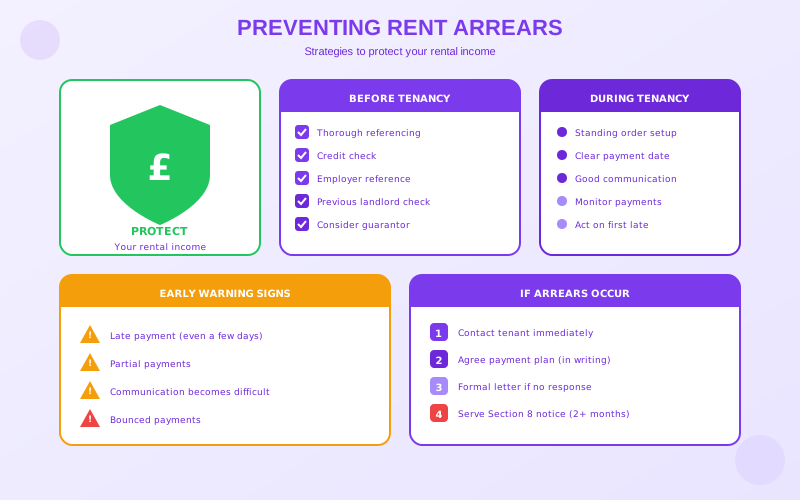
Prevention is better than cure. Here's how to reduce your risk of rent arrears:
- Thorough referencing: Check credit history, employment, and previous landlord references
- Rent guarantee insurance: Covers unpaid rent and legal costs
- Guarantor requirement: Especially for tenants with thin credit files
- Standing order setup: Encourage automatic payments from day one
- Early intervention: Contact tenants immediately when rent is late
Rent Arrears Eviction FAQ
How much rent must be owed for eviction?
Any rent arrears can be grounds for eviction (Ground 10), but for mandatory possession (Ground 8), the tenant must owe at least 3 months' rent, or 13 weeks' rent if paid weekly or fortnightly, at both notice and hearing stage.
What if the tenant pays some rent before court?
If they reduce arrears below the Ground 8 threshold before the hearing, Ground 8 fails. You'd need to rely on discretionary Grounds 10 and 11 if they were included and properly evidenced.
Should I accept partial rent payments?
Generally yes—courts look unfavourably on landlords who refuse reasonable payments. Accepting payment doesn't invalidate your notice, but it may reduce arrears below thresholds.
Can I use Section 21 for rent arrears?
For new England cases after 1 May 2026, no. Section 21 is abolished for new notices. Rent arrears cases now need the Form 3A route, usually Ground 8 with Grounds 10 and 11 as backups where appropriate.
Will I get my unpaid rent back?
Getting a court order for money and actually collecting it are different things. Many landlords write off smaller arrears. For larger amounts, enforcement options exist but add cost and time.
Take Action Now
If you have a tenant in rent arrears, don't wait. The longer you delay, the more money you lose and the further behind the tenant falls.
Prefer us to prepare it with you?
Free consultation before any assisted eviction preparation is agreed
We discuss the facts first. If we can help, we confirm the scope and send a secure Stripe payment link afterwards.
Unsure about grounds or dates?
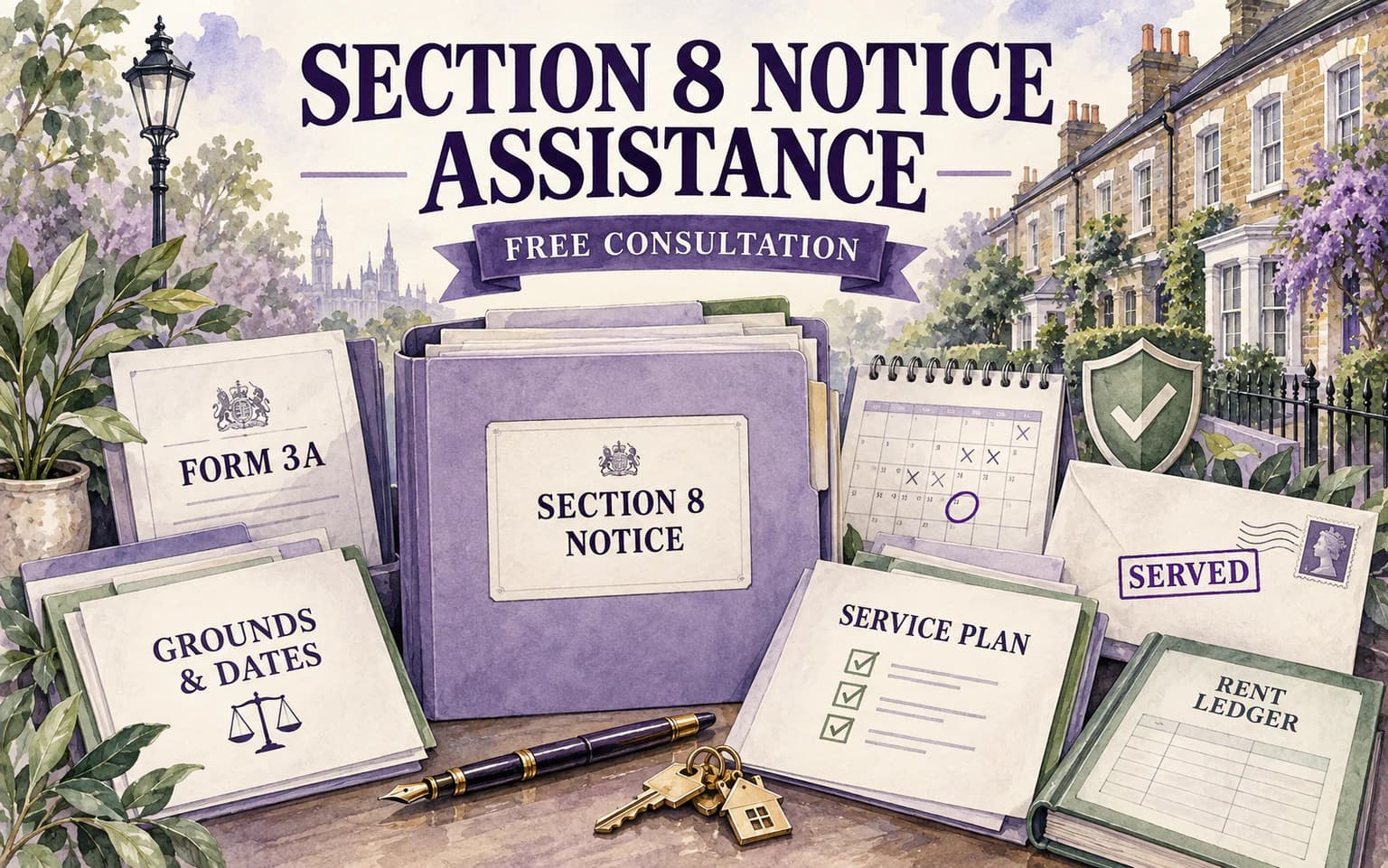
Landlord Section 8 notice assistance
Free consultation · £149.00 only if we confirm we can help
Before you serve, we help organise your Form 3A, tenant details, notice timing, service plan and evidence prompts around the facts you approve.
Book free consultation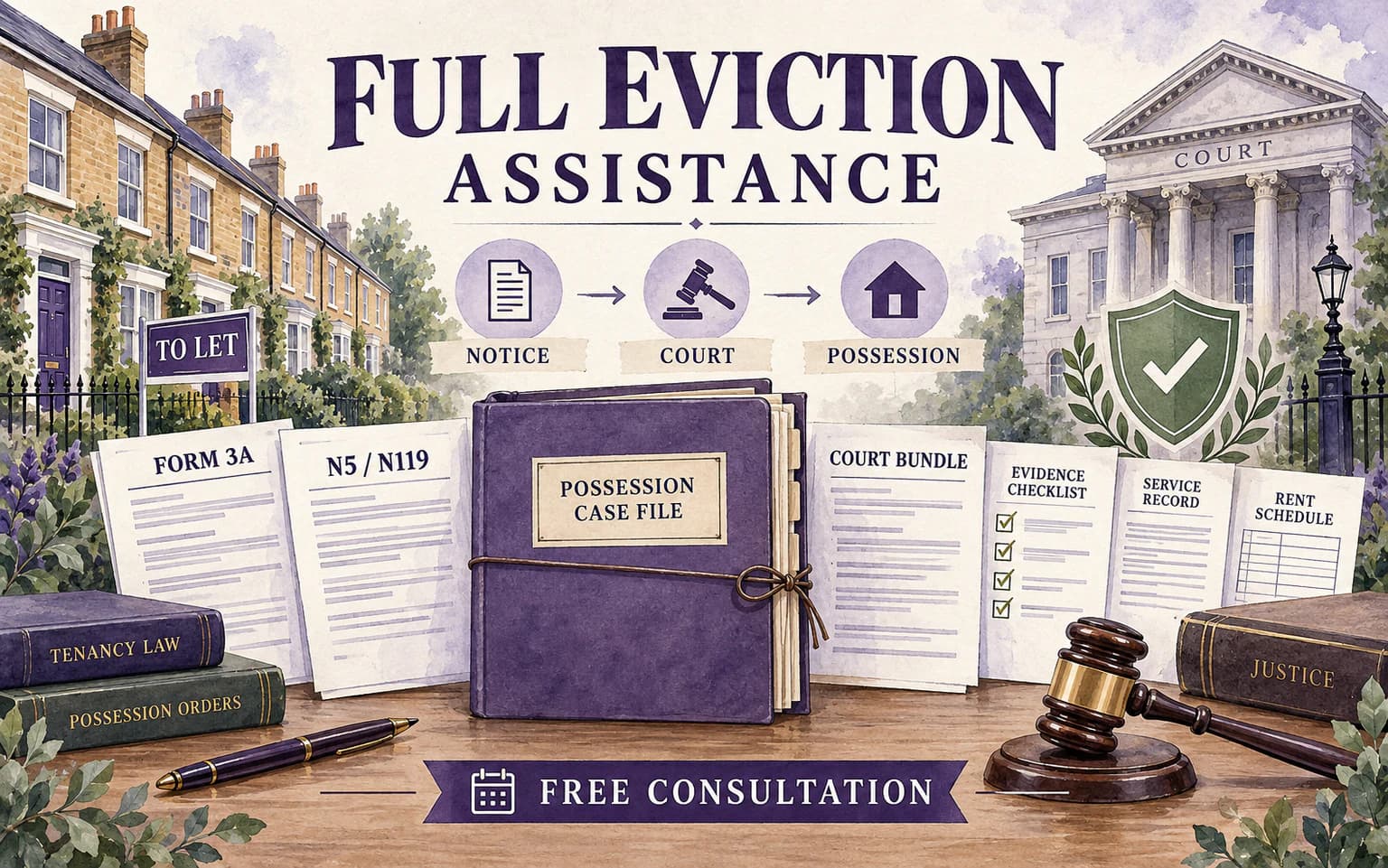
Want the full case, including court forms?
Landlord eviction assistance service
Free consultation · £399.00 only if we confirm we can help
Our £399 full-case service can cover your Section 8 notice, service record, N5, N119 particulars of claim and supporting bundle. If you have already served notice, we focus on the court-stage pack.
Book free consultationWhat to do next
Core eviction guides landlords usually need next
These are the core possession guides landlords usually need after notice or arrears problems start.
FAQs for landlords

Have a landlord question?
Ask Heaven is our free AI assistant that can help with eviction advice, tenancy questions, and more.