
Rated4.8/5 | 3008 reviews
What Happens at a Possession Hearing - England Guide 2026
Nervous about your possession hearing? Learn exactly what happens in court, how to prepare, what documents to bring, and what judges look for when deciding e...
Use this guide when
You need a practical landlord answer, not just a definition
Use this page when you need to understand possession hearing landlord in landlord terms, check the evidence or compliance points that matter, and decide whether the next step is a guide, free tool, notice pack, court pack, tenancy agreement, rent increase pack, or money claim route.
This guide explains step-by-step UK eviction process landlord in plain English, including the rules, common mistakes and practical next steps.
Most Hearings Are Straightforward
The majority of possession hearings are relatively quick and procedural, especially for Section 21 cases or uncontested Section 8 notice guide claims. If your paperwork is in order, you'll likely spend more time waiting than in the actual hearing.
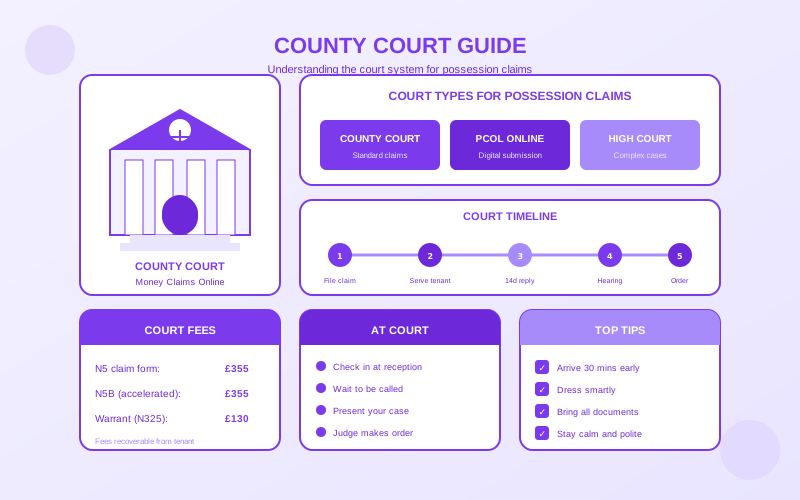
Before the Hearing
Preparation is key to a successful possession hearing. In the weeks before your court date:
Court stage
Heading toward court? Prepare the possession file
If the problem has moved beyond serving notice, keep the notice, claim forms, and evidence aligned from the start.
- Keep the notice and court forms consistent.
- Avoid paying court fees on a weak file.
- Get the next-stage paperwork together in one place.

Review Your Documentation
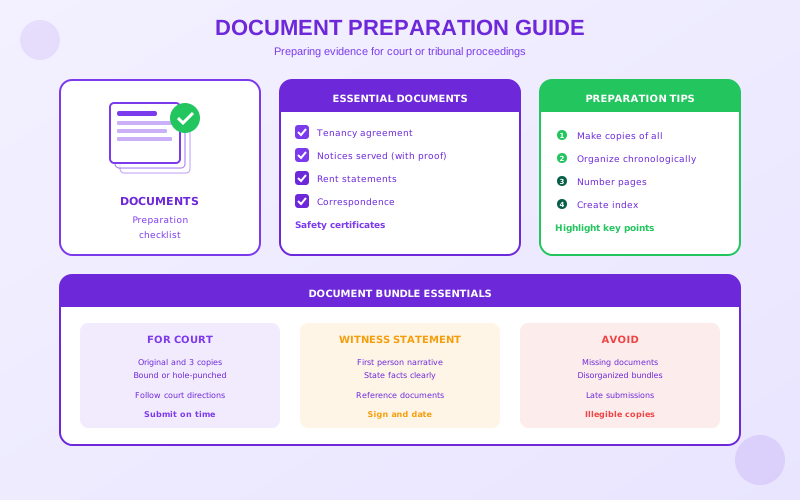
Gather and organise all relevant documents:
- Original tenancy agreement (signed by all parties)
- Copy of the notice you served (Section 21 or Section 8)
- Proof of service (certificate of service, recorded delivery receipt, photos)
- For Section 21: Gas Safety Certificate, EPC, How to Rent guide, deposit protection proof
- For Section 8: Evidence supporting your grounds (rent statements, photos, letters)
- Any correspondence with the tenant
- Copy of your court application (N5/N5B) and particulars of claim
Check for Tenant Defence
The tenant may file a defence challenging your claim. You'll receive this from the court before the hearing. Read it carefully and prepare responses to any points raised. Common defences include:
- Claiming the notice wasn't served correctly
- Disputing the amount of rent arrears
- Arguing the deposit wasn't protected
- Claiming you haven't complied with legal requirements
Prepare Your Witness Statement
For Section 8 claims particularly, you may need to present evidence. Write a clear, chronological witness statement covering:
- When the tenancy started
- What the breach/problem is
- When you became aware of it
- What steps you took to resolve it
- Why you're seeking possession
Bring Copies
Bring three copies of all documents: one for you, one for the judge, and one for the tenant (if they attend). Organise them in a logical order, ideally in a ring binder with numbered tabs.
Arriving at Court
Allow Extra Time
Arrive at least 30-45 minutes early. You'll need to:
- Find parking or navigate public transport
- Pass through security screening (like airport security)
- Locate the correct courtroom or hearing room
- Check in with court staff
What to Bring
- All your documentation (organised with copies)
- Photo ID
- Your court notice showing date, time, and case number
- Pen and notepad
- Water (hearings can run late)
Dress Code
While there's no strict dress code, smart-casual or business attire shows respect for the court. Avoid very casual clothing, hats, or anything with offensive slogans. You don't need a suit, but look presentable.
Check In
Find the court usher or the listing board showing that day's cases. Let them know you've arrived. They'll tell you which room to wait in or when you'll be called.
The Hearing Process
Where Hearings Take Place
Possession hearings are usually held in the county court covering the property's location. The setting varies:
- Courtroom: Formal setting with the judge on a raised bench
- Chambers: Smaller room with the judge at a desk (more informal)
- Video/telephone: Remote hearings became common after 2020 and continue for some cases
Who Will Be There
- District Judge or Deputy District Judge: Makes the decision
- You (the landlord/claimant): Or your representative
- The tenant (defendant): If they choose to attend
- Possibly: Legal representatives for either side, support workers for the tenant
Section 21 Hearings (Accelerated Procedure)
If you used the accelerated possession procedure (Form N5B), there's often no hearing at all. The judge reviews papers and makes a decision. A hearing only happens if:
- The tenant files a defence
- The judge has questions or concerns
- There's a dispute about the paperwork
Standard Possession Hearings
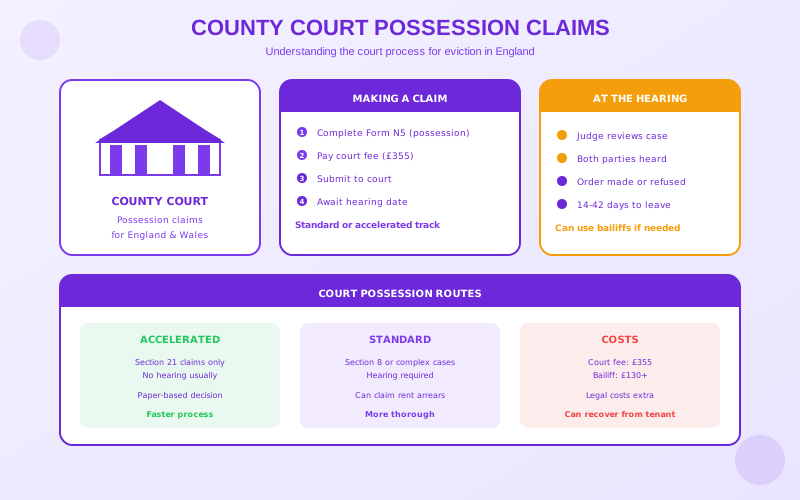
For Section 8 claims or contested Section 21 claims, hearings typically last 15-30 minutes (though complex cases take longer). The process follows this pattern:
- Judge introduces the case and confirms who's present
- You (or your representative) present your case
- The tenant (if present) responds or presents their defence
- Judge asks questions to clarify points
- Judge makes a decision (or reserves judgment for later)
What the Judge Will Ask
Judges vary in their approach, but common questions include:
For Section 21 Claims
- Can you confirm the tenancy started on [date] and is an AST?
- Was the notice served correctly? How was it served?
- Did you provide the prescribed information (gas certificate, EPC, How to Rent)?
- Was the deposit protected within the required timeframe?
- Is the notice in the correct form (Form 6A)?
For Section 8 Claims
- Which grounds are you relying on?
- What evidence do you have for each ground?
- For rent arrears: What is owed? Is the tenant still in arrears?
- For antisocial behaviour: What incidents occurred? Do you have evidence?
- Did you serve the notice correctly?
- Is it reasonable to grant possession?
Responding to Questions
When answering the judge:
- Address them as "Sir" or "Madam" (or "Your Honour" for circuit judges)
- Stand when speaking unless told otherwise
- Answer clearly and directly
- Refer to specific documents if relevant ("As shown in tab 3, the rent statement...")
- Don't argue with the judge—answer questions factually
Possible Outcomes
Outright Possession Order
The judge orders the tenant to leave by a specific date (usually 14 days for Section 21, though can be extended to 42 days in cases of exceptional hardship). This is the outcome you want.
Suspended Possession Order
Common in Section 8 rent arrears cases. The tenant can stay provided they comply with conditions—typically paying current rent plus an amount towards arrears. If they breach conditions, you can apply for a bailiff warrant without another hearing.
Postponed Possession Order
Similar to suspended orders but with a fixed future date. If the tenant doesn't comply with conditions, possession takes effect on that date.
Adjournment
The judge postpones the hearing to another date. This happens if:
- More evidence is needed
- A party needs legal advice
- There's not enough time to hear the case properly
- Settlement discussions are ongoing
Case Dismissed
The judge rejects your claim. This might happen if:
- The notice was defective
- You didn't comply with legal requirements
- For discretionary grounds, it's not reasonable to evict
- You can't prove your case
If Your Case Is Dismissed
A dismissed case is frustrating but not necessarily the end. You may be able to serve a fresh notice and start again, addressing whatever defect caused the dismissal. Take note of exactly why the judge dismissed the case.
After the Hearing
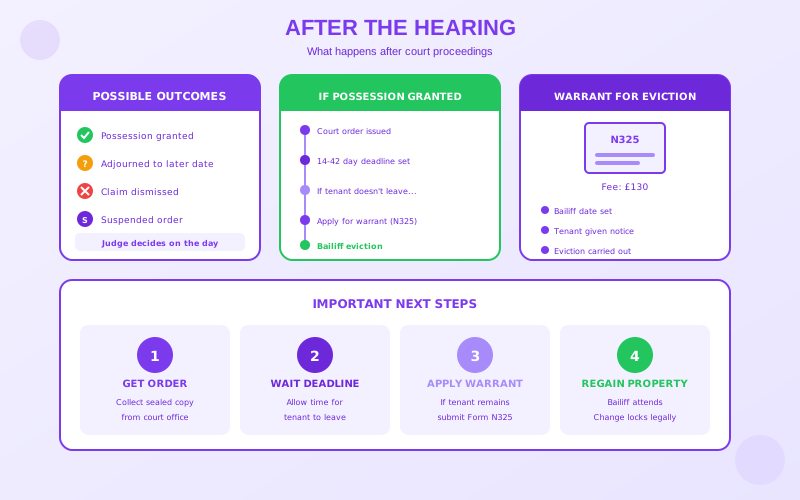
If You Get a Possession Order
The order will specify the date by which the tenant must leave. Most tenants leave once they have a court order. If they don't:
- Wait until the date in the order passes
- Apply for a warrant of possession (Form N325)
- Court issues warrant to bailiffs
- Bailiffs schedule eviction date (usually 2-4 weeks later)
- Bailiffs physically remove tenant if necessary
If You Get a Suspended Order
Monitor whether the tenant complies with conditions. Keep records of all payments received. If they breach conditions, you can apply for a bailiff warrant—but the tenant can apply to have the warrant suspended, so keep good records.
If Your Case Is Adjourned
Note what the judge wants before the next hearing. Gather any additional evidence or documentation required. The court will send you a new hearing date.
Possession Hearing FAQ
What if the tenant doesn't attend?
The hearing proceeds without them. In fact, this often makes things simpler—there's no defence to contest. The judge will still check your paperwork is correct before granting possession.
Do I need a solicitor?
Not necessarily. Many landlords represent themselves successfully, especially for straightforward Section 21 claims. For complex Section 8 cases with multiple grounds or substantial defences, legal representation can help.
Can I settle with the tenant outside court?
Yes. If the tenant agrees to leave by a certain date, you can ask the judge to make a consent order reflecting this agreement. This avoids the uncertainty of a contested hearing.
What if I can't attend on the scheduled date?
Contact the court as soon as possible to request an adjournment. Send someone to represent you if possible (they'll need written authority). Missing a hearing without notice could result in your claim being dismissed or struck out.
How long does a possession order take to enforce?
After the order date passes, you can apply for a bailiff warrant. Bailiffs typically schedule eviction 2-4 weeks later. Total time from order to physical eviction is usually 4-8 weeks.
Can I claim costs from the tenant?
You can ask for fixed costs in your claim. The court usually awards these if you win. For more substantial legal costs, you'd need to apply specifically—courts rarely award full costs against tenants in possession cases.
Get the documents you need for the court stage
Our Complete Eviction Pack includes the notice, court forms, and supporting documents landlords usually need once the case moves into the possession hearing stage.
Get Complete Eviction Pack - £69.99Prefer us to prepare it with you?
Free consultation before any assisted eviction preparation is agreed
We discuss the facts first. If we can help, we confirm the scope and send a secure Stripe payment link afterwards.
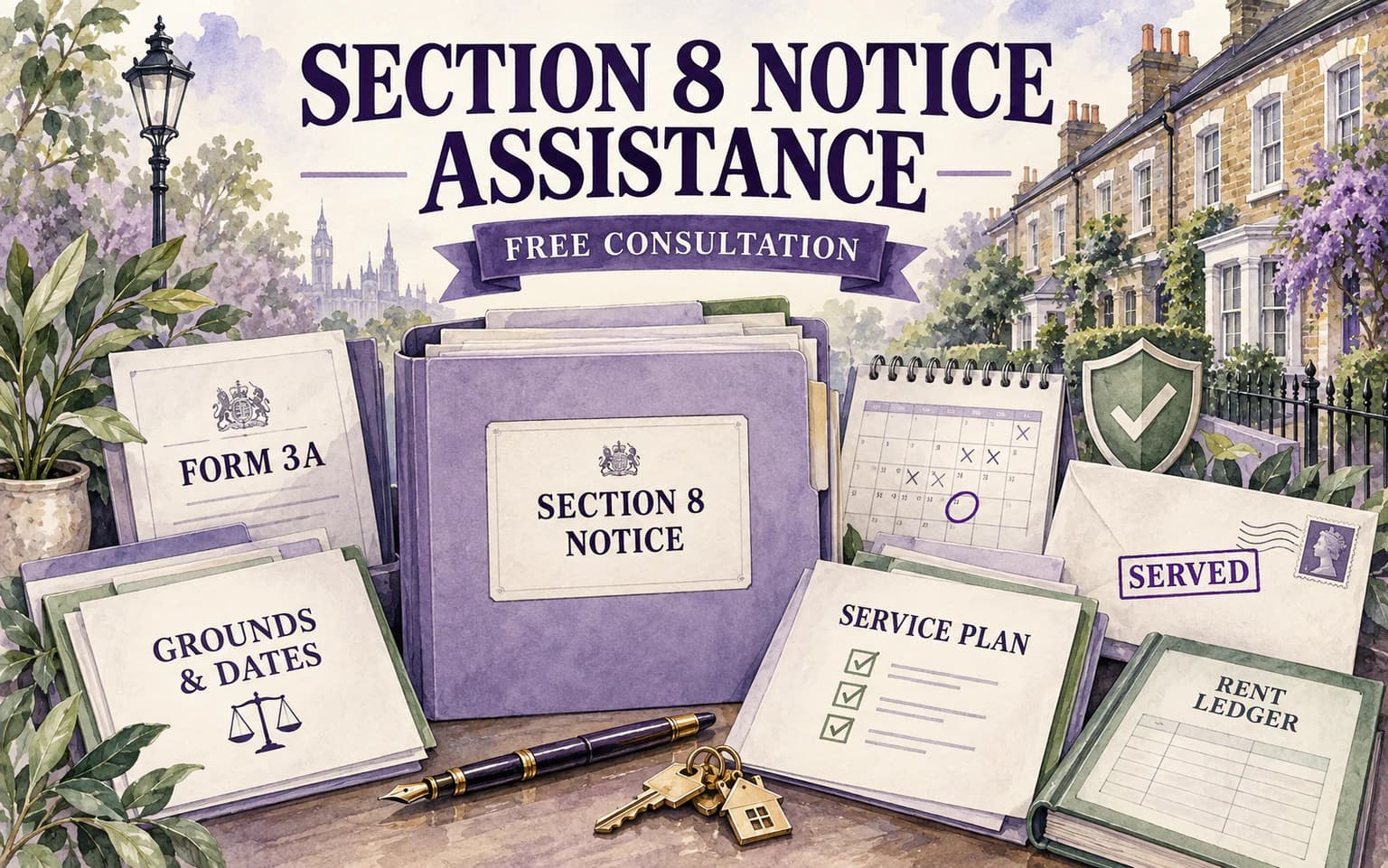
Unsure about grounds or dates?
Landlord Section 8 notice assistance
Free consultation · £149.00 only if we confirm we can help
Before you serve, we help organise your Form 3A, tenant details, notice timing, service plan and evidence prompts around the facts you approve.
Book free consultation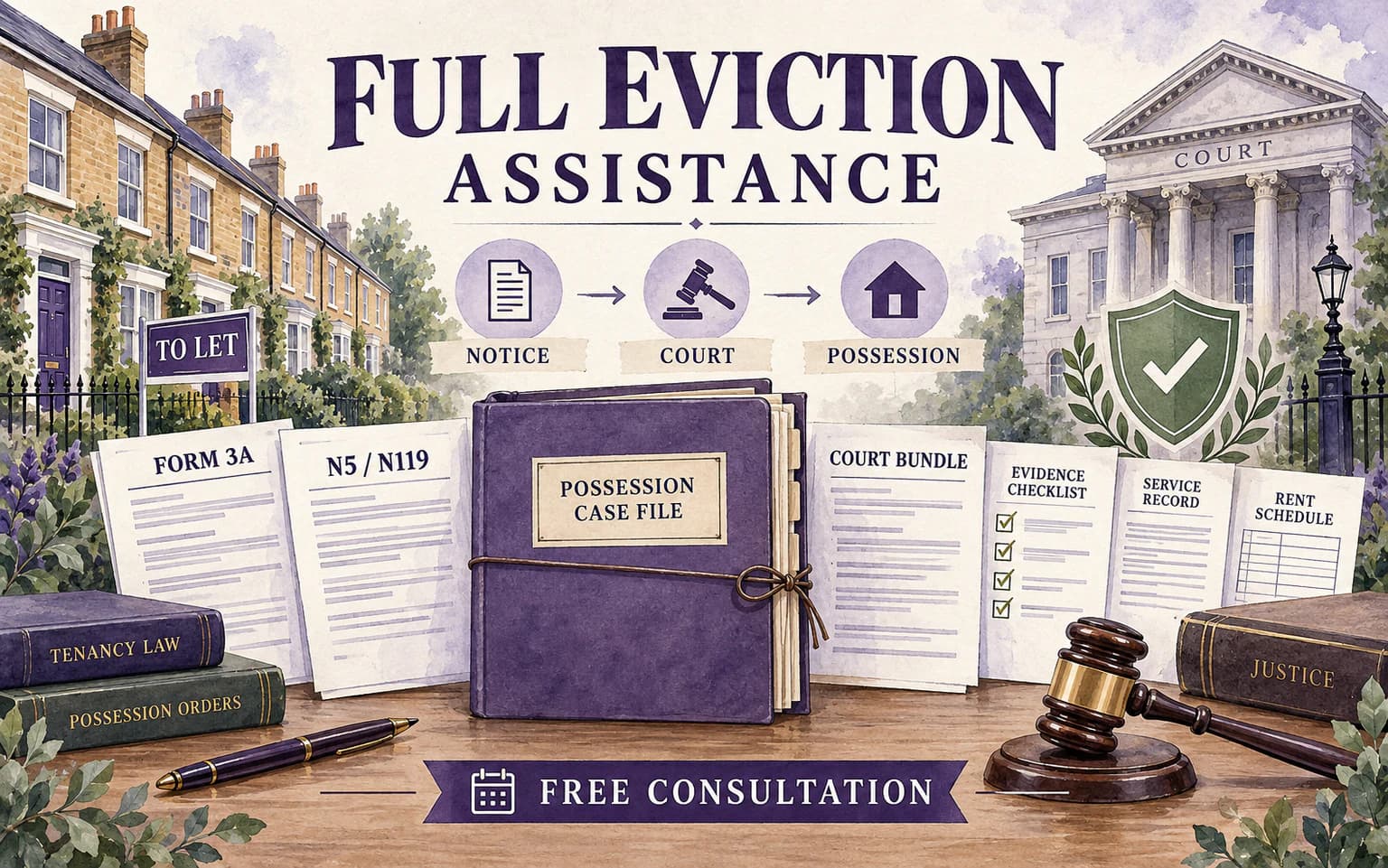
Want the full case, including court forms?
Landlord eviction assistance service
Free consultation · £399.00 only if we confirm we can help
Our £399 full-case service can cover your Section 8 notice, service record, N5, N119 particulars of claim and supporting bundle. If you have already served notice, we focus on the court-stage pack.
Book free consultationWhat to do next
Core eviction guides landlords usually need next
These are the core possession guides landlords usually need after notice or arrears problems start.
FAQs for landlords

Have a landlord question?
Ask Heaven is our free AI assistant that can help with eviction advice, tenancy questions, and more.