
Rated4.8/5 | 3008 reviews
NI Eviction Process - Complete Landlord Guide 2026
Step-by-step guide to evicting tenants in Northern Ireland. Notice requirements, court process, and regaining possession under NI law. Get the Northern Irela...
Use this guide when
You need a practical landlord answer, not just a definition
Use this page when you need to understand northern ireland eviction process in landlord terms, check the evidence or compliance points that matter, and decide whether the next step is a guide, free tool, notice pack, court pack, tenancy agreement, rent increase pack, or money claim route.
This guide explains northern ireland step-by-step UK eviction process in plain English, including the rules, common mistakes and practical next steps.
Eviction Overview
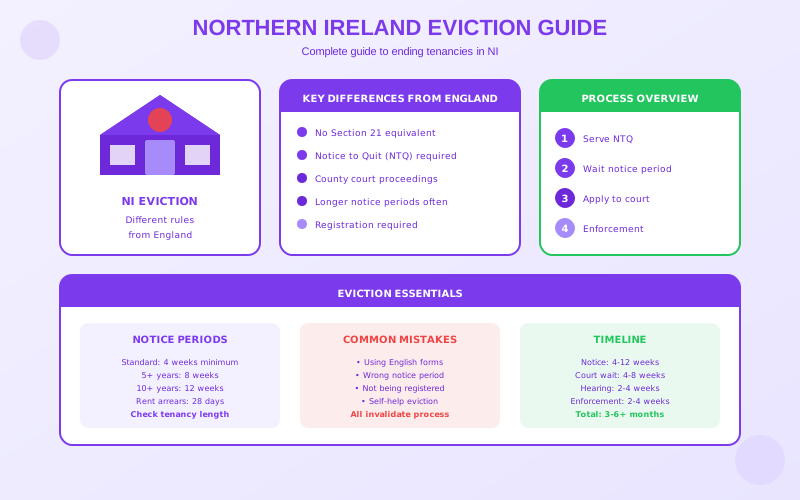
The eviction process in Northern Ireland typically involves:
Court stage
Heading toward court? Prepare the possession file
If the problem has moved beyond serving notice, keep the notice, claim forms, and evidence aligned from the start.
- Keep the notice and court forms consistent.
- Avoid paying court fees on a weak file.
- Get the next-stage paperwork together in one place.

- Serving a valid Notice to Quit
- Waiting for the notice period to expire
- Applying to court for a possession order
- If tenant doesn't leave, applying for enforcement
Court Order Required
You cannot evict a tenant without a court order. Even if they have given up paying rent or breached the tenancy, you must go through the courts. Self-help remedies like changing locks are criminal offences.
Notice to Quit
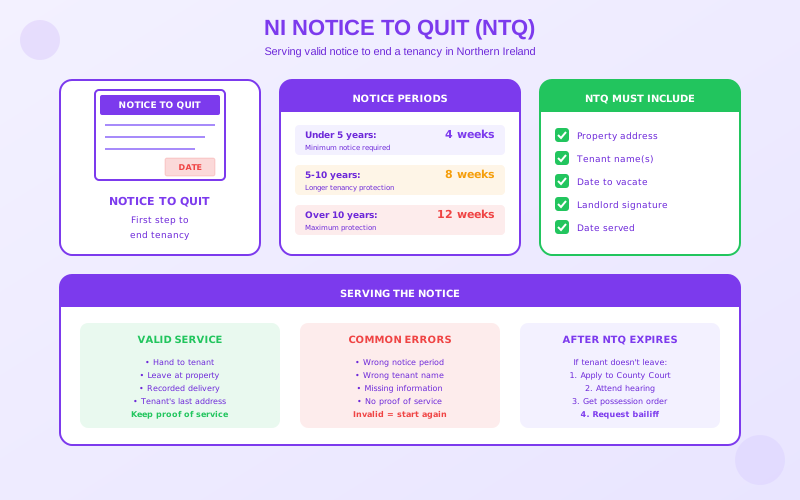
Before seeking possession, you must serve a valid Notice to Quit (NTQ). The requirements depend on the type of tenancy:
Notice Periods
| Tenancy Type | Minimum Notice |
|---|---|
| Weekly tenancy | 4 weeks |
| Monthly tenancy | 4 weeks |
| Yearly tenancy | 4 weeks |
| Fixed term (during term) | Only with break clause |
Notice Requirements
A valid Notice to Quit must:
- Be in writing
- Give the correct notice period
- State the date on which the tenancy will end
- Be properly served on the tenant
- Include required statutory information
Grounds for Possession
In NI, landlords don't need to give a reason for seeking possession of a private tenancy - you can simply serve a Notice to Quit. However, having grounds can strengthen your case:
Common Reasons for Possession
- Rent arrears
- Breach of tenancy agreement
- Damage to property
- Anti-social behaviour
- Landlord requires property for own use
- End of fixed term
Rent Arrears Cases
If seeking possession for rent arrears:
- Keep detailed records of all arrears
- Document attempts to recover rent
- Serve Notice to Quit as normal
- Court will consider arrears when making decision
- Can also claim for rent owed in same proceedings
Alternative Approaches
Before starting eviction, consider whether negotiation, payment plans, or mediation might resolve the issue. Eviction is costly and time-consuming for both parties.
Court Process
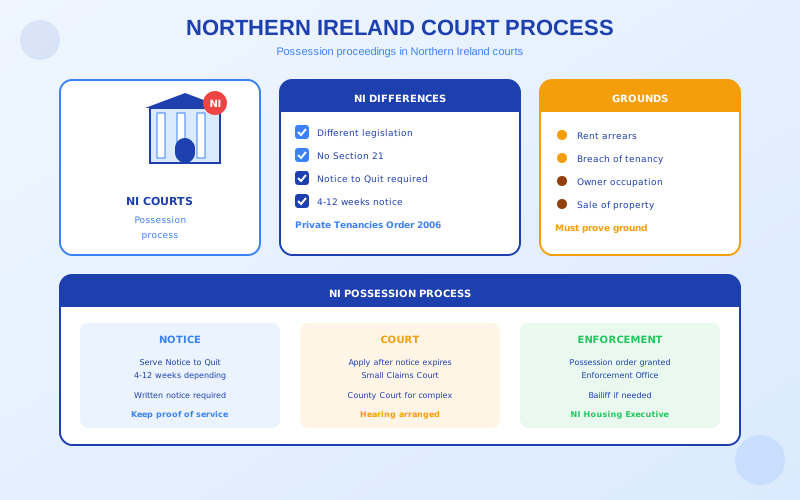
After the Notice to Quit expires, if the tenant hasn't left, you must apply to court:
Step 1: Issue Proceedings
- Complete the court application form
- Include copy of Notice to Quit and tenancy agreement
- Pay the court fee
- Submit to the appropriate county court
Step 2: Hearing
- Court will set a hearing date
- Tenant will be notified
- Both parties can attend and present their case
- Judge decides whether to grant possession
Step 3: Possession Order
If successful, the court will grant a possession order. This may be:
- Immediate: Tenant must leave within a specified time (usually 14-28 days)
- Suspended: Order suspended on conditions (e.g., paying arrears)
- Postponed: Possession delayed for a period
Enforcement
If the tenant doesn't leave after the possession order:
Enforcement Officers
- Apply to court for warrant of possession
- Enforcement officers will execute the warrant
- Tenant will be physically removed if necessary
- Landlord can then change locks and take possession
Costs
- Additional court fee for warrant
- Enforcement officer fees
- May be recoverable from tenant (but often difficult)
Never Self-Evict
Changing locks, removing belongings, or harassing the tenant to leave is illegal eviction - a criminal offence. Always wait for the court process and use enforcement officers if needed.
NI Eviction Documents
Landlord Heaven provides Notice to Quit templates and court form guidance for Northern Ireland landlords.
View NI Templates ?Eviction FAQ
How long does eviction take in NI?
From serving notice to enforcement can take 3-6 months or longer. The notice period is typically 4 weeks, court proceedings can take 4-8 weeks, and enforcement a further few weeks.
Can I evict in winter?
There is no restriction on evicting during winter months in NI. However, courts may consider vulnerability of tenants when setting possession dates.
What if the tenant has children?
The presence of children doesn't prevent eviction, but the court may consider their welfare. The local council has duties toward homeless families with children.
Can I recover my costs from the tenant?
You can ask the court to award costs, including court fees. However, recovering money from a tenant who has been evicted can be difficult if they have limited means.
Prefer us to prepare it with you?
Free consultation before any assisted eviction preparation is agreed
We discuss the facts first. If we can help, we confirm the scope and send a secure Stripe payment link afterwards.
Unsure about grounds or dates?
Landlord Section 8 notice assistance
Free consultation · £149.00 only if we confirm we can help
Before you serve, we help organise your Form 3A, tenant details, notice timing, service plan and evidence prompts around the facts you approve.
Book free consultation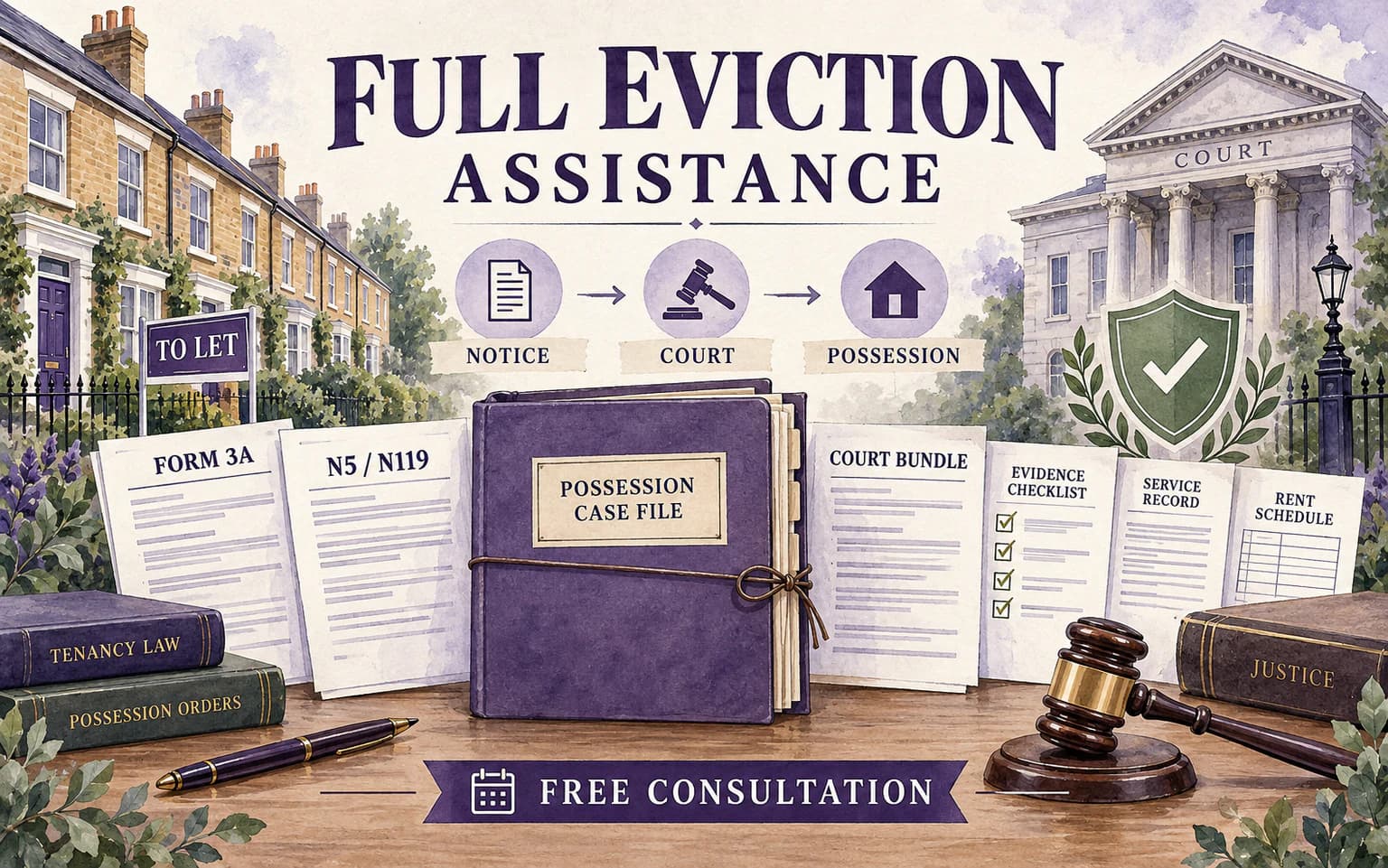
Want the full case, including court forms?
Landlord eviction assistance service
Free consultation · £399.00 only if we confirm we can help
Our £399 full-case service can cover your Section 8 notice, service record, N5, N119 particulars of claim and supporting bundle. If you have already served notice, we focus on the court-stage pack.
Book free consultationWhat to do next
Core eviction guides landlords usually need next
These are the core possession guides landlords usually need after notice or arrears problems start.
FAQs for landlords

Have a landlord question?
Ask Heaven is our free AI assistant that can help with eviction advice, tenancy questions, and more.