
Rated4.8/5 | 3008 reviews
NI Tenancy Deposit Protection - Complete Guide 2026
How to protect tenancy deposits in Northern Ireland. Deposit scheme requirements, protection deadlines, and returning deposits at end of tenancy.
Use this guide when
You need a practical landlord answer, not just a definition
Use this page when you need to understand northern ireland deposit protection in landlord terms, check the evidence or compliance points that matter, and decide whether the next step is a guide, free tool, notice pack, court pack, tenancy agreement, rent increase pack, or money claim route.
You are trying to sort northern ireland deposit protection before it causes a bigger problem later. This guide explains what you need to do, when it matters, and how it affects the rest of your case.
Deposit Protection Overview
Under the Tenancy Deposit Schemes Regulations (Northern Ireland) 2012, landlords must protect deposits taken for private tenancies. Key features:
Next step for landlords
Problem clear? Create the right notice before you serve
If the issue now points toward possession, move from guidance into a notice route that keeps grounds, dates, service, and evidence together.
- Choose the right route before you serve anything.
- Answer plain-English questions. We handle the legal logic.
- Preview the paperwork before you pay.

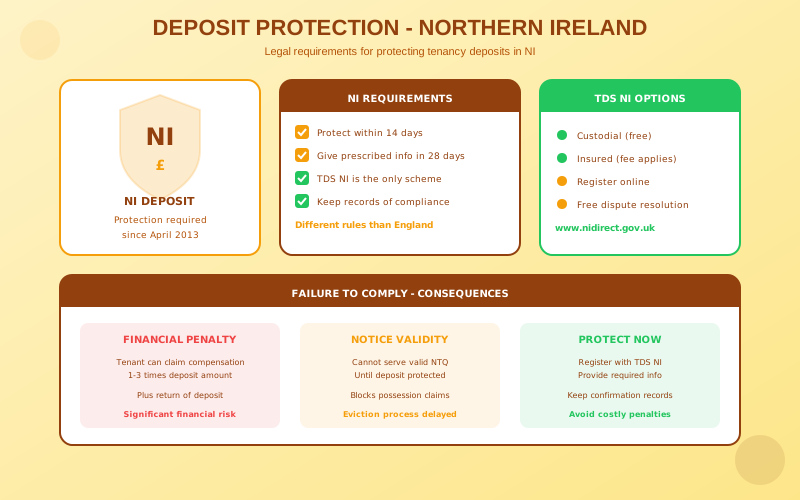
- Applies to all deposits taken for private tenancies
- Must be protected within 14 days of receipt
- Prescribed information must be given to tenant
- Free dispute resolution service available
- Penalties for non-compliance
Approved Scheme
The Tenancy Deposit Scheme (TDS) operates in Northern Ireland. This is a custodial-style scheme where the deposit is held by the scheme rather than the landlord.
Protection Requirements
What Must Be Protected
- Any deposit (money paid as security)
- Regardless of amount
- Including deposits held by agents
- For all private tenancies starting after 1 April 2013
Timing Requirements
- Deposit must be protected within 14 days of receipt
- Prescribed information within 28 days
- Must remain protected throughout the tenancy
How to Protect
- Receive deposit from tenant
- Submit deposit to TDS within 14 days
- Complete required information online
- Pay any administration fees
- Receive confirmation from scheme
Prescribed Information
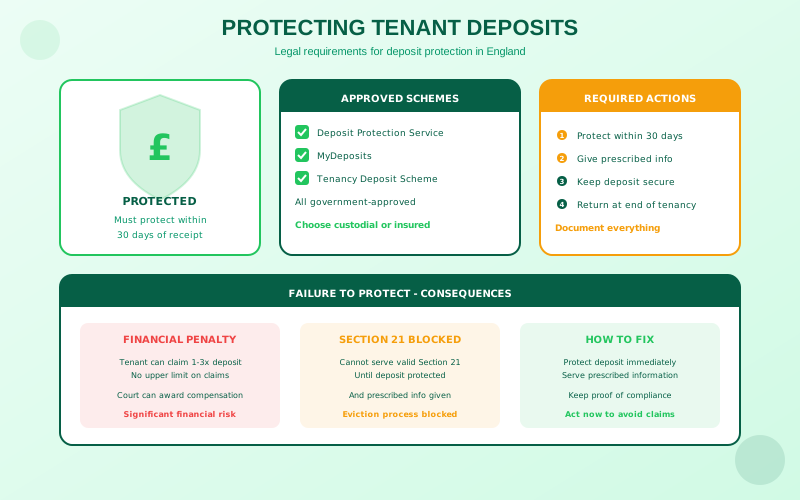
Within 28 days of receiving the deposit, you must give the tenant certain prescribed information:
Information Required
- Amount of deposit protected
- Property address
- Landlord's contact details
- Name and contact details of deposit scheme
- Purpose of the deposit
- How to apply for release at end of tenancy
- What to do in case of dispute
- Circumstances where deductions may be made
How to Provide
- In writing to the tenant
- Keep proof of service
- TDS provides template documents
- Must be provided even if deposit paid by third party
Evidence of Compliance
Keep copies of all documents given to the tenant and proof of when they were provided. You may need to prove compliance if challenged.
Returning the Deposit
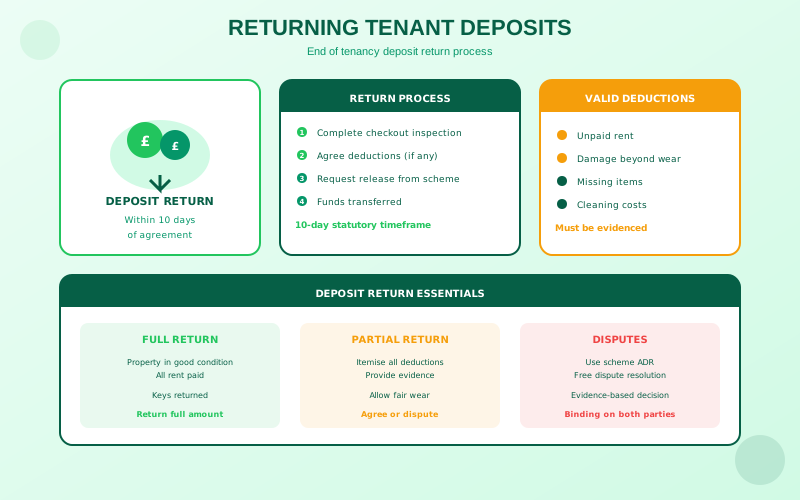
At the end of the tenancy, the deposit return process is:
Where No Deductions
- Tenant applies to TDS for release
- Landlord confirms agreement to full return
- TDS releases deposit to tenant
- Usually processed within 10 working days
Where Deductions Proposed
- Landlord proposes deductions with evidence
- Tenant agrees or disputes
- If agreed, deposit split accordingly
- If disputed, goes to adjudication
Valid Deduction Reasons
- Damage beyond fair wear and tear
- evict tenant not paying rent guide
- Breach of tenancy agreement
- Cleaning costs (if beyond normal standards)
- Missing items
Deposit Disputes
If landlord and tenant disagree about deductions:
Adjudication Process
- Either party can request adjudication through TDS
- Free service (included in protection fee)
- Both parties submit evidence
- Independent adjudicator makes decision
- Decision is binding
Evidence to Submit
- Tenancy agreement
- Inventory and check-in report
- Check-out report
- Photos (dated)
- Quotes or invoices for repairs/cleaning
- Correspondence about issues
Inventory Importance
A detailed, dated inventory with photos at the start of tenancy is essential for any deduction claim. Without this evidence, adjudicators typically rule in the tenant's favour.
Non-Compliance Penalties
If you fail to protect the deposit correctly:
- Cannot serve a valid notice to quit
- Court may award tenant 1-3x deposit amount
- Must return full deposit regardless of damage
- May face rent penalty notice claim
NI Deposit Documentation
Landlord Heaven provides inventory templates, check-in/check-out reports, and prescribed information templates for NI landlords.
View NI Templates ?Deposit FAQ
Is NI deposit protection different from England?
Yes, NI has its own scheme (TDS Northern Ireland) with different rules. The 14-day protection deadline is shorter than England's 30 days, and NI uses a custodial-only model.
Can I hold the deposit myself?
No, in NI the deposit must be transferred to the TDS scheme. This is a custodial scheme where TDS holds the actual money, unlike insurance-based schemes in England.
What is the maximum deposit I can take?
There is no legal maximum for deposits in NI, unlike England. However, practical considerations and market norms typically mean deposits of 1-2 months' rent.
What if the tenant paid through benefits?
If a third party (like a council or charity) paid the deposit on behalf of the tenant, the same protection requirements apply. The prescribed information must still be given to the tenant.
What to do next
Core eviction guides landlords usually need next
These are the core possession guides landlords usually need after notice or arrears problems start.
FAQs for landlords

Question about deposit protection?
Ask Heaven is our free AI assistant that can help with eviction advice, tenancy questions, and more.