
Rated4.8/5 | 3008 reviews
UK Guarantor Agreements - Complete Landlord Guide 2026
Comprehensive guide to guarantor agreements for UK landlords. Learn when to require guarantors, legal requirements, drafting agreements, and enforcing guaran...
Use this guide when
You need a practical landlord answer, not just a definition
Use this page when you need to understand guarantor agreement UK in landlord terms, check the evidence or compliance points that matter, and decide whether the next step is a guide, free tool, notice pack, court pack, tenancy agreement, rent increase pack, or money claim route.
This guide explains guarantor agreement uk in plain English, including the rules, common mistakes and practical next steps.
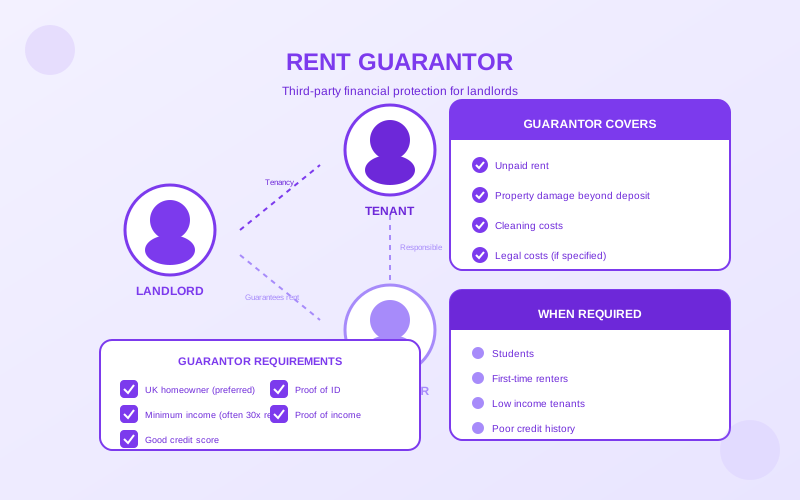
What is a Guarantor?
A guarantor is a third party who agrees to cover the tenant's obligations if the tenant fails to meet them. This typically includes evict tenant not paying rent guide and property damage beyond normal wear and tear.
Recommended next step
Setting up a guarantor-backed let?
Choose the agreement route that matches the property and record the tenancy details clearly before occupation.
Fixed price £14.99. Preview available before payment.
- Choose the right agreement route.
- Record the tenancy terms clearly.
- Preview before payment.

Guarantor vs. Co-signer
While often used interchangeably, there are distinctions:
- Guarantor - liable only if tenant defaults; secondary liability
- Co-signer/Joint tenant - equally liable throughout; primary liability
Most landlords use guarantor agreements, where the guarantor is only called upon if the tenant fails to pay. The tenant remains primarily responsible.
Note on Terminology
Some agreements create "indemnity" rather than guarantee obligations, which can affect enforceability. Proper legal drafting is essential.
When to Require a Guarantor
Guarantors are commonly required in these situations:
Student Tenants
Students typically have limited income and no rental history. Requiring a parent or family member as guarantor is standard practice in student lettings.
First-Time Renters
Tenants with no previous rental history can't provide landlord references. A guarantor provides assurance until they establish a track record.
Low or Irregular Income
Self-employed tenants, those on benefits, or those with income below typical thresholds (usually 2.5-3x annual rent) may need guarantor support.
Poor Credit History
Applicants with CCJs, defaults, or low credit scores represent higher risk. A guarantor with good credit offsets this concern.
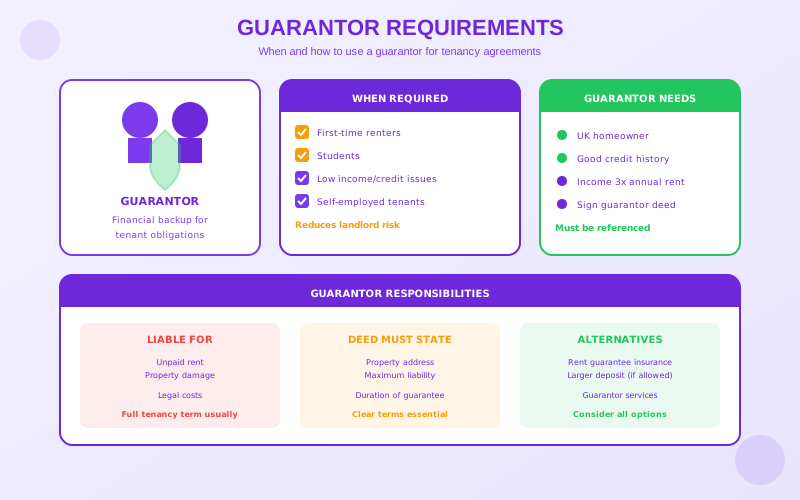
Guarantor Requirements
Not everyone can serve as an effective guarantor. Landlords should verify:
Financial Capacity
| Requirement | Typical Standard |
|---|---|
| Annual Income | 3x annual rent minimum |
| Credit Score | Good credit history, no CCJs |
| UK Residence | Usually required for enforcement |
| Homeowner Status | Preferred but not essential |
| Age | Over 18 (over 21 preferred) |
Referencing the Guarantor
Treat guarantor referencing as seriously as tenant referencing:
- Credit check with major reference agencies
- Proof of income (payslips, accounts, tax returns)
- Proof of identity and address
- Employment verification where applicable
Drafting the Agreement
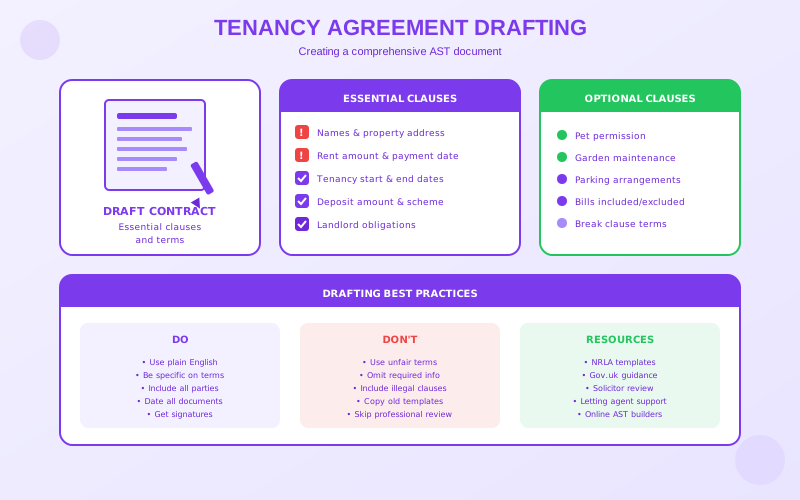
A properly drafted guarantor agreement is essential for enforceability. Key elements include:
Essential Clauses
- Parties identified - full names, addresses of landlord, tenant, guarantor
- Property description - clear identification of the rental property
- Tenancy reference - link to the specific tenancy agreement
- Scope of guarantee - what obligations are covered
- Duration - how long the guarantee lasts
- Cap on liability - maximum amount guarantor will pay (optional)
- Notice requirements - how landlord must notify guarantor of claims
Scope of Obligations
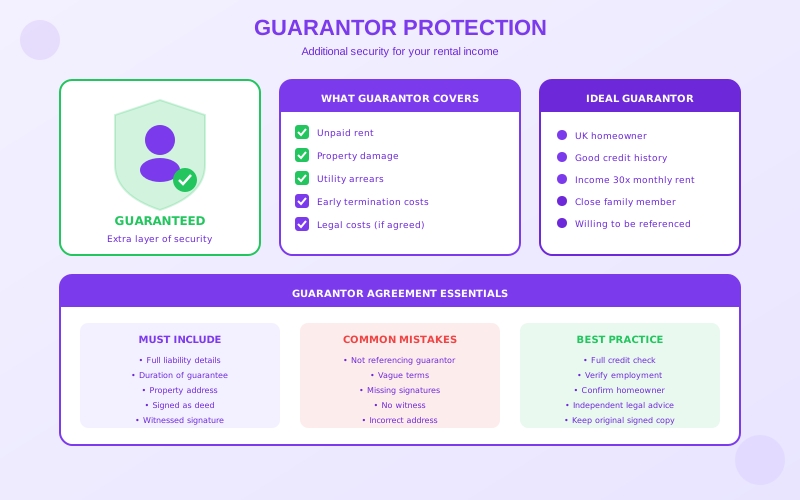
Specify exactly what the guarantor is liable for:
- Unpaid rent and service charges
- Damage beyond fair wear and tear
- Cleaning costs if property left unacceptably dirty
- Legal costs for enforcement
- Rent for period until property re-let (if applicable)
Duration Warning
If the tenancy becomes periodic or is renewed, the guarantee may not automatically continue. Include explicit wording covering periodic tenancies and any renewals or variations.
Legal Enforceability
Several factors affect whether a guarantor agreement can be enforced:
Signature Requirements
The guarantor must sign the agreement. Electronic signatures are generally acceptable, but for maximum security, obtain a witnessed wet signature. Some agreements are executed as deeds, requiring witness signatures.
Independent Legal Advice
While not legally required, advising the guarantor to seek independent legal advice (and documenting this) strengthens enforceability. It prevents claims they didn't understand their obligations.
Material Variations
If the tenancy is materially varied without the guarantor's consent, the guarantee may become unenforceable. This includes:
- Significant rent increases
- Changes to tenant (adding or removing joint tenants)
- Major changes to tenancy terms
Critical Point
Always obtain guarantor consent for any tenancy variations. A simple variation agreement signed by the guarantor preserves their liability.
Consumer Rights Act 2015
The Consumer Rights Act applies to guarantor agreements. Terms must be fair and transparent. Unduly onerous or surprising terms may be unenforceable.
Enforcing the Guarantee
When a tenant defaults, follow these steps to enforce the guarantee:
Step-by-Step Process
- Document the default - record unpaid rent, damage, etc.
- Notify the guarantor - formal written notice of default
- Calculate the claim - itemise amounts owed with evidence
- Demand payment - formal demand letter with deadline
- Negotiate if needed - payment plan may be acceptable
- Court action - Money Claims Online or County Court
Time Limits
You have 6 years to bring a claim for breach of a simple contract guarantee. However, act promptly - delays can complicate enforcement and recovery.
Guarantor Agreement Templates
Landlord Heaven provides professionally drafted guarantor agreement templates covering all essential clauses for maximum protection.
View Legal Templates ?Guarantor FAQ
Can a guarantor be released during the tenancy?
Only if the landlord agrees. You can release a guarantor if the tenant's circumstances improve or a new guarantor is provided. Always document any release in writing.
Does the guarantor need to sign the tenancy agreement?
No, the guarantor signs a separate guarantor agreement that references the tenancy. They should receive a copy of the tenancy agreement so they understand what they're guaranteeing.
Can I require multiple guarantors?
Yes, especially for joint tenancies. You can require each tenant to have a guarantor, or have guarantors liable for specific tenants only. Clarify in the agreement whether guarantors are jointly and severally liable.
What if the guarantor is overseas?
Overseas guarantors are harder to reference and enforce against. Preferably require a UK-based guarantor. If you accept overseas guarantors, consider additional security like larger deposits or rent in advance.
What to do next
Core eviction guides landlords usually need next
These are the core possession guides landlords usually need after notice or arrears problems start.
FAQs for landlords

Have a landlord question?
Ask Heaven is our free AI assistant that can help with eviction advice, tenancy questions, and more.