
Rated4.8/5 | 3008 reviews
Section 8 Ground 14 Explained: Antisocial Behaviour Eviction (England)
Ground 14 allows eviction for antisocial behaviour, nuisance, or illegal activities. Learn what qualifies as ASB, evidence requirements, and the court process.
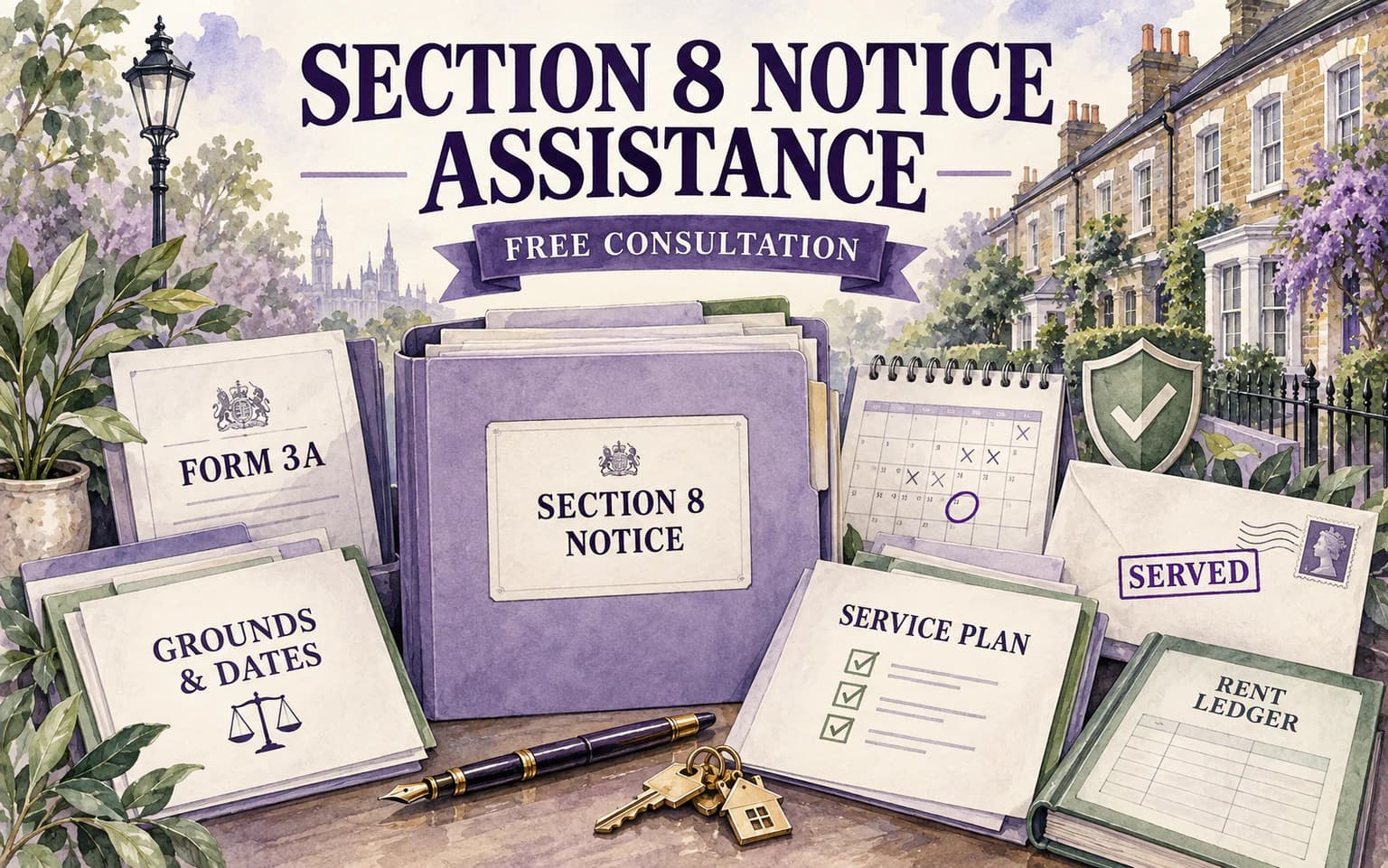
Assisted prep
Need help preparing your Ground 14 notice?
Start with a free consultation. If suitable, we can help prepare the Form 3A notice, service record and evidence file before you serve it.
Book free consultationUse this guide when
You need a practical landlord answer, not just a definition
Use this page when you need to understand section 8 ground 14 antisocial behaviour in landlord terms, check the evidence or compliance points that matter, and decide whether the next step is a guide, free tool, notice pack, court pack, tenancy agreement, rent increase pack, or money claim route.
Your tenant is breaching the tenancy and you need to know whether Section 8 notice guide is the right route. This guide explains how it works, what evidence matters, and what to do next.
What landlords should do next
If you are under pressure, decide the route early. In England after 1 May 2026, Section 21 is no longer the live route for new cases. If this ground fits, the next step is using the current Form 3A process with the right evidence and timing.
Need to act on an England possession ground now?
For post-1 May 2026 England cases, Section 21 has gone and the live route is the Form 3A possession notice. Choose the product that matches how far the case has gone.
- Eviction Notice Generator for the Form 3A notice, service instructions, validity checklist, compliance declaration, and arrears statement before you serve anything.
- Complete Eviction Pack if you want the notice, N5, N119, evidence checklist, witness material, and possession file working together from the start.
- Section 8 guide if you want the rule overview first.
- Ground-specific guides: Ground 1 occupation, Ground 1A sale, Ground 2 mortgagee sale, Ground 7A serious ASB, Ground 8 arrears, Ground 10 arrears, Ground 11 late rent, Ground 12 breach, Ground 13 property deterioration, Ground 14 ASB, Ground 15 furniture, and Ground 17 false statement.
Discretionary but Powerful
Ground 14 is discretionary, so the court decides if eviction is reasonable. However, for serious cases (violence, drug dealing, persistent harassment), judges routinely grant possession. Strong evidence is the key to success.
What Is Ground 14?
Ground 14 is set out in Schedule 2, Part II of the Housing Act 1988. It applies when the tenant, another person residing in the property, or a visitor:
Recommended next step
Need to serve a notice for this tenancy problem?
Use the guided Form 3A builder to keep the grounds, dates, service steps and evidence checks aligned. Preview the paperwork before paying.
Fixed price £39.99. Preview available before payment.
- Use the current notice route for the facts entered.
- Check dates and service requirements before serving.
- Preview the available paperwork before payment.

- Has been guilty of conduct causing or likely to cause a nuisance or annoyance to a person residing, visiting, or carrying on lawful activity in the locality
- Has been convicted of using the property, or allowing it to be used, for immoral or illegal purposes
- Has been convicted of an indictable offence committed in the locality
The ground is broad and covers everything from persistent noise complaints to drug dealing. Importantly, the tenant is responsible for the behaviour of anyone living with them or visiting them.
Key Points
- Type: Discretionary ground; reasonableness test applies
- Notice period: Proceedings can begin immediately after notice, but the court cannot make the possession order for 14 days from the notice date
- Tenant responsibility: Includes conduct of residents and visitors
- Location: Must affect the locality or premises itself
Types of Behaviour Covered
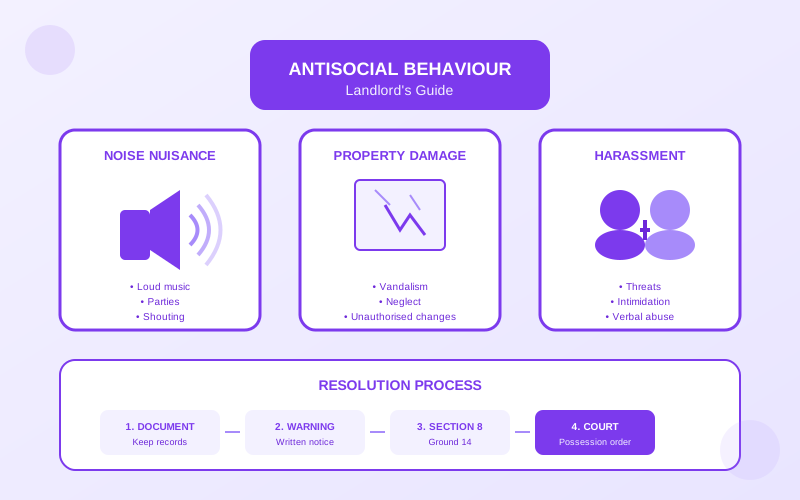
Ground 14 covers a wide spectrum of conduct:
Nuisance and Annoyance
- Noise: Persistent loud music, parties, shouting, barking dogs
- Harassment: Threatening behaviour, verbal abuse, intimidation
- Property damage: Vandalism to communal areas or neighbours' property
- Rubbish and waste: Dumping rubbish, attracting vermin, creating health hazards
- Domestic disputes: Violent arguments that disturb neighbours
- Aggressive pets: Dogs that threaten or attack people
Illegal Activity
- Drug dealing: Using the property for drug supply or production
- Cannabis cultivation: Growing cannabis plants in the property
- Prostitution: Using premises as a brothel
- Criminal enterprise: Using the property for fraud, theft operations, etc.
Indictable Offences
Serious criminal offences committed in the locality; this includes assault, robbery, serious harassment, and other offences tried in the Crown Court. A conviction provides strong evidence.
Important Distinction
For nuisance/annoyance, you don't need a criminal conviction; evidence of the behaviour is sufficient. For illegal/immoral use or indictable offences, a conviction is required.
Notice Requirements
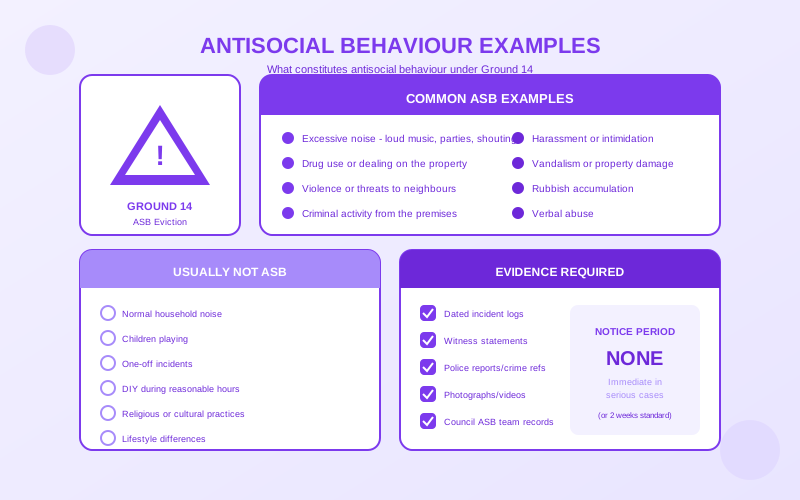
Ground 14 can move quickly. The landlord can apply to court as soon as the Form 3A notice is served, but the court cannot make the possession order until 14 days have passed from the notice date.
| Situation | Current effect |
|---|---|
| Standard nuisance/annoyance | Proceedings can begin after notice is served; court order cannot be made for 14 days from the notice date |
| Serious cases (violence, drug dealing) | Proceedings can begin as soon as notice is served |
| With conviction for illegal use | Proceedings can begin as soon as notice is served |
This makes Ground 14 different from many other Section 8 grounds. It can move quickly, but you still need proof that the notice was served correctly and evidence that makes possession reasonable.
Notice Content
Your Section 8 notice (Form 3A) must:
- Specify Ground 14 as the ground being relied upon
- Describe the behaviour in enough detail for the tenant to understand the allegation
- Include dates, times, and specific incidents where possible
- State the notice period (or that proceedings may begin immediately)
Gathering Evidence
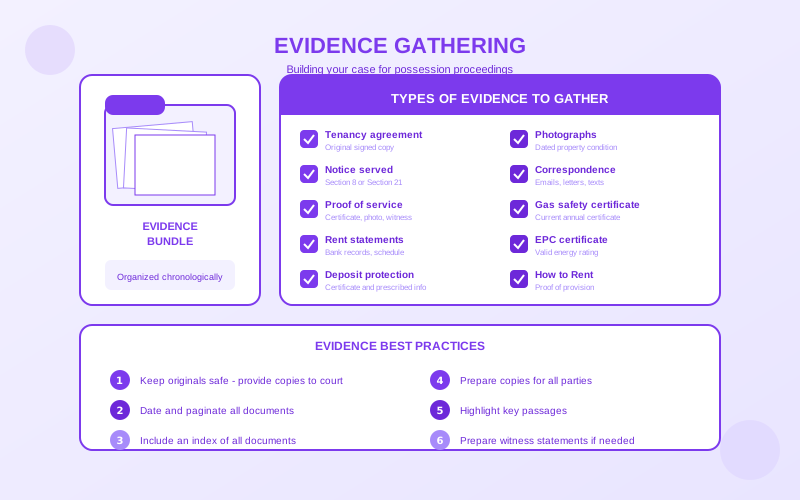
Strong evidence is critical for Ground 14 because the court must be satisfied both that the behaviour occurred AND that eviction is reasonable. Here's how to build your case:
Incident Diary
Encourage affected neighbours to keep a detailed log of incidents:
- Date and time of each incident
- What happened (specific description)
- Duration of the incident
- Impact on the complainant (sleep lost, fear, etc.)
- Any witnesses
Witness Statements
Obtain written, signed statements from:
- Neighbours affected by the behaviour
- Managing agents who have witnessed issues
- Other residents in the building/street
- Any professionals who have visited (tradespeople, etc.)
Official Records
- Police reports: Crime reference numbers, incident logs
- Council complaints: Environmental health records, noise complaints
- Housing association records: If applicable
- Court records: Any injunctions, ASBOs, or criminal convictions
Documentary Evidence
- Photos of damage or mess
- Video or audio recordings (where lawfully obtained)
- Letters or texts from the tenant showing aggressive behaviour
- Correspondence you've sent warning about the behaviour
Police Involvement
If police have been called to incidents, obtain crime reference numbers and request disclosure of police records for court. Police evidence carries significant weight with judges.
The Court Process
Ground 14 claims follow the standard possession procedure:
Step 1: Serve Section 8 Notice
Use the current Form 3A specifying Ground 14 with details of the behaviour. Proceedings can begin immediately after service, but keep proof of service because the court cannot make the order for 14 days from the notice date.
Step 2: Issue Court Claim
Complete Form N5 and N119 with a detailed chronology of incidents and a list of the evidence. Check the current court fee before issuing.
Step 3: Prepare Evidence Bundle
Organize all evidence in a paginated bundle:
- Index of documents
- Tenancy agreement
- Section 8 notice and proof of service
- Chronology of incidents
- Witness statements
- Police/council records
- Photos and other evidence
Step 4: Attend Hearing
Present your case to the district judge. Witnesses may attend to give evidence. The tenant can respond and the judge will make a decision on reasonableness.
Step 5: Possession Order
If successful, the court grants a possession order. For serious ASB, judges typically order possession within 14 days rather than the extended period available for other cases.
Reasonableness Considerations
The judge weighs various factors when deciding if possession is reasonable:
Factors in Favour of Possession
- Severity and frequency of incidents
- Impact on victims (health, wellbeing, fear)
- Previous warnings that had no effect
- Criminal convictions related to the behaviour
- Tenant's failure to control visitors/residents
- Risk of escalation or harm
Factors Against Possession
- Isolated incident with genuine remorse
- Mitigating circumstances (mental health, provocation)
- Steps taken to address the issue (e.g., removing problematic visitor)
- Vulnerable household members (children, elderly)
- Long tenancy with previously good behaviour
Practical Tip
Demonstrate you gave the tenant chances to change. Courts look favourably on landlords who issued warnings and tried to resolve issues before pursuing eviction. A paper trail of warnings strengthens your case.
Urgent Cases and Expedited Process
For serious antisocial behaviour, such as violence, drug dealing, or severe harassment, you may be able to expedite the court process:
Immediate Notice
For Ground 14, you can issue court proceedings as soon as the Form 3A notice is served. The court still cannot make the possession order until 14 days have passed from the notice date, so the service date and proof of service matter.
Expedited Hearing
When issuing your claim, write to the court requesting an expedited hearing due to the severity of the situation. Include:
- Summary of the urgency
- Evidence of ongoing risk or harm
- Request for earliest possible hearing date
Injunctions
In extreme cases, consider seeking an injunction alongside possession proceedings. This can prohibit specific behaviour immediately, with breach being contempt of court.
Working with Authorities
For drug-related activity, the police can apply for a Closure Order under the Anti-social Behaviour, Crime and Policing Act 2014. This can close the property immediately and supports your eviction case.
Ground 14 FAQ
Can I evict for one-off noise?
A single noisy party probably won't succeed. Judges expect a pattern of behaviour for nuisance cases. However, a single serious incident (violence, drug dealing) may be sufficient if severe enough.
What if neighbours won't give statements?
This is a common problem; neighbours fear retaliation. Try to obtain police or council records as alternative evidence. If witnesses will attend court anonymously, ask if special measures are possible. Your own observations can also be evidence.
Is the tenant responsible for visitors' behaviour?
Yes. Ground 14 explicitly covers behaviour by "a person residing in or visiting the dwelling-house." If the tenant's visitors cause problems, the tenant is responsible.
Do I need a criminal conviction?
Not for nuisance/annoyance; evidence of the behaviour is sufficient. A conviction is only required for the illegal/immoral use or indictable offence limbs of Ground 14. A conviction makes your case stronger but isn't always necessary.
Can I use Ground 14 for property damage?
Yes, if the damage affects others (communal areas, neighbours' property). For damage only to your own property, Ground 13 (deterioration of the property) may be more appropriate.
What if the tenant has mental health issues?
Mental health is a factor in reasonableness, but doesn't prevent eviction. Courts balance the tenant's circumstances against the impact on others. If behaviour is severe and ongoing despite support, possession may still be granted.
How does Ground 14 work after the current England eviction rules?
Ground 14 remains available after the 1 May 2026 Renters' Rights Act changes. Section 21 is no longer the live route for new England private-rented cases, so landlords dealing with antisocial behaviour need to use the current Form 3A / Section 8 process and build the evidence carefully.
Dealing with Problem Tenants?
Our Complete Eviction Pack includes Section 8 notices, incident log templates, and guidance on building a Ground 14 case. Take action against antisocial behaviour with clear landlord documentation.
Get Complete Eviction Pack ?A clearer route from ground to possession
What to prepare for Section 8 Ground 14
Keep the reason for possession, the notice, proof of service and later court evidence consistent from the outset. Choose the route that matches what you need to do next.
Match the facts
Use the ground only where your evidence supports the reason you will give.
Prepare and serve
Check the notice details, timing and service record before you send anything.
Keep the file joined up
Store the notice, service proof and supporting documents for any court stage.
Choose your document route
Start at the stage your case is actually in

Stage 1: serve the Section 8 notice
£39.99Choose this route when your immediate job is preparing Form 3A and a clear service record before anything is sent to the tenant.
- Problem it solves
- It keeps the ground, tenant details, notice date and service evidence in one notice-stage file.
- Risk if this is not the right stage
- If the tenant stays, you will still need to prepare the court claim file at the next stage.
- Landlord outcome
- You have a structured notice and service route ready to review, approve and serve yourself.

Stage 2: build the full possession file
£69.99Choose this route when you want the Section 8 notice and the court-stage forms, evidence structure and hearing prompts planned together.
- Problem it solves
- It avoids building the notice file first and then trying to reconstruct the same facts for court later.
- Risk if this is not the right stage
- If you only need to serve notice now, this may be more preparation than your case needs today.
- Landlord outcome
- You can prepare one joined-up file for notice, N5, N119, evidence and the court stage.
Prefer us to prepare it with you?
Start with a free consultation before any paid work is agreed
Tell us what has happened and show us the documents you have. We confirm whether assisted preparation is suitable, explain the scope, and only then send a secure payment link.
Section 8 notice assistance
For landlords who need the Form 3A notice, service plan and evidence prompts checked before serving.
Book a free consultation · £149.00
Full eviction case assistance
For landlords who want the Section 8 notice plus N5, N119, service record, evidence bundle and court-stage file prepared together.
Book a free consultation · £399.00What to do next
Core eviction guides landlords usually need next
These are the core possession guides landlords usually need after notice or arrears problems start.
FAQs for landlords

Have a landlord question?
Ask Heaven is our free AI assistant that can help with eviction advice, tenancy questions, and more.