
Rated4.8/5 | 3008 reviews
Section 8 Grounds 10 and 11 | Rent Arrears Guide
Grounds 10 and 11 are discretionary rent arrears grounds. Learn when to use them, how they differ from Ground 8, and how to convince the court possession is...
Assisted prep
Need help preparing your Section 8 notice?
Start with a free consultation. If suitable, we can help prepare the Form 3A notice, service record and supporting evidence before you serve it.
Book free consultationUse this guide when
You need a practical landlord answer, not just a definition
Use this page when you need to understand section 8 ground 10 ground 11 in landlord terms, check the evidence or compliance points that matter, and decide whether the next step is a guide, free tool, notice pack, court pack, tenancy agreement, rent increase pack, or money claim route.
Your tenant owes rent and you need to know whether a Section 8 notice guide notice is the right move. This guide explains how it works, what can trip you up, and what to do next.
What landlords should do next
If you are under pressure, decide the route early. In England after 1 May 2026, Section 21 is no longer the live route for new cases. If this ground fits, the next step is using the current Form 3A process with the right evidence and timing.
Need to act on an England possession ground now?
For post-1 May 2026 England cases, Section 21 has gone and the live route is the Form 3A possession notice. Choose the product that matches how far the case has gone.
- Eviction Notice Generator for the Form 3A notice, service instructions, validity checklist, compliance declaration, and arrears statement before you serve anything.
- Complete Eviction Pack if you want the notice, N5, N119, evidence checklist, witness material, and possession file working together from the start.
- Section 8 guide if you want the rule overview first.
- Ground-specific guides: Ground 1 occupation, Ground 1A sale, Ground 2 mortgagee sale, Ground 7A serious ASB, Ground 8 arrears, Ground 10 arrears, Ground 11 late rent, Ground 12 breach, Ground 13 property deterioration, Ground 14 ASB, Ground 15 furniture, and Ground 17 false statement.
Strategic Importance
Always include Grounds 10 and 11 alongside Ground 8 in your Section 8 notice. If the tenant reduces arrears below the Ground 8 threshold before the hearing (defeating Ground 8), you can still pursue possession on discretionary grounds.
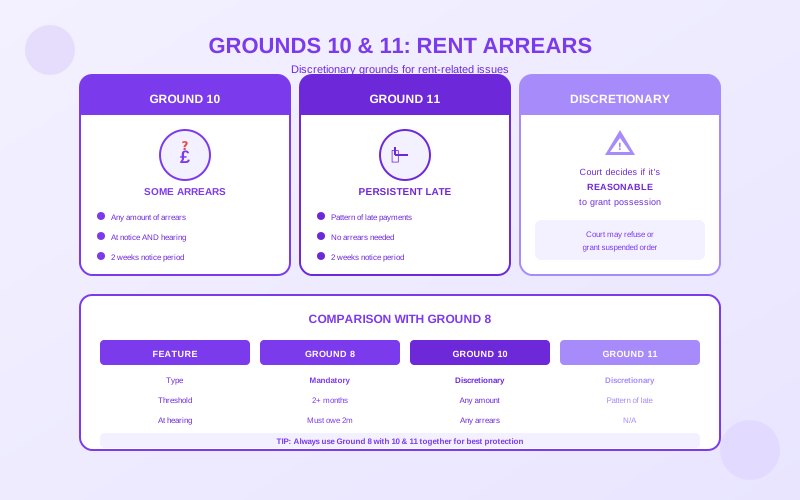
Overview of Grounds 10 and 11
Both grounds deal with rent arrears but in different ways:
Recommended next step
Need to serve a notice for this tenancy problem?
Use the guided Form 3A builder to keep the grounds, dates, service steps and evidence checks aligned. Preview the paperwork before paying.
Fixed price £39.99. Preview available before payment.
- Use the current notice route for the facts entered.
- Check dates and service requirements before serving.
- Preview the available paperwork before payment.

| Ground | Requirement | Type |
|---|---|---|
| Ground 10 | Some rent lawfully due is unpaid at notice date AND hearing date | Discretionary |
| Ground 11 | Tenant has persistently delayed paying rent | Discretionary |
Because both are discretionary, even if you prove the ground applies, the judge must still be satisfied that it's reasonable to order possession. This gives tenants an opportunity to explain their circumstances and potentially keep their home.
Ground 10 Explained
Ground 10 applies when some rent lawfully due from the tenant is unpaid at both:
- The date the Section 8 notice was served, AND
- The date of the step-by-step UK eviction process
Key Features
- No minimum amount: Unlike Ground 8, there's no threshold. Even £1 of arrears qualifies
- Must exist at both dates: Arrears must be present when you serve notice AND at the hearing
- Lawfully due: The rent must be legally owed under the tenancy agreement
- Discretionary: Judge decides if eviction is reasonable
Notice Period
Ground 10 requires a minimum of 4 weeks' notice on the current Form 3A notice. This is the same post-May 2026 notice period used for Ground 8 and Ground 11 in England.
Warning
If the tenant clears all arrears before the hearing, Ground 10 fails because there's no rent unpaid at the hearing date. This is why combining with Ground 11 is essential—Ground 11 looks at payment history, not just current arrears.
Ground 11 Explained
Ground 11 is unique among arrears grounds. It applies when the tenant has persistently delayed paying rent, regardless of whether any rent is currently owed.
Key Features
- No current arrears required: Tenant may be fully paid up at the hearing
- Pattern of behaviour: Focuses on history of late payments
- Persistent delay: Must show a pattern, not just occasional lateness
- Discretionary: Judge considers whether eviction is reasonable
What Counts as Persistent Delay?
There's no strict legal definition, but courts typically look for:
- Regular pattern of late payments over multiple months
- Rent repeatedly paid days or weeks after due date
- History of chasing payments, reminders, or threats of action
- Previous arrears that were cleared only under pressure
Notice Period
Ground 11 also requires a minimum of 4 weeks' notice.
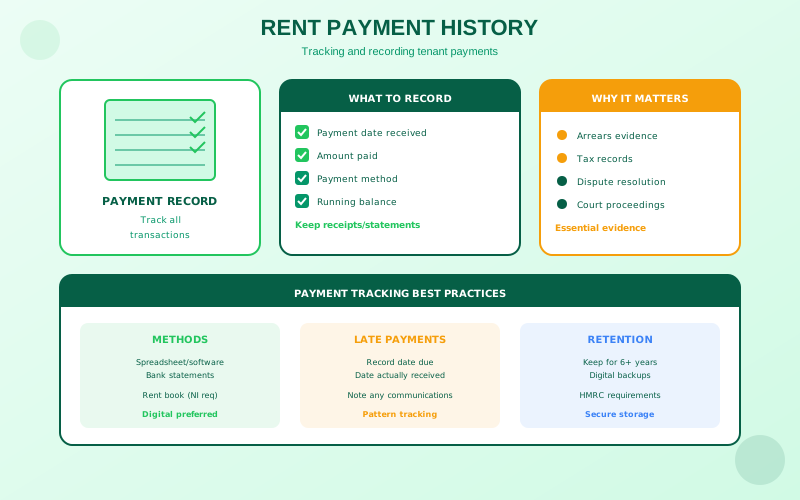
Grounds 10/11 vs Ground 8
Understanding the differences helps you decide which grounds to use:
| Aspect | Ground 8 | Ground 10 | Ground 11 |
|---|---|---|---|
| Type | Mandatory | Discretionary | Discretionary |
| Minimum arrears | 3 months' rent, or 13 weeks' rent if paid weekly or fortnightly | Any amount | None required |
| Two-date test | Yes (threshold met at both) | Yes (any arrears at both) | No |
| Reasonableness | Not considered | Required | Required |
| Tenant can defeat by paying | Yes (below the Ground 8 threshold) | Yes (clear all) | No |
The Reasonableness Test
For discretionary grounds, the judge must consider whether it's reasonable to order possession. This involves weighing various factors:
Factors the Court Considers
In Favour of the Landlord:
- History of non-payment despite reminders
- Amount of arrears and how they accumulated
- Impact on the landlord (mortgage, expenses, financial hardship)
- Previous court orders or agreements breached
- Lack of communication from tenant
- No realistic prospect of tenant catching up
In Favour of the Tenant:
- Temporary circumstances (job loss, illness, relationship breakdown)
- Benefits claim pending or in process
- Vulnerable tenant or household members (children, elderly, disabled)
- Realistic payment plan proposed
- Recent improvement in payment behaviour
- Long tenancy with good history before issues
Landlord's Circumstances Matter
Judges must consider your position too. If arrears are causing you financial hardship—you can't pay your mortgage, you're retired and reliant on rental income—make this clear to the court.
When to Use These Grounds
Use Grounds 10 and 11 in these situations:
Backup for Ground 8
Always include them with Ground 8. If the tenant pays down arrears below the Ground 8 threshold before the hearing, Ground 8 fails but you can still pursue possession on Grounds 10/11.
When Arrears Are Below The Ground 8 Threshold
If arrears haven't reached 3 months (13 weeks for weekly or fortnightly rent), Ground 8 isn't available. Ground 10 works with any amount owed.
Chronic Late Payers
For tenants who always pay eventually but always late—creating constant stress and cash flow problems— Ground 11 is specifically designed for this scenario.
After Arrears Cleared Under Pressure
If a tenant repeatedly builds up arrears then clears them when threatened with eviction, Ground 11 captures this pattern. The payment history tells the story even if current arrears are zero.
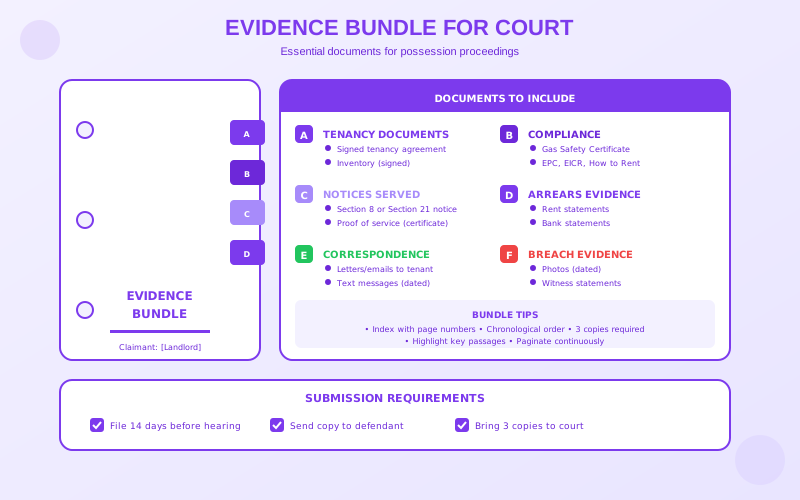
Evidence You Need
Strong evidence is essential for discretionary grounds because you need to persuade the judge that possession is reasonable:
For Ground 10:
- Rent ledger: Showing arrears at notice date and current balance
- Tenancy agreement: Confirming rent amount and due date
- Bank statements: Corroborating payment records
- Chasing correspondence: Letters, emails, texts about non-payment
- Notice and proof of service: Your Section 8 notice with delivery evidence
For Ground 11:
- Complete payment history: Full record from tenancy start showing payment dates
- Due dates vs payment dates: Highlight the pattern of late payment
- Reminders sent: Evidence of chasing payments
- Previous agreements: Any payment plans agreed and then breached
- Impact statement: How persistent delays have affected you
Demonstrating Reasonableness
- Your financial position: Mortgage statements, income reliance
- Communication attempts: Efforts to resolve the issue
- Length of problem: How long this has been going on
- Tenant's proposals: Whether they've offered solutions (and whether those are realistic)
Likely Court Outcomes
For discretionary grounds, the court has more options than simply granting or refusing possession:
Outright Possession Order
Granted when the judge concludes the tenant is unlikely to maintain payments and eviction is reasonable. Tenant must leave by a specified date (typically 14 days, up to 42 days for hardship).
Suspended Possession Order
Most common outcome for rent arrears. Possession is granted but suspended as long as the tenant pays:
- Current rent on time, PLUS
- An agreed amount toward arrears (e.g., £50-100/month)
If the tenant defaults on these terms, the landlord can apply for a warrant without returning to court for a new hearing. This gives the tenant a chance while protecting the landlord.
Adjournment
The judge may adjourn (postpone) the case to see if the tenant's circumstances improve—for example, if a benefits claim is pending or they've just started a new job.
Claim Dismissed
If the judge finds eviction unreasonable despite the ground being proven—perhaps the tenant has vulnerable circumstances and a realistic plan to pay—the claim may be dismissed.
Suspended Order Strategy
A suspended possession order can work in your favour. The tenant must pay consistently or face eviction. If they default, you don't need another hearing—just apply for a warrant. It keeps pressure on while giving them a chance.
Ground 10/11 FAQ
Can I use Ground 10 for just £50 of arrears?
Technically yes, but the court is unlikely to find eviction reasonable for such a small amount. Ground 10 works best when combined with a significant history of arrears or persistent issues, even if the current balance is low.
What if the tenant clears arrears just before the hearing?
Ground 10 fails if no rent is owed at the hearing date. However, Ground 11 can still apply if there's a history of persistent late payment. This is why you should always include both grounds in your notice.
How many late payments count as "persistent"?
There's no magic number. Courts look at the overall pattern. Three late payments in three years is probably not persistent; three months of consecutive late payments likely is. Present the full history and let the judge decide.
Can the tenant defeat Ground 11 by starting to pay on time?
Recent good behaviour helps the tenant's case but doesn't erase history. The judge will consider whether the improvement is genuine or just a response to eviction proceedings. A long history of problems won't be negated by a few weeks of timely payment.
Should I accept a suspended order or push for outright possession?
You can't really "push" for outright possession—it's the judge's decision based on reasonableness. However, you can argue against suspension by showing the tenant has broken previous agreements or that there's no realistic prospect of consistent payment.
Will Grounds 10 and 11 still work after the current England eviction rules?
Yes. When Section 21 is abolished in May 2026, Section 8 becomes the only eviction route. Grounds 10 and 11 remain available and become even more important as backup options alongside the renamed rent arrears grounds.
Create Your Section 8 Notice
Our document generator creates properly-formatted Section 8 notices with Grounds 8, 10, and 11 correctly specified. Includes a rent arrears schedule template and hearing preparation guide.
Create my Section 8 noticeA clearer route from ground to possession
What to prepare for Section 8 Ground 10 and 11
Keep the reason for possession, the notice, proof of service and later court evidence consistent from the outset. Choose the route that matches what you need to do next.
Match the facts
Use the ground only where your evidence supports the reason you will give.
Prepare and serve
Check the notice details, timing and service record before you send anything.
Keep the file joined up
Store the notice, service proof and supporting documents for any court stage.
Choose your document route
Start at the stage your case is actually in

Stage 1: serve the Section 8 notice
£39.99Choose this route when your immediate job is preparing Form 3A and a clear service record before anything is sent to the tenant.
- Problem it solves
- It keeps the ground, tenant details, notice date and service evidence in one notice-stage file.
- Risk if this is not the right stage
- If the tenant stays, you will still need to prepare the court claim file at the next stage.
- Landlord outcome
- You have a structured notice and service route ready to review, approve and serve yourself.

Stage 2: build the full possession file
£69.99Choose this route when you want the Section 8 notice and the court-stage forms, evidence structure and hearing prompts planned together.
- Problem it solves
- It avoids building the notice file first and then trying to reconstruct the same facts for court later.
- Risk if this is not the right stage
- If you only need to serve notice now, this may be more preparation than your case needs today.
- Landlord outcome
- You can prepare one joined-up file for notice, N5, N119, evidence and the court stage.
Prefer us to prepare it with you?
Start with a free consultation before any paid work is agreed
Tell us what has happened and show us the documents you have. We confirm whether assisted preparation is suitable, explain the scope, and only then send a secure payment link.
Section 8 notice assistance
For landlords who need the Form 3A notice, service plan and evidence prompts checked before serving.
Book a free consultation · £149.00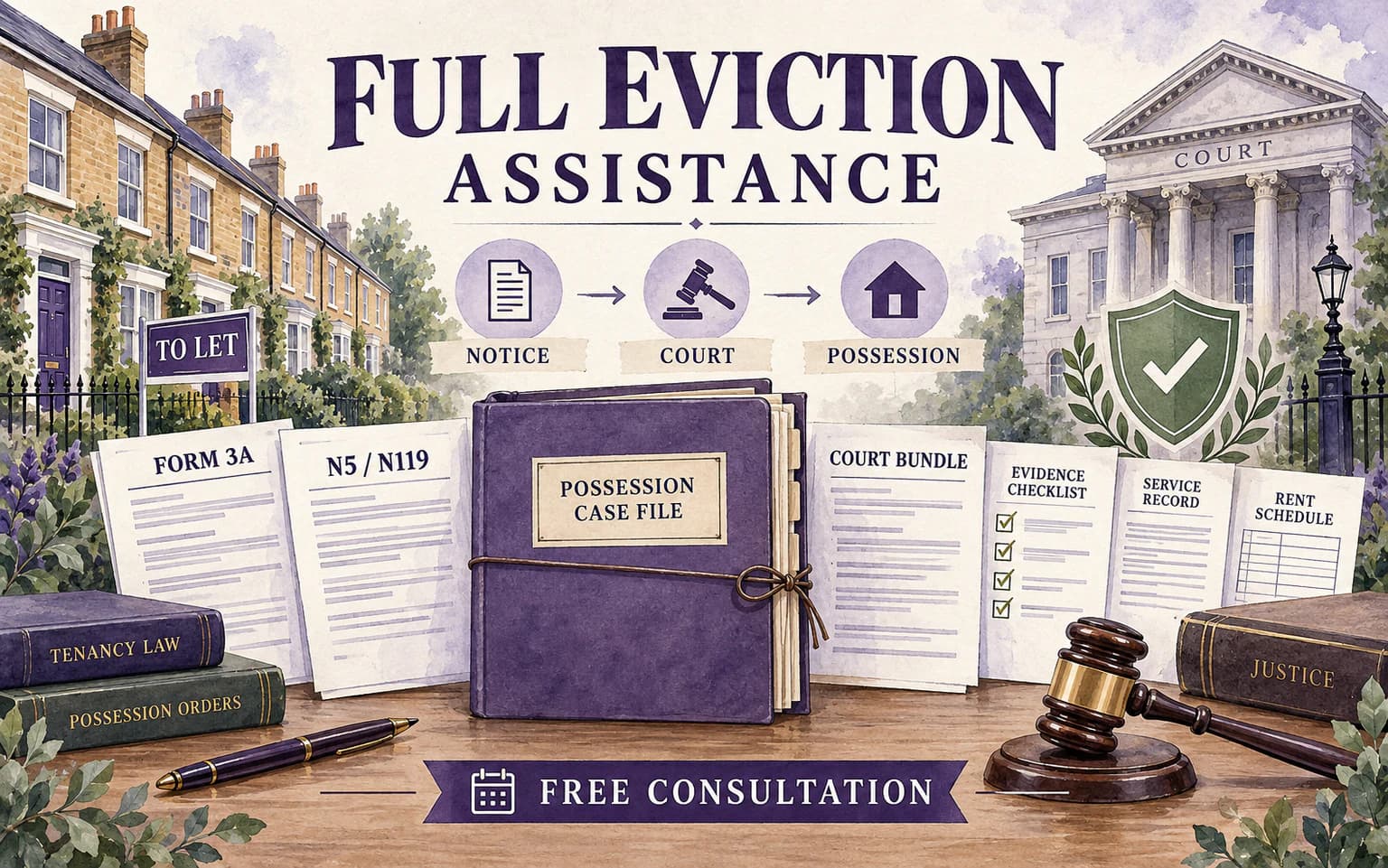
Full eviction case assistance
For landlords who want the Section 8 notice plus N5, N119, service record, evidence bundle and court-stage file prepared together.
Book a free consultation · £399.00What to do next
Core eviction guides landlords usually need next
These are the core possession guides landlords usually need after notice or arrears problems start.
FAQs for landlords

Have a landlord question?
Ask Heaven is our free AI assistant that can help with eviction advice, tenancy questions, and more.