
Rated4.8/5 | 3008 reviews
Section 8 Ground 1 Explained: Landlord Returning to Property (England)
Ground 1 lets landlords recover property for landlord or family occupation under the post-May England rules. Learn the 12-month timing rule, evidence, and 4-...
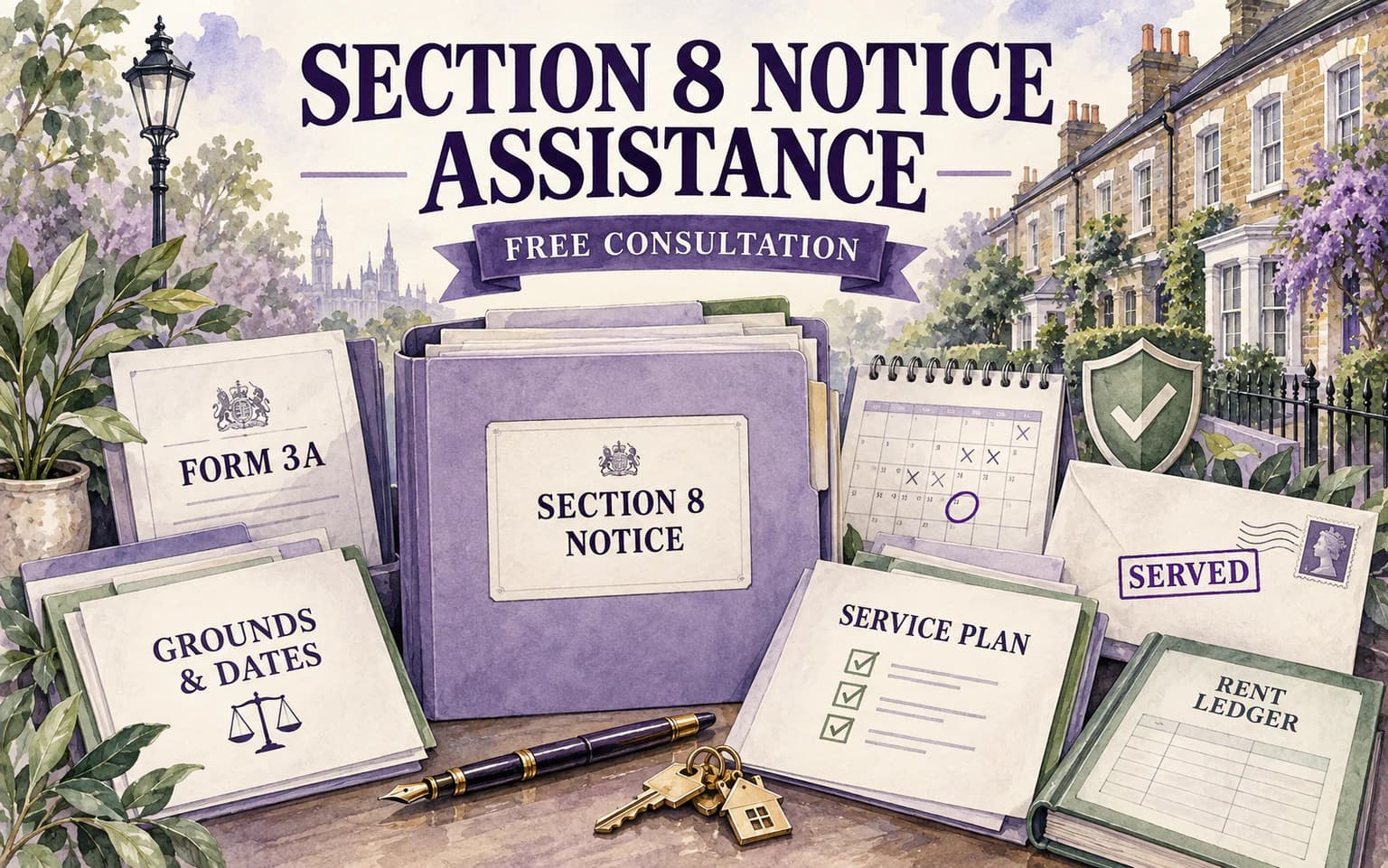
Assisted prep
Need help preparing your Section 8 notice?
Start with a free consultation. If suitable, we can help prepare the Form 3A notice, service record and supporting evidence before you serve it.
Book free consultationUse this guide when
You need a practical landlord answer, not just a definition
Use this page when you need to understand section 8 ground 1 landlord returning in landlord terms, check the evidence or compliance points that matter, and decide whether the next step is a guide, free tool, notice pack, court pack, tenancy agreement, rent increase pack, or money claim route.
Your tenant owes rent and you need to know whether a Section 8 notice guide notice is the right move. This guide explains how it works, what can trip you up, and what to do next.
When you have checked Ground 1 fits the facts, create your Section 8 notice so the notice, service record, and evidence trail stay aligned, or go straight to the court pack if you already expect to file N5 and N119.
What landlords should do next
If you are under pressure, decide the route early. In England after 1 May 2026, Section 21 is no longer the live route for new cases. If this ground fits, the next step is using the current Form 3A process with the right evidence and timing.
Need to act on an England possession ground now?
For post-1 May 2026 England cases, Section 21 has gone and the live route is the Form 3A possession notice. Choose the product that matches how far the case has gone.
- Eviction Notice Generator for the Form 3A notice, service instructions, validity checklist, compliance declaration, and arrears statement before you serve anything.
- Complete Eviction Pack if you want the notice, N5, N119, evidence checklist, witness material, and possession file working together from the start.
- Section 8 guide if you want the rule overview first.
- Ground-specific guides: Ground 1 occupation, Ground 1A sale, Ground 2 mortgagee sale, Ground 7A serious ASB, Ground 8 arrears, Ground 10 arrears, Ground 11 late rent, Ground 12 breach, Ground 13 property deterioration, Ground 14 ASB, Ground 15 furniture, and Ground 17 false statement.
Mandatory Ground
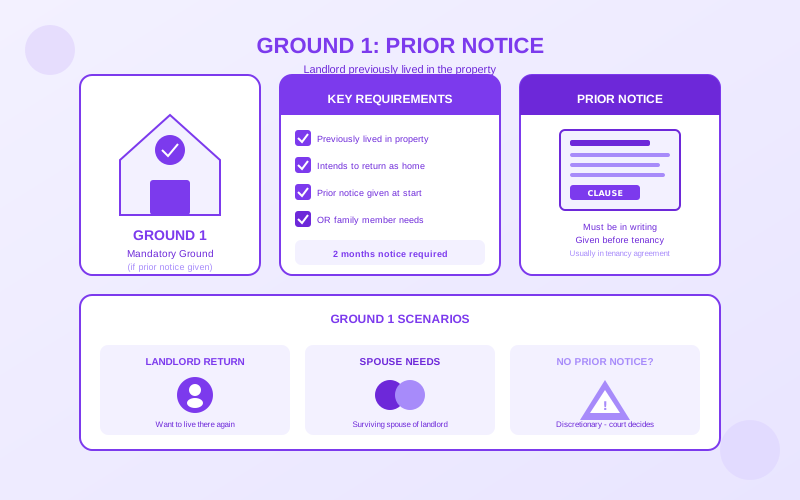
Ground 1 is mandatory—if you prove the conditions are met, the court must grant possession. The judge has no discretion to refuse based on the tenant's circumstances.
What Is Ground 1?
Ground 1 is set out in Schedule 2, Part I of the Housing Act 1988. The ground applies where:
Recommended next step
Need to serve a notice for this tenancy problem?
Use the guided Form 3A builder to keep the grounds, dates, service steps and evidence checks aligned. Preview the paperwork before paying.
Fixed price £39.99. Preview available before payment.
- Use the current notice route for the facts entered.
- Check dates and service requirements before serving.
- Preview the available paperwork before payment.

"Not later than the beginning of the tenancy the landlord gave notice in writing to the tenant that possession might be recovered on this ground... [and] the dwelling-house... was at some time occupied by the landlord as his only or principal home... [or] the landlord who is seeking possession or... their spouse or civil partner requires the dwelling-house as his or their only or principal home."
Two Situations Covered
1. Previously Lived There
The landlord occupied the property as their only or principal home at some time before letting it. This covers typical scenarios where you lived in a property, moved away (perhaps for work), let it out, and now want to return.
2. Require It as Principal Home
The landlord (or their spouse/civil partner) now requires the property as their only or principal home. This covers landlords who may never have lived there but need it now.
Key Features
- Type: Mandatory (court must grant possession if conditions met)
- Tenancy timing: Generally cannot be used during the first 12 months of the tenancy
- Notice period: 4 months on the current Form 3A notice
- Occupation purpose: The property must genuinely be needed as an only or principal home
The 12-Month Timing Rule
The critical post-May 2026 requirement is timing. Ground 1 is designed for genuine landlord or family occupation and generally cannot be used until the tenancy has been running for at least 12 months.
What the Form 3A Notice Must Say
The notice should explain:
- That you are relying on Ground 1 under Schedule 2 to the Housing Act 1988
- Who needs to occupy the property and why it will be their only or principal home
- Why the timing rule is met
Timing
The notice period is 4 months. You should also check that the tenancy is old enough before serving:
- Do not treat Ground 1 as a quick no-fault replacement for Section 21
- Check the 12-month rule before preparing the notice
Form of Notice
The prescribed form is the current Form 3A. It must:
- Use the current official wording
- State the correct 4-month notice period
- Give particulars showing why Ground 1 applies
Do Not Use Old Ground 1 Wording
Older Ground 1 guidance often focused on prior notice at the start of the tenancy. For new England cases after 1 May 2026, build the file around the current Form 3A rules, the 12-month timing rule, and evidence of genuine occupation.
Who Can Use Ground 1?
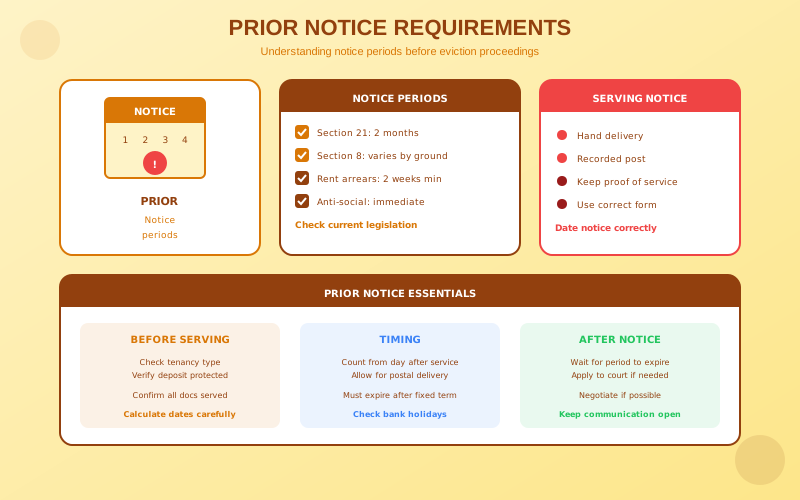
Ground 1 is only available to certain landlords:
Individual Landlords
The ground is available to individual landlords (natural persons) who owned the property at some point before the tenancy. This includes:
- The landlord who granted the tenancy
- Someone who inherited the property and the landlord role
Spouse or Civil Partner
The property can be recovered for the landlord's spouse or civil partner to live in. This covers situations where the landlord themselves may not live there but their spouse needs it.
Not Available For:
- Companies: A company cannot have a "principal home"
- Landlords who bought after letting: If you purchased an already-tenanted property
- Evidence gap: You will need to show who is moving in and why the occupation is genuine
Joint Landlords
If the property is jointly owned, at least one of the joint landlords must have previously occupied it as their principal home, or at least one (or their spouse) must require it as their principal home.
Court Discretion
While Ground 1 is mandatory when conditions are met, there is limited discretion in one scenario:
Timing and Evidence Problems
If the tenancy has not run long enough, or if the evidence of occupation looks weak, Ground 1 may fail. Factors include:
- Whether the 12-month timing rule is met
- Who is going to occupy the property
- Impact on the tenant
- Your genuine need for the property
Genuine Intention
The court may enquire whether you genuinely intend to live in the property. If there's evidence you plan to re-let it rather than occupy it, the court may refuse possession. Evidence of genuine intention includes:
- Your current living arrangements (e.g., renting elsewhere)
- Evidence of selling your current home
- Practical reasons for the move (work, family, retirement)
Post-current England eviction rules
After 1 May 2026, landlord and family occupation grounds became more important because Section 21 is abolished for new notices. Use the current Form 3A wording and check the 12-month timing rule before relying on Ground 1.
Notice and Court Process
Section 8 Notice
Ground 1 requires a minimum of 4 months' notice on the current Form 3A notice. The notice should:
- Specify Ground 1
- State that you previously occupied the property as your home (if applicable)
- State that you require it as your principal home (or for your spouse/civil partner)
- Explain why the 12-month timing rule and occupation requirements are met
Court Proceedings
Use the standard possession procedure (Form N5). At the hearing, be prepared to prove:
- The tenancy timing rule is met
- You or the qualifying family member genuinely require the property as a home
- You are the landlord and can prove the occupation intention
Mandatory Nature
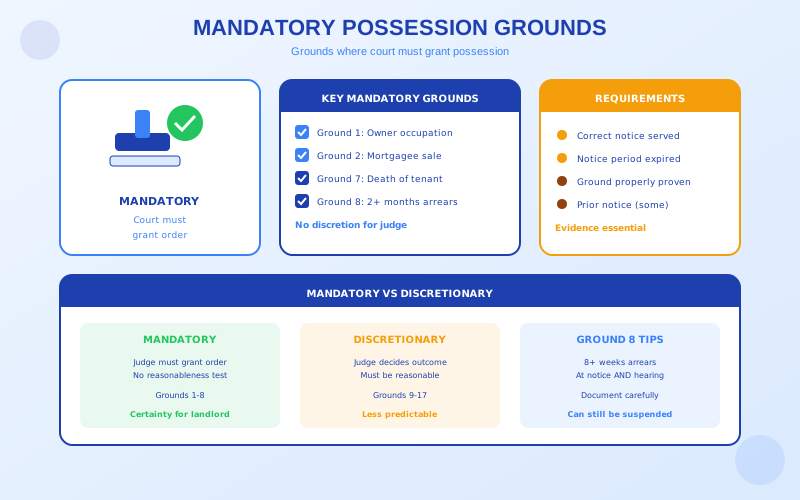
If you prove these elements, the judge must grant possession. Unlike discretionary grounds, the tenant's circumstances do not usually defeat a properly proven mandatory ground, but weak evidence or wrong timing can still undermine the claim.
Ground 1 FAQ
What if I never actually lived in the property?
You can still use Ground 1 if you require the property as your principal home now (or for your spouse/civil partner). You don't have to have lived there before—just prove you genuinely need it now.
Can I use Ground 1 if my child needs the property?
The current post-May 2026 occupation grounds include family-occupation routes. Check the exact relationship and evidence before serving, because Section 21 is no longer available for new England notices.
What counts as "principal home"?
Your principal home is where you mainly live—your primary residence. You can only have one principal home at a time. If you already have a principal home elsewhere, Ground 1 may not apply unless you're genuinely moving.
Can I re-let the property after getting possession?
Ground 1 requires genuine intention to occupy. If you immediately re-let the property, you may have committed fraud and the former tenant could potentially claim damages. You should genuinely intend to live there.
What if I am using old Ground 1 guidance?
Do not rely on pre-reform wording without checking it against the current Form 3A route. For new England notices, focus on the occupation facts, the 12-month timing rule, and the 4-month notice period.
How long do I need to live there after getting possession?
There's no minimum period specified in law, but if you move in briefly then re-let, a court might view future claims skeptically. The requirement is genuine intention at the time of the claim—but using Ground 1 as a workaround to simply re-let is not its intended purpose.
Recover Your Property
The Section 8 notice route uses the current Form 3A route for landlord and family occupation claims, including the 4-month notice period and evidence prompts.
Create my Section 8 noticeA clearer route from ground to possession
What to prepare for Section 8 Ground 1
Keep the reason for possession, the notice, proof of service and later court evidence consistent from the outset. Choose the route that matches what you need to do next.
Match the facts
Use the ground only where your evidence supports the reason you will give.
Prepare and serve
Check the notice details, timing and service record before you send anything.
Keep the file joined up
Store the notice, service proof and supporting documents for any court stage.
Choose your document route
Start at the stage your case is actually in

Stage 1: serve the Section 8 notice
£39.99Choose this route when your immediate job is preparing Form 3A and a clear service record before anything is sent to the tenant.
- Problem it solves
- It keeps the ground, tenant details, notice date and service evidence in one notice-stage file.
- Risk if this is not the right stage
- If the tenant stays, you will still need to prepare the court claim file at the next stage.
- Landlord outcome
- You have a structured notice and service route ready to review, approve and serve yourself.

Stage 2: build the full possession file
£69.99Choose this route when you want the Section 8 notice and the court-stage forms, evidence structure and hearing prompts planned together.
- Problem it solves
- It avoids building the notice file first and then trying to reconstruct the same facts for court later.
- Risk if this is not the right stage
- If you only need to serve notice now, this may be more preparation than your case needs today.
- Landlord outcome
- You can prepare one joined-up file for notice, N5, N119, evidence and the court stage.
Prefer us to prepare it with you?
Start with a free consultation before any paid work is agreed
Tell us what has happened and show us the documents you have. We confirm whether assisted preparation is suitable, explain the scope, and only then send a secure payment link.
Section 8 notice assistance
For landlords who need the Form 3A notice, service plan and evidence prompts checked before serving.
Book a free consultation · £149.00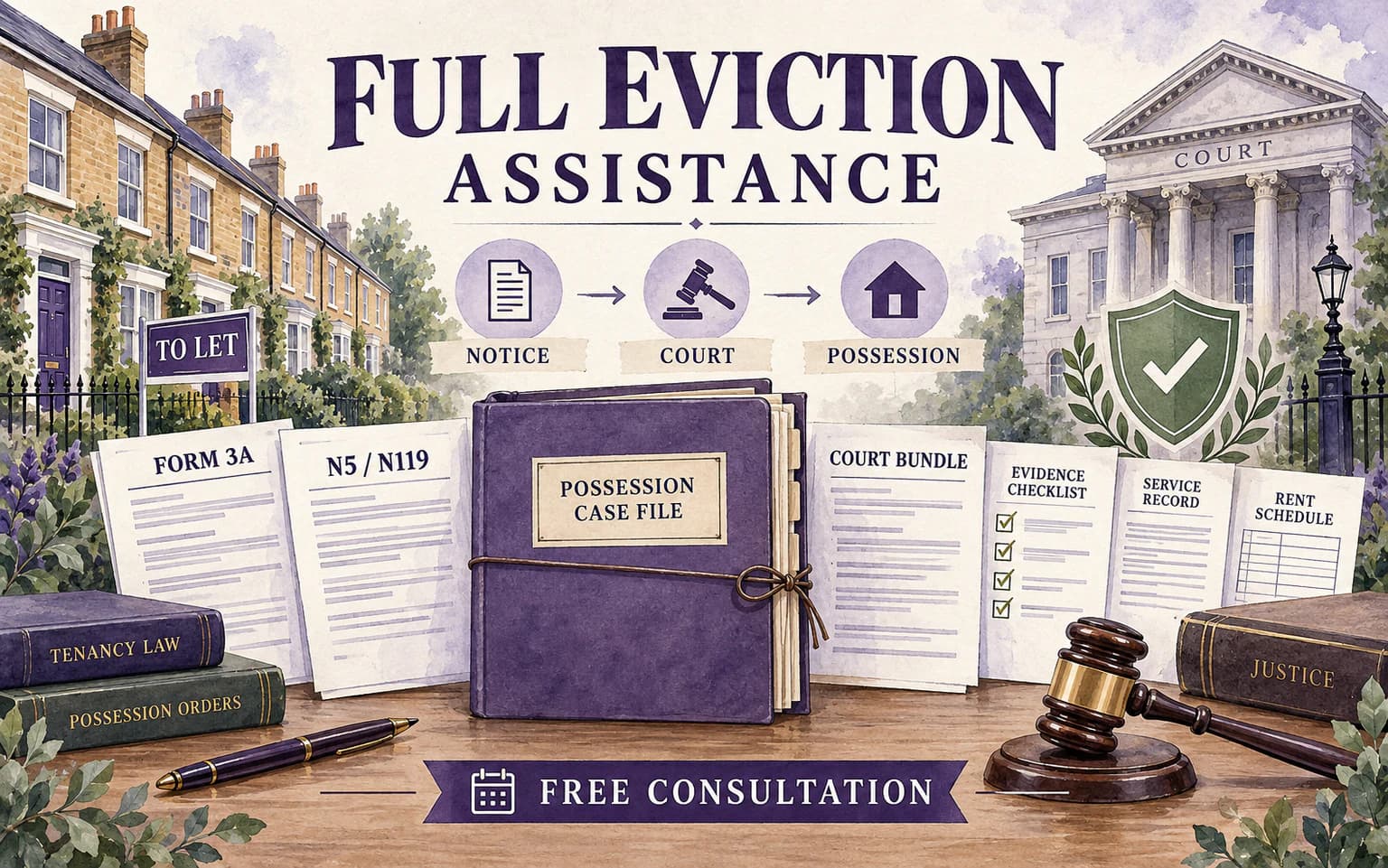
Full eviction case assistance
For landlords who want the Section 8 notice plus N5, N119, service record, evidence bundle and court-stage file prepared together.
Book a free consultation · £399.00What to do next
Core eviction guides landlords usually need next
These are the core possession guides landlords usually need after notice or arrears problems start.
FAQs for landlords

Have a landlord question?
Ask Heaven is our free AI assistant that can help with eviction advice, tenancy questions, and more.