
Rated4.8/5 | 3008 reviews
Section 8 Ground 2 Explained: Mortgage Lender Repossession (England)
Ground 2 allows mortgage lenders to recover a property from tenants when the landlord defaults. Learn the post-May Form 3A timing, evidence, and 4-month noti...
Assisted prep
Need help preparing your Section 8 notice?
Start with a free consultation. If suitable, we can help prepare the Form 3A notice, service record and supporting evidence before you serve it.
Book free consultationUse this guide when
You need a practical landlord answer, not just a definition
Use this page when you need to understand section 8 ground 2 mortgage lender in landlord terms, check the evidence or compliance points that matter, and decide whether the next step is a guide, free tool, notice pack, court pack, tenancy agreement, rent increase pack, or money claim route.
Your tenant is breaching the tenancy and you need to know whether Section 8 notice guide is the right route. This guide explains how it works, what evidence matters, and what to do next.
What landlords should do next
If you are under pressure, decide the route early. In England after 1 May 2026, Section 21 is no longer the live route for new cases. If this ground fits, the next step is using the current Form 3A process with the right evidence and timing.
Need to act on an England possession ground now?
For post-1 May 2026 England cases, Section 21 has gone and the live route is the Form 3A possession notice. Choose the product that matches how far the case has gone.
- Eviction Notice Generator for the Form 3A notice, service instructions, validity checklist, compliance declaration, and arrears statement before you serve anything.
- Complete Eviction Pack if you want the notice, N5, N119, evidence checklist, witness material, and possession file working together from the start.
- Section 8 guide if you want the rule overview first.
- Ground-specific guides: Ground 1 occupation, Ground 1A sale, Ground 2 mortgagee sale, Ground 7A serious ASB, Ground 8 arrears, Ground 10 arrears, Ground 11 late rent, Ground 12 breach, Ground 13 property deterioration, Ground 14 ASB, Ground 15 furniture, and Ground 17 false statement.
Lender Ground
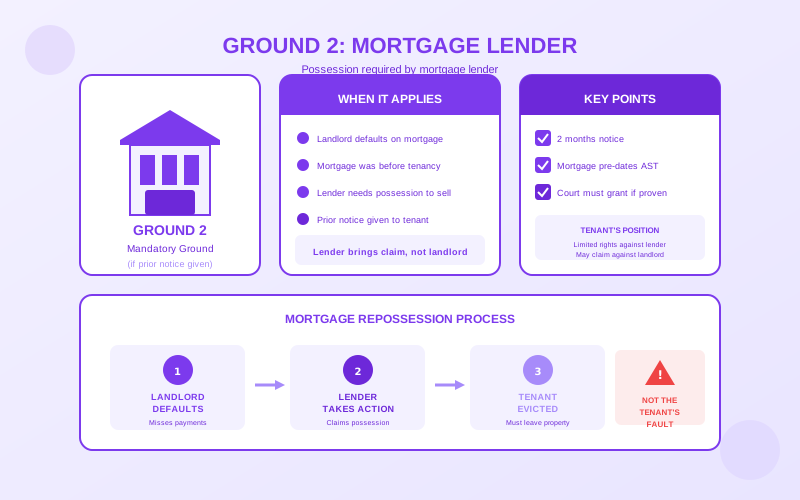
Unlike most Section 8 grounds, Ground 2 is typically used by mortgage lenders, not landlords. It allows lenders to remove tenants when taking possession of a mortgaged property.
What Is Ground 2?
Ground 2 is set out in Schedule 2, Part I of the Housing Act 1988. It applies where:
Next step for landlords
Problem clear? Create the right notice before you serve
If the issue now points toward possession, move from guidance into a notice route that keeps grounds, dates, service, and evidence together.
- Choose the right route before you serve anything.
- Answer plain-English questions. We handle the legal logic.
- Preview the paperwork before you pay.

"The dwelling-house is subject to a mortgage granted before the beginning of the tenancy and— (a) the mortgagee is entitled to exercise a power of sale... and (b) the mortgagee requires possession of the dwelling-house for the purpose of disposing of it with vacant possession."
Key Elements
- Mortgage existed first: The mortgage was in place before the tenancy started
- Power of sale: The lender has the legal right to sell (usually after default)
- Vacant possession needed: The lender needs the property empty to sell it
Ground Details
- Type: Mandatory (court must grant possession if conditions met)
- Evidence: Mortgage documents, lender demand, and sale evidence matter
- Notice period: 4 months on the current Form 3A notice
- Who uses it: Mortgage lenders, not landlords
How Ground 2 Works
Here's the typical sequence of events:
1. Landlord Defaults on Mortgage
The landlord stops paying their mortgage. After a period of missed payments, the lender starts possession proceedings against the landlord.
2. Lender Obtains Possession
The lender gets a possession order against the landlord under the mortgage terms. However, this doesn't automatically give them rights against the tenant.
3. Lender Serves Section 8 Notice
To remove the tenant, the lender must serve a Form 3A notice specifying Ground 2. This requires 4 months' notice.
4. Court Proceedings
If the tenant doesn't leave, the lender issues possession proceedings. If Ground 2 conditions are met, the court must grant possession.
Binding Tenancy?
If the lender consented to the letting (giving permission for the tenancy), the tenancy may be "binding" on them. In that case, Ground 2 may not apply and the lender might have to honour the tenancy terms. Always check whether lender consent was obtained.
Evidence and Mortgage Position
Ground 2 depends on the mortgage position and the lender's right to sell with vacant possession:
What Notice Is Required
The file should show:
- The property is subject to a relevant mortgage
- The lender has the right to exercise a power of sale
- The lender needs vacant possession for disposal
Who Gives the Form 3A Notice
Ground 2 is usually driven by the lender rather than the landlord. The Form 3A notice must use the current wording and give the correct 4-month period.
If the Mortgage Position Is Disputed
Tenants may challenge whether Ground 2 applies. Factors include:
- Whether the lender consented to the tenancy
- The circumstances of the landlord's default
- Whether the lender can prove the power of sale and need for vacant possession
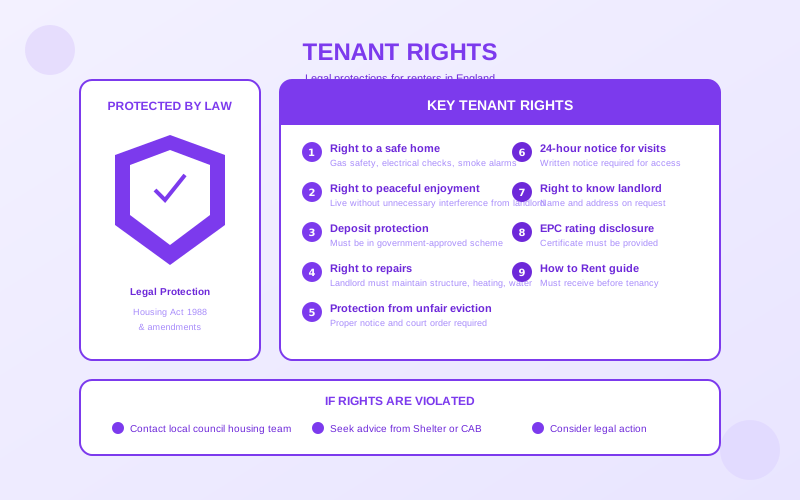
Tenant Rights
Tenants caught in Ground 2 situations have some protections:
Right to 4 Months' Notice
Even when Ground 2 applies, the tenant is entitled to at least 4 months' notice on the Form 3A notice. They can't be immediately evicted.
Right to Court Process
The lender must go through proper court proceedings. The tenant has the right to:
- Receive the court claim
- Attend the hearing
- Challenge whether the conditions are met
- Request time to find alternative accommodation (usually 14-42 days)
Potential Defences
Tenants may be able to challenge Ground 2 if:
- The lender consented to the tenancy (making it binding)
- The lender has not proved the current Ground 2 requirements
- The tenancy actually started before the mortgage
- Technical defects in the notice or proceedings
Deposit Protection
If the tenant paid a deposit, they should ensure they can recover it. If the landlord has disappeared, the deposit scheme should still have the funds protected.
Landlord Considerations
If you're a landlord, understanding Ground 2 helps you:
Protect Your Tenants
- Keep mortgage records: Make sure the letting is consistent with the mortgage terms
- Get lender consent: If required by your mortgage, get written consent to let
- Communicate: If you're in financial difficulty, talk to your lender early
Buy-to-Let Mortgages
Most buy-to-let mortgages expect you to let the property. However, if you default, the lender can still use Ground 2 to remove tenants. The mortgage agreement usually covers this.
Consent to Let
If you have a residential mortgage and are letting the property (perhaps temporarily), you must get "consent to let" from your lender. Without this:
- You may be breaching your mortgage terms
- The lender may not be bound by the tenancy
- Ground 2 may more easily apply
Staying Ahead
If you're struggling with mortgage payments, contact your lender immediately. Many have forbearance options. Letting the situation reach repossession hurts everyone—you, your tenant, and your credit record.
Ground 2 FAQ
Can I as a landlord use Ground 2?
No. Ground 2 is specifically for mortgagees (lenders), not landlords. If you want to recover your property, use the current Form 3A grounds that fit the case, such as Ground 1, Ground 1A, Ground 8, or another applicable ground. Section 21 is no longer available for new England notices.
What if the lender agreed to the tenancy?
If the lender gave written consent to the tenancy, they may be bound by its terms. In this case, Ground 2 might not apply until the tenancy ends naturally, or they may need to use other grounds.
As a tenant, will I get my deposit back?
Your deposit should be protected in a government-approved scheme. Contact the scheme directly to claim it back. The landlord's financial problems shouldn't affect protected deposits.
Can I claim rent back if evicted under Ground 2?
Unfortunately, rent paid to the landlord is usually gone. You may have a claim against the landlord for breach of contract or misrepresentation, but if they're in financial difficulty, recovery may be impractical.
Does the 2-month notice apply?
Yes. Under the current England Form 3A rules, Ground 2 normally requires 4 months' notice. The tenant has this time to find alternative accommodation.
What happens to my belongings?
You should remove all belongings before the eviction date. If anything is left, the lender must follow proper procedures under the Torts Act to store and eventually dispose of items.
Understand Your Eviction Rights
Whether you're a landlord managing compliance or a tenant facing eviction, understanding the grounds for possession is essential. Our guides cover all Section 8 grounds in detail.
Browse Our Guides ?A clearer route from ground to possession
What to prepare for Section 8 Ground 2
Keep the reason for possession, the notice, proof of service and later court evidence consistent from the outset. Choose the route that matches what you need to do next.
Match the facts
Use the ground only where your evidence supports the reason you will give.
Prepare and serve
Check the notice details, timing and service record before you send anything.
Keep the file joined up
Store the notice, service proof and supporting documents for any court stage.
Choose your document route
Start at the stage your case is actually in

Stage 1: serve the Section 8 notice
£39.99Choose this route when your immediate job is preparing Form 3A and a clear service record before anything is sent to the tenant.
- Problem it solves
- It keeps the ground, tenant details, notice date and service evidence in one notice-stage file.
- Risk if this is not the right stage
- If the tenant stays, you will still need to prepare the court claim file at the next stage.
- Landlord outcome
- You have a structured notice and service route ready to review, approve and serve yourself.

Stage 2: build the full possession file
£69.99Choose this route when you want the Section 8 notice and the court-stage forms, evidence structure and hearing prompts planned together.
- Problem it solves
- It avoids building the notice file first and then trying to reconstruct the same facts for court later.
- Risk if this is not the right stage
- If you only need to serve notice now, this may be more preparation than your case needs today.
- Landlord outcome
- You can prepare one joined-up file for notice, N5, N119, evidence and the court stage.
Prefer us to prepare it with you?
Start with a free consultation before any paid work is agreed
Tell us what has happened and show us the documents you have. We confirm whether assisted preparation is suitable, explain the scope, and only then send a secure payment link.
Section 8 notice assistance
For landlords who need the Form 3A notice, service plan and evidence prompts checked before serving.
Book a free consultation · £149.00
Full eviction case assistance
For landlords who want the Section 8 notice plus N5, N119, service record, evidence bundle and court-stage file prepared together.
Book a free consultation · £399.00What to do next
Core eviction guides landlords usually need next
These are the core possession guides landlords usually need after notice or arrears problems start.
FAQs for landlords

Have a landlord question?
Ask Heaven is our free AI assistant that can help with eviction advice, tenancy questions, and more.